Modern businesses are increasingly facing a critical decision: should they invest in AI-assisted workflows or hire human specialists? This article explores both options in detail, showing how AI can dramatically improve productivity, reduce costs, and manage repetitive or data-heavy tasks with speed and accuracy. At the same time, it highlights why human specialists remain essential for strategic thinking, complex decision-making, and industry-specific challenges that AI cannot fully manage.
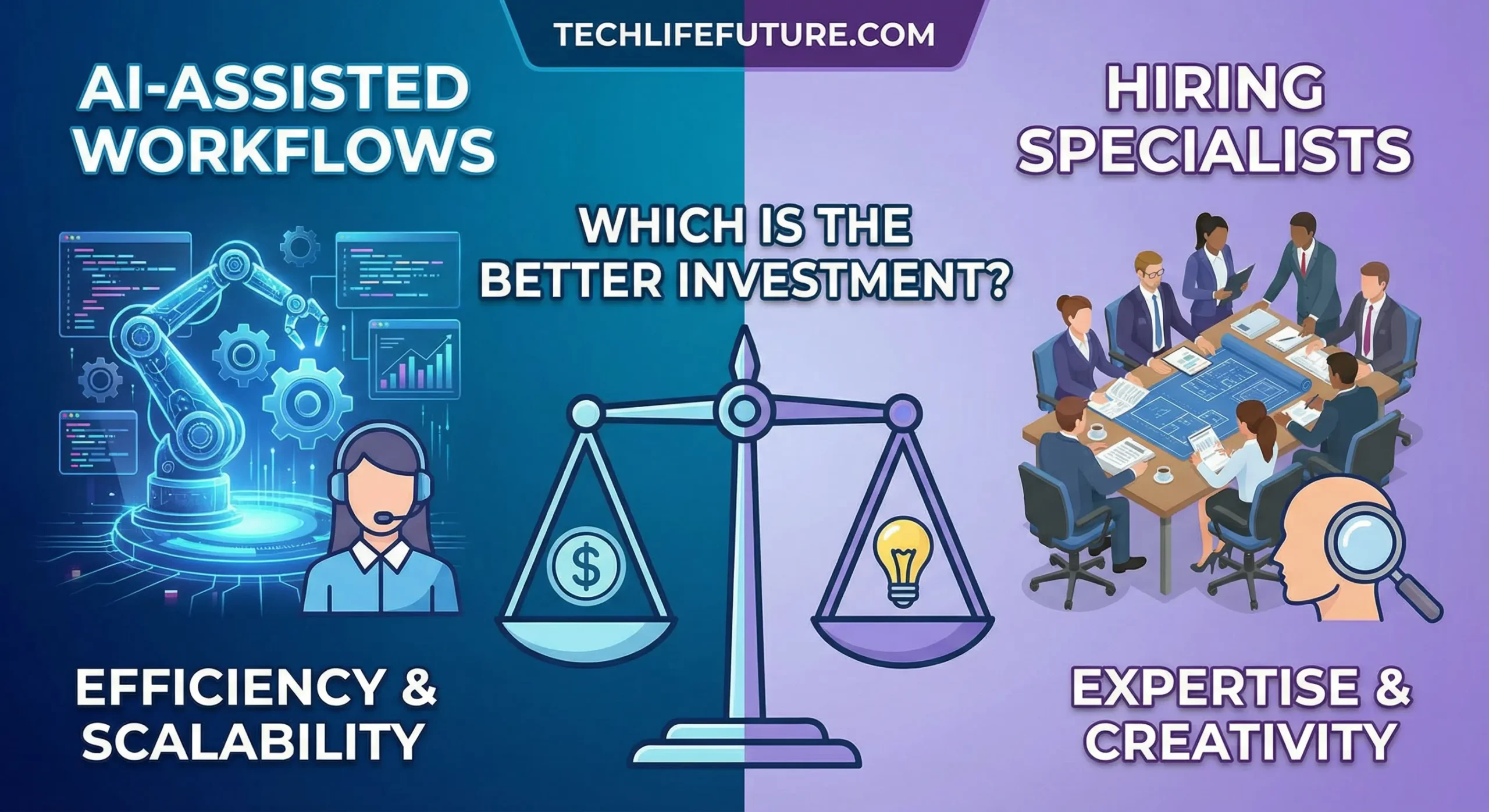
Rather than presenting AI and human expertise as competitors, the article explains why a balanced, hybrid approach is often the smartest investment. By combining AI automation with human judgment and continuous upskilling through just-in-time learning platforms, businesses can scale faster, work smarter, and stay competitive in a rapidly changing digital world.
👉 Read the full article to discover when AI is the better choice, when human specialists are irreplaceable, and how to build the right strategy for your business.
The debate between AI vs human expertise is ongoing, with some arguing that AI can automate tasks more efficiently, while others claim that human specialists bring a level of nuance and expertise that’s hard to replicate with technology.
Key Takeaways
- Banking AI implementations have achieved up to 40% faster transaction processing with over 50% error reduction
- Hiring specialists brings human nuance and expertise to business tasks
- The right choice between AI-assisted workflows and hiring specialists depends on business needs
- Businesses must weigh the benefits and drawbacks of each option carefully
- AI vs human expertise is a key consideration for modern businesses
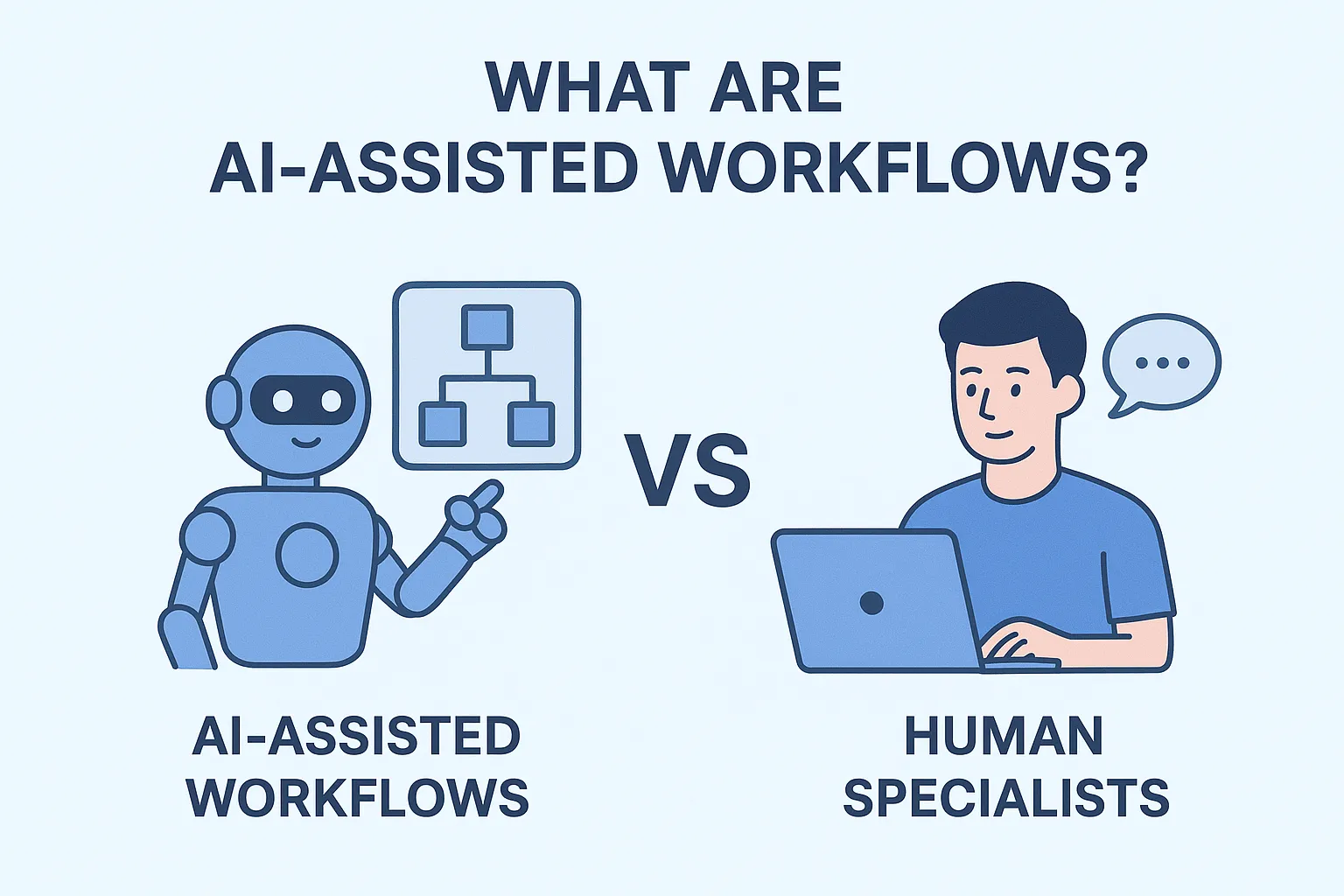
What Are AI-Assisted Workflows?
The integration of AI into workflows is transforming business operations, making them more efficient and streamlined. AI-assisted workflows involve the use of artificial intelligence to automate, optimize, and streamline various business processes.
How AI Streamlines Daily Operations
AI streamlines daily operations by automating repetitive tasks, enhancing data analysis, and improving decision-making processes. This is achieved through:
- Automating routine tasks, freeing up human resources for more strategic work
- Enhancing data analysis to provide actionable insights
- Improving predictive capabilities to make informed decisions
Real Examples of AI-Assisted Workflows in Business
Several businesses have successfully integrated AI into their workflows. For instance:
- Customer service chatbots that manage inquiries and provide support
- Predictive maintenance in manufacturing to prevent equipment failures
- AI-driven data analytics tools that help in making data-driven decisions
Benefits for Teams and Productivity
The adoption of AI-assisted workflows offers numerous benefits for teams and overall productivity:
- Increased Efficiency: AI manages repetitive tasks at speed, allowing team members to focus on higher-value work that requires creativity and strategic thinking
- Improved Accuracy: Automated processes reduce human error in data-intensive tasks, leading to more reliable outcomes
- 24/7 Operations: AI systems can work continuously without breaks, enabling round-the-clock processing and support
- Scalability: AI workflows can easily scale to manage increased workloads without proportional increases in staffing
- Data-Driven Insights: AI analyzes vast amounts of data to uncover patterns and insights that inform better decision-making
By leveraging AI-assisted workflows, businesses can achieve significant improvements in efficiency, accuracy, and productivity, ultimately driving growth and competitiveness.
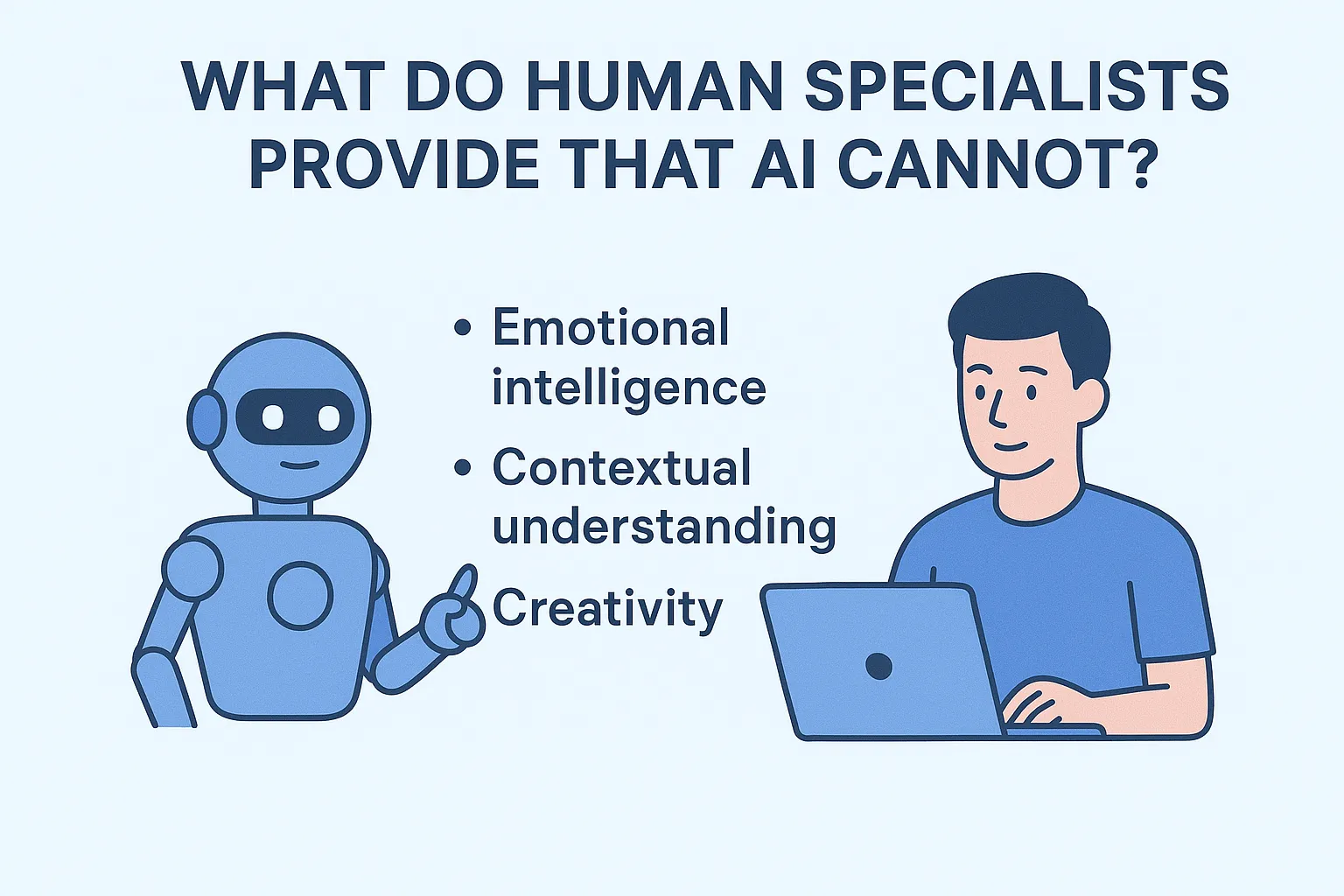
What Do Human Specialists Provide That AI Cannot?
Human specialists offer a unique combination of skills, experience, and strategic thinking that AI systems currently cannot replicate. While AI has made significant strides in automating routine and data-intensive tasks, there are several areas where human expertise remains invaluable.
Deep Expertise and Strategic Judgment
Human specialists bring deep expertise to the table, gained through years of experience and continuous learning. This expertise is crucial in making strategic decisions that require not just data analysis, but also a nuanced understanding of the business context.
Strategic judgment involves evaluating complex situations, weighing multiple factors, and making decisions that align with long-term goals. AI can analyze data and provide insights, but human specialists are better equipped to make strategic judgments that require a deep understanding of the business and its environment.
Managing Complex, Non-Standard Business Challenges
Businesses often face complex, non-standard challenges that require creative problem-solving and a deep understanding of the specific context. Human specialists are adept at managing such challenges because they can draw upon their experience, intuition, and ability to think creatively.
- Complex problem-solving involves identifying the root cause of a problem and developing a tailored solution
- Human specialists can navigate ambiguous situations and make decisions based on incomplete or uncertain information
- Their ability to adapt to new situations and challenges is a significant advantage in rapidly changing business environments
Industry-Specific Knowledge and Compliance
Different industries have unique requirements, regulations, and best practices. Human specialists with industry-specific knowledge are essential for ensuring compliance with these regulations and navigating the complexities of their respective industries.
For instance, in highly regulated industries like finance or healthcare, human specialists play a critical role in ensuring that businesses comply with relevant laws and regulations. Their knowledge and experience are indispensable in managing risk and avoiding costly compliance issues.
AI-Assisted Workflows vs. Hiring Specialists: Side-by-Side Comparison
To make an informed decision, companies need to evaluate AI-assisted workflows and hiring specialists based on multiple critical dimensions.
The comparison between AI-assisted workflows and hiring specialists is multifaceted, involving factors such as cost, efficiency, quality, and risk management. By examining these elements closely, businesses can determine which approach best suits their needs.
Cost Differences
One of the primary considerations for businesses is the cost associated with implementing AI-assisted workflows versus hiring specialists. AI-assisted workflows typically require an initial investment in technology and training, but they can lead to significant long-term savings by reducing labor costs and increasing productivity.
- Initial Costs: AI-assisted workflows require investment in software and training, while hiring specialists involves recruitment and onboarding costs
- Ongoing Expenses: AI-assisted workflows may incur maintenance and update costs, whereas hiring specialists means ongoing salary, benefits, and training expenses
Speed, Efficiency, and Scalability
AI-assisted workflows are designed to streamline processes, enhance efficiency, and scale according to business needs. In contrast, hiring specialists can bring expertise and flexibility but may be limited by the availability of skilled personnel.
Quality, Accuracy, and Oversight
Both AI-assisted workflows and hiring specialists have their strengths when it comes to quality, accuracy, and oversight. AI can provide consistent accuracy, while human specialists can offer nuanced judgment and oversight.
- Accuracy: AI-assisted workflows can maintain high accuracy levels, especially for repetitive tasks
- Oversight: Human specialists can provide strategic oversight and judgment, particularly in complex or non-standard situations
Risk Management
Risk management is another critical aspect to consider. AI-assisted workflows can mitigate certain risks associated with human error, but they also introduce risks related to data security and technology failure.
- Data Security: AI-assisted workflows require robust data security measures to protect sensitive information
- Technology Failure: Businesses must have contingency plans in place for potential technology failures
In conclusion, the decision between AI-assisted workflows and hiring specialists depends on a careful evaluation of cost, efficiency, quality, and risk management. By understanding the strengths and limitations of each approach, businesses can make informed decisions that align with their strategic objectives.
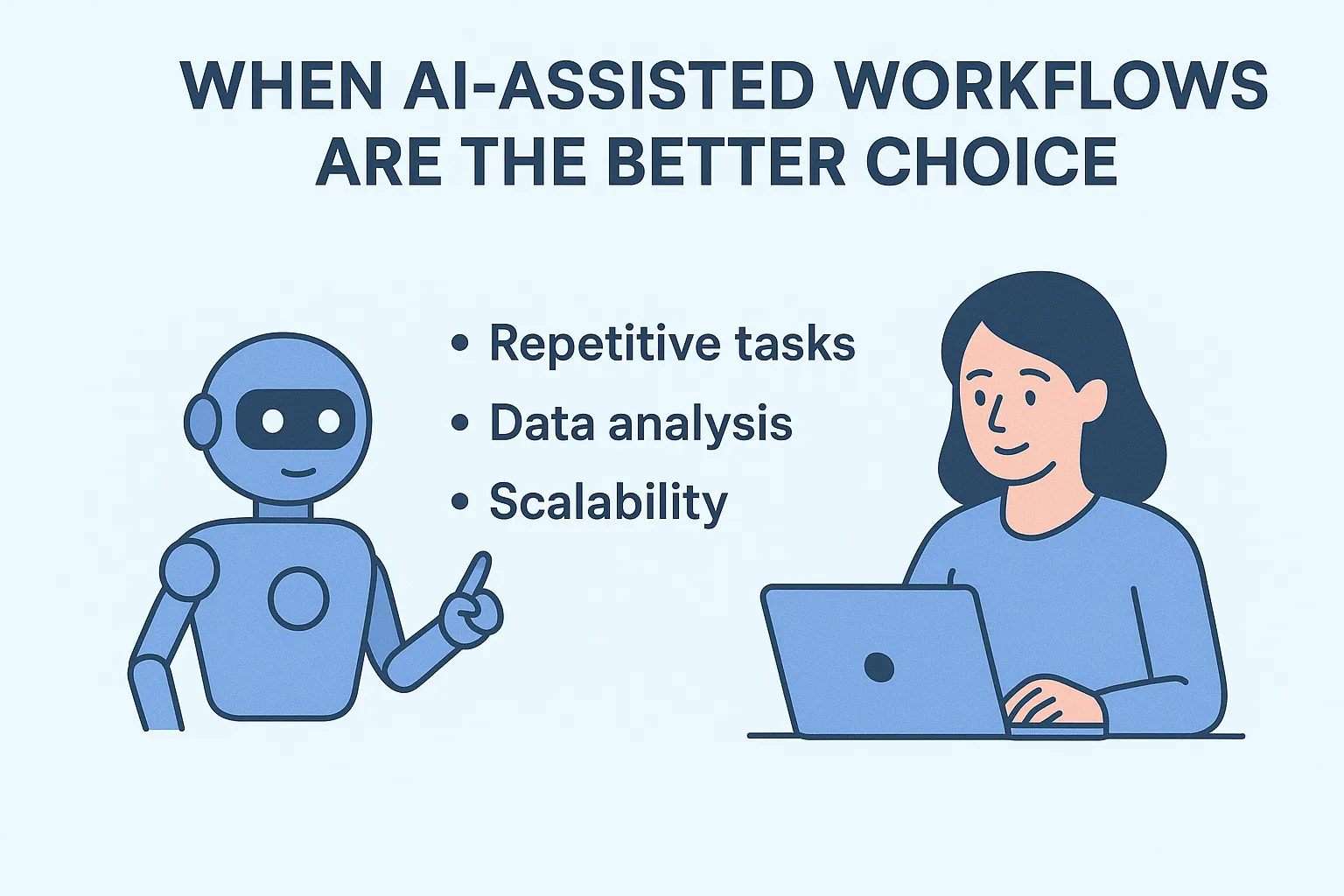
When AI-Assisted Workflows Are the Better Choice
For many organizations, integrating AI into their workflows is not just a trend but a strategic necessity. AI-assisted workflows can significantly enhance operational efficiency, reduce costs, and improve productivity.
Repetitive or Data-Intensive Tasks
AI is particularly beneficial for tasks that are repetitive or data-intensive. By automating these tasks, businesses can free up human resources for more strategic and creative work. For instance, AI can be used for:
- Data processing and analysis
- Automated reporting
- Customer service chatbots
Benefits of AI in Repetitive Tasks: Reduced human error, increased speed, and the ability to operate 24/7 without breaks.
Businesses Needing Fast Upskilling
In today’s rapidly changing business landscape, the ability to upskill quickly is crucial. AI-assisted workflows can facilitate this by providing AI upskilling tools that help employees learn new skills on the job.
Some key benefits include:
- Personalized learning experiences
- Real-time feedback and assessment
- Access to a vast knowledge base
Limited Hiring Budget or Talent Shortage
For businesses facing budget constraints or talent shortages, AI-assisted workflows offer a viable alternative. By optimizing workflows with AI, companies can achieve more with less.
- Reduced labor costs
- Increased productivity
- Ability to manage increased workload without additional hiring
By understanding when to leverage AI-assisted workflows, businesses can make informed decisions that drive growth and competitiveness.
“For tasks that are repetitive and data-driven, AI delivers unprecedented speed and accuracy. But for strategic decisions requiring creativity and contextual understanding, human judgment remains essential.”
When Hiring Specialists Is Still Essential
Human specialists bring a level of strategic insight and expertise that AI currently cannot match. While AI-assisted workflows have revolutionized many aspects of business operations, there are critical areas where the nuanced judgment, deep expertise, and strategic thinking of human specialists are indispensable.
In today’s fast-paced business environment, making informed decisions quickly is crucial. However, certain situations demand the irreplaceable value of human specialists. Let’s explore the scenarios where hiring specialists remains essential.
High-Stakes Decision-Making
In situations involving high-stakes decision-making, the expertise and judgment of human specialists are crucial. These decisions often involve complex variables, uncertain outcomes, and significant consequences, making human intuition and experience invaluable.
- Critical business strategy formulation
- Mergers and acquisitions
- Major financial investments
Human specialists can analyze complex data, consider multiple scenarios, and provide recommendations based on their expertise and experience. This capability is particularly important in environments where decisions have far-reaching implications.
Regulated or Complex Environments
Businesses operating in regulated or complex environments require specialists who understand the intricacies of the industry. These specialists ensure compliance with regulations, navigate complex legal landscapes, and implement industry-specific best practices.
For instance, in highly regulated industries like finance or healthcare, specialists are essential for ensuring that businesses comply with all relevant laws and regulations, thereby avoiding costly penalties and reputational damage.
Long-Term Strategy and Architecture Planning
When it comes to long-term strategy and architecture planning, human specialists play a vital role. They bring a deep understanding of the business, industry trends, and the ability to foresee potential challenges and opportunities.
Specialists can develop comprehensive strategies that align with the company’s goals, ensuring sustainable growth and competitive advantage. Their ability to think critically and plan for the long term is invaluable in today’s rapidly changing business landscape.
In conclusion, while AI-assisted workflows offer numerous benefits, there are distinct scenarios where the expertise of human specialists is not only beneficial but essential. By understanding when to leverage human specialists versus AI, businesses can make more informed decisions that drive success.
Can AI Replace Specialists Entirely? Realistic Outlook
With AI’s growing capabilities, companies are now faced with the critical decision of whether to rely solely on AI or maintain a balance with human specialists. The increasing sophistication of AI technologies has led to significant improvements in efficiency and productivity across various business processes. However, the question remains as to whether AI can entirely replace the nuanced expertise and judgment that human specialists provide.
Augmentation vs. Replacement
The concept of AI augmenting human capabilities rather than replacing them is gaining traction. Augmentation involves using AI to enhance the productivity and efficiency of human workers, rather than substituting them entirely. This approach allows businesses to leverage the strengths of both AI and human specialists.
“The real value of AI is not automation—it’s augmentation.” — Fei-Fei Li, Co-Director, Stanford Human-Centered AI Institute
Hybrid Models in Modern Companies
Many modern companies are adopting hybrid models that combine the efficiency of AI-assisted workflows with the strategic judgment of human specialists. These models enable businesses to automate routine and data-intensive tasks while reserving complex decision-making and strategic planning for human experts.
Platforms like Mindhive.ai demonstrate this hybrid approach in action, combining AI-powered workflow automation with access to certified AI consultants who guide implementation. Rather than choosing between AI tools or human expertise, businesses get both: AI-assisted collaboration, automated reporting, and stakeholder engagement tools, plus experienced consultants who help deploy them strategically.
This addresses a critical challenge—many businesses struggle not with AI availability, but with effective implementation. SMEs can access Mindhive’s network of certified AI consultants to guide their AI adoption journey, from initial pilots to full-scale implementation. Recognized in the Australian Financial Review’s 2024 Most Innovative Companies report, Mindhive exemplifies how hybrid models work in practice.
Learn more about Mindhive’s collective intelligence approach and how it creates new opportunities for both SMEs and tech professionals *(Disclosure: The author holds a minor shareholding in Mindhive.ai and maintains an affiliate relationship.)
In conclusion, while AI has the potential to impact the role of human specialists in the workplace significantly, a balanced approach that leverages the strengths of both AI and human expertise is likely to be the most effective strategy for businesses.
The Role of Just-In-Time Training Platforms
In the era of AI-driven business, the role of just-in-time training platforms cannot be overstated. These platforms are designed to provide employees with the skills they need exactly when they need them, thereby optimizing workforce performance and facilitating smoother AI adoption. (Disclosure: TechLifeFuture.com maintains an affiliate relationship with Educative.io)
“The future belongs to organizations that can reskill faster than change happens.” — Josh Bersin, Global HR & Workforce Analyst
Why Just-In-Time Learning Fits AI Adoption
Just-in-time learning platforms like Educative.io are particularly well-suited for AI adoption because they offer flexible, on-demand learning that can be tailored to the specific needs of the organization. This approach ensures that employees can quickly acquire the skills required to work effectively with AI technologies.
The benefits of just-in-time learning include reduced downtime, as employees can learn at their own pace without having to leave their workstations. Moreover, it allows for immediate application of new skills, enhancing productivity and efficiency.
Benefits for Team Upskilling
Upskilling teams with just-in-time training platforms can lead to significant improvements in overall team performance. By providing access to relevant training at the point of need, organizations can ensure that their teams are always equipped with the latest skills and knowledge.
- Enhanced productivity through targeted skill development
- Improved employee engagement due to personalized learning paths
- Faster time-to-competency for new technologies and processes
Is It More Cost-Effective Than Hiring Specialists?
When comparing the cost-effectiveness of just-in-time training platforms versus hiring specialists, several factors come into play. The table below summarizes some key differences:
TABLE 1: Just-In-Time Training vs Hiring Specialists
| Factor | Just-In-Time Training | Hiring Specialists |
| Initial Cost | Platform subscription (typically $50-500/user/year) | Recruitment costs, salary negotiations, onboarding |
| Ongoing Cost | Annual subscription renewal | Annual salary, benefits, training, equipment |
| Scalability | Easily scales to entire workforce | Limited by hiring market and budget |
| Time to Value | Immediate access to training content | Several weeks/months for recruitment and onboarding |
| Flexibility | Learn multiple skills across different areas | Typically specialized in specific domain |
As the table illustrates, just-in-time training platforms can offer a more cost-effective solution for organizations looking to upskill their workforce without the long-term commitment of hiring new specialists.

Final Recommendation: Choosing the Right Approach for Your Business
Making the right choice between AI-assisted workflows and hiring specialists requires a thorough understanding of your business needs. As we’ve explored in the previous sections, both approaches have their strengths and weaknesses.
To make an informed decision, it’s essential to consider several key factors. The following checklist will help you evaluate your business requirements and choose the most suitable approach.
Decision Factors Checklist
When deciding between AI-assisted workflows and hiring specialists, consider the following factors:
- Nature of the Task: Is it repetitive or data-intensive? AI-assisted workflows might be more suitable
- Complexity: Does the task require deep expertise or strategic judgment? Human specialists might be more appropriate
- Scalability: Do you need to scale your operations quickly? AI can often provide the necessary speed
- Budget: What are your budget constraints? AI solutions can be more cost-effective eventually
- Regulatory Compliance: Are there specific regulations you need to comply with? Human oversight might be necessary
Hybrid Strategy for Balanced Growth
In many cases, a hybrid approach that combines AI-assisted workflows with the expertise of human specialists can offer the best of both worlds. This strategy allows businesses to leverage the strengths of AI for certain tasks while relying on human judgment for more complex decisions.
For instance, a company might use AI to automate data analysis and reporting, freeing up their specialists to focus on strategic planning and decision-making.
By carefully evaluating your business needs and considering a hybrid strategy, you can make an informed decision that optimizes your workflows and drives growth.
“Technology is best when it brings people together and amplifies what humans do best.” — Sundar Pichai, CEO, Google
TABLE 2: Decision Framework
| Consideration | AI-Assisted Workflows | Hiring Specialists |
| Best For | Repetitive, data-intensive, scalable tasks | Strategic decisions, complex problems, compliance |
| Primary Strength | Speed, consistency, 24/7 operation | Deep expertise, creativity, contextual judgment |
| Cost Profile | High initial, lower ongoing | Recruitment costs, continuous salary, and benefits |
| Risk Factors | Data security, technology failures, lack of nuance | Human error, availability constraints, higher costs |
| Implementation Time | Weeks to months (setup and training) | Months (recruitment, onboarding, ramp-up) |
Ultimately, the key to successful workforce optimization with AI is to align technology adoption with business objectives, ensuring that both AI-assisted workflows and human expertise are utilized effectively. By doing so, organizations can achieve a competitive edge in their respective markets.
Case Studies
Case Study 1 — Global Bank Document Automation (Cognizant)
A major multinational bank partnered with Cognizant to implement a generative AI-powered document processing system for complex financial paperwork. The solution automated the extraction and analysis of key information from thousands of document types, including printed and handwritten files.
Results:
- 🕒 Processed documents 98% faster (from ~30 minutes to ~30 seconds)
- 📉 Reduced document processing costs by up to 98% due to automation
- 📊 Achieved 96% accuracy in extracting key information, freeing specialists from manual tasks and enabling them to focus on higher-value work
Source: Cognizant Case Study
This demonstrates how AI can streamline transaction-related workflows, drastically cut time and costs, and enhance operational efficiency in banking.
Case Study 2 — TechBank AI Transaction Processing
TechBank (featured in a 2025 AI in Banking case collection) adopted advanced AI systems to enhance transaction processing workflows.
Results:
- ⚡ Transaction processing time was reduced by 40% through automation
- 📉 Operational errors dropped by over 50%, improving reliability and compliance
- 🚀 The bank strengthened its competitive position by boosting overall efficiency with AI-driven processes
Source: DigitalDefynd AI Finance Case Studies
This case highlights real performance gains from integrating AI in core financial operations, aligning with this article’s theme of efficiency and strategic workforce reallocation.
Frequently Asked Questions (FAQ)
Q1: What are the primary benefits of adopting AI-assisted workflows in business operations?
AI-assisted workflows can enhance efficiency, reduce costs, and improve scalability by automating repetitive or data-intensive tasks, allowing businesses to optimize their processes and improve productivity.
Q2: How do AI upskilling tools contribute to workforce optimization?
AI upskilling tools enable employees to acquire new skills quickly, bridging the gap between current capabilities and the requirements of evolving business needs, thus optimizing the workforce for improved performance.
Q3: In what scenarios is hiring AI specialists more beneficial than implementing AI-assisted workflows?
Hiring AI specialists is more beneficial in scenarios requiring deep expertise, strategic judgment, and managing complex, non-standard business challenges, where human insight and industry-specific knowledge are crucial.
Q4: Can AI technology entirely replace human specialists in workflow management?
While AI technology significantly enhances workflow management by improving efficiency and accuracy, it is not a complete replacement for human specialists, especially in areas requiring strategic decision-making, complex problem-solving, and nuanced judgment.
Q5: What are the advantages of using just-in-time training platforms like Educative.io for AI adoption?
Just-in-time training platforms offer a cost-effective and efficient way to upskill teams on AI technologies, providing relevant training exactly when needed, thus supporting rapid adaptation to new tools and processes.
Q6: How do businesses determine whether to invest in AI-assisted workflows or hire specialists?
Businesses should consider factors such as cost, the nature of tasks, required expertise, scalability needs, and risk management when deciding between AI-assisted workflows and hiring specialists, often benefiting from a hybrid approach that combines both.
Q7: What is the role of AI governance in digital transformation?
AI governance plays a critical role in digital transformation by ensuring that AI systems are developed and deployed responsibly, ethically, and in compliance with regulatory requirements, thereby supporting trustworthy AI adoption.
Q8: How can companies achieve a balanced strategy between AI-assisted workflows and human expertise?
Companies can achieve a balanced strategy by identifying areas where AI-assisted workflows offer the most value, such as in repetitive tasks, and complementing these with human expertise in areas requiring strategic judgment, complex problem-solving, and deep industry knowledge.
References
Industry Reports on AI Adoption & Workforce Automation
- McKinsey: Superagency in the Workplace
- Azumo: AI in Workplace Statistics
- ScienceDirect: AI Adoption Research
- IBM: AI in the Workplace
Research on Just-In-Time Learning Models
- Docket.io: Just-In-Time Learning Glossary
- Innovation Training: Just-In-Time Learning
- ResearchGate: Just-In-Time Learning Expectations
- Docebo: Just-In-Time Training
Training Platform Resources (Educative.io)
- Educative.io Homepage
- Educative.io AI-Assisted Feedback
- Educative.io Generative AI Courses
- Educative.io Interview Prep
Transparency and Disclosures
This article reflects AI adoption practices and workforce strategies as of December 16, 2025 (AEST). Business conditions and technology capabilities may have evolved since publication.
This article may contain affiliate links for Educative.io. If you purchase a product or service through a link in this article, TechLifeFuture.com may receive a commission at no additional cost to you.
The author holds a minor shareholding in Mindhive.ai and maintains an affiliate relationship. Mindhive.ai is mentioned in this article as an example of hybrid AI adoption models combining technology with consultant expertise. This relationship does not influence the article’s analysis of when to adopt AI-assisted workflows versus hiring specialists, which is based on widely accepted principles in workforce optimization and digital transformation.
The author’s analysis references widely accepted principles in AI governance, workforce upskilling, and digital transformation. While platforms such as Educative.io support AI-assisted learning and Just-In-Time training, organizations should evaluate training tools and workflow strategies based on their specific business needs, regulatory requirements, and risk profile.
For accountants advising their clients who wish to learn more about AI, Compliance, Digital Trust, and the Proof Before Scale formula, a Comprehensive FAQs and Answers article is available on TechLifeFuture.com.
All analyses provided are for informational and educational purposes only and do not constitute legal, financial, or professional advice. Readers should consult qualified professionals before acting on any information contained in this article.
Portions of this article were AI-assisted and human-edited for accuracy and compliance with TechLifeFuture’s editorial standards.
About the Author
John Cosstick is Founder-Editor of TechLifeFuture.com and winner of the 2024 BOLD Award for Open Innovation in Digital Industries. He is a former banker, accountant, and certified financial planner. He is now a freelance journalist and author. John is a member of the Media Entertainment and Arts Alliance (Union). You can visit his Amazon author page.
© 2025 TechLifeFuture.com | Creative Commons BY-NC 4.0.