Thinking about changing your career? It’s a mix of excitement and worry.
Many Australians are at a crossroads, wondering if their current job fits their future plans. If you’re thinking about switching careers, you’re in good company. Deciding to start a new career path is a big deal. This article offers helpful tips and career pivot guidance to guide you through this big decision.
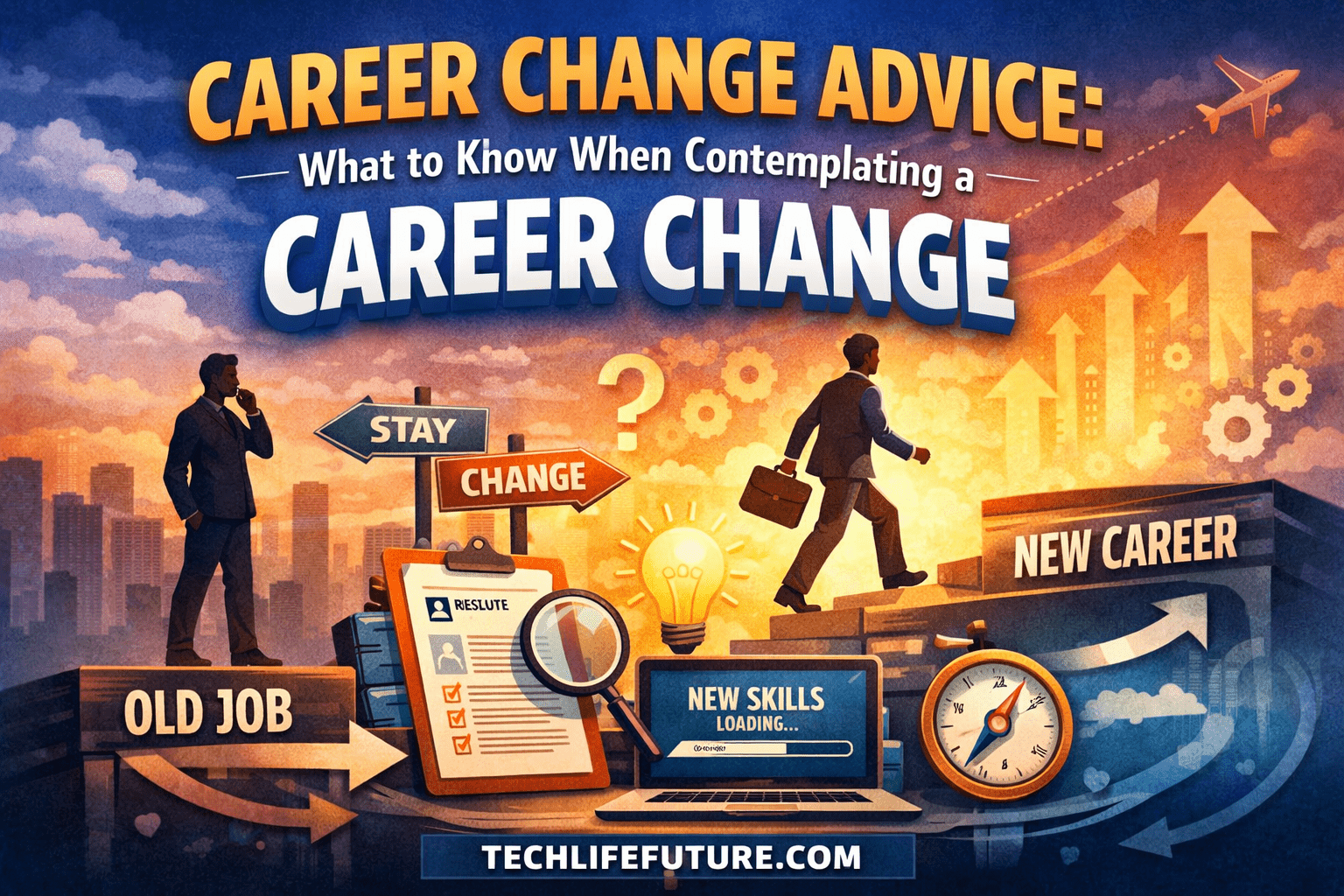
By the end of this article, you’ll know what to think about when considering a career change. This will help you make a smart choice for your future. Getting career change advice is key to a smooth transition.
Intro
Thinking about a career change can feel scary, but with the right career change guidance, it can be exciting. Many people want to change jobs because they’re unhappy, burnt out, or looking for new challenges. If you’re thinking about a career change, it’s key to know why and how to make the move smoothly.
Changing careers means finding a new path that fits your passions and goals. You might want to change careers for money, happiness, or to get away from a bad work place. Having a clear plan is vital. This includes checking your current skills, finding skills you can use elsewhere, and learning what your new career needs.
Getting the right career change guidance helps you through this tough time. It’s about making a choice that’s good for your career and life. Next, we’ll explore why people change careers, when it’s time to make a change, and how to make a smooth transition.
Why People Consider a Career Change
It’s important to know why someone wants to change careers. There are many reasons, each one different for everyone.
Job dissatisfaction and burnout
Job dissatisfaction and burnout are big reasons for changing careers. This can happen when:
- There’s not enough challenge or interest in the job
- Work-life balance is off
- The work environment or company culture isn’t good
For example, a marketing person might get bored with the same tasks. They might want a job that lets them be more creative.
Financial or lifestyle motivations
Money or lifestyle changes also push people to change careers. Some might:
- Look for jobs that pay more to improve their finances
- Want jobs with better work-life balance, like remote work
- Seek a career that lets them spend more time with family or pursue hobbies
A software developer might switch to consulting for better hours and pay.
Desire for growth or purpose
Some people change careers for personal growth or to find purpose. This could mean:
- Choosing a field that matches their values or interests
- Looking for jobs with more responsibility or chances to move up
- Wishing to make a big difference in their field
A teacher might move to educational administration to have a bigger impact and lead.
Understanding these reasons helps people make better career choices. They can use career transition tips and mid-career change advice to guide their decisions.
Signs It’s Time for a Career Change
It can be tough to know when it’s time for a new career. But, there are clear signs to watch for. Understanding these signs can guide you towards a better professional future.
Feeling Stuck or Unmotivated
Feeling stuck or unmotivated in your job is a big sign. If you dread going to work or feel like you’re not moving forward, it’s time to think about changing.
As “You don’t learn to walk by following rules. You learn by doing, and by falling over.” – Richard Branson, Sometimes, taking a leap and changing careers can be the best way to learn and grow.
No Long-Term Growth Opportunities
If your job doesn’t offer chances for growth, it might be time to look elsewhere. Think about whether your role lets you learn new skills or take on new challenges. If not, it’s worth exploring other options that offer professional transition guidance.
Work No Longer Aligns with Values
When your job doesn’t match your values or goals, you might feel unhappy and disconnected. Think about your core values and compare them to your current job. If they don’t align, it might be time for a career change. For tips for changing careers, talk to professionals in your desired field.
Changing careers is a big decision, but it can also be rewarding. By recognizing the signs for change, you can start a more fulfilling career.
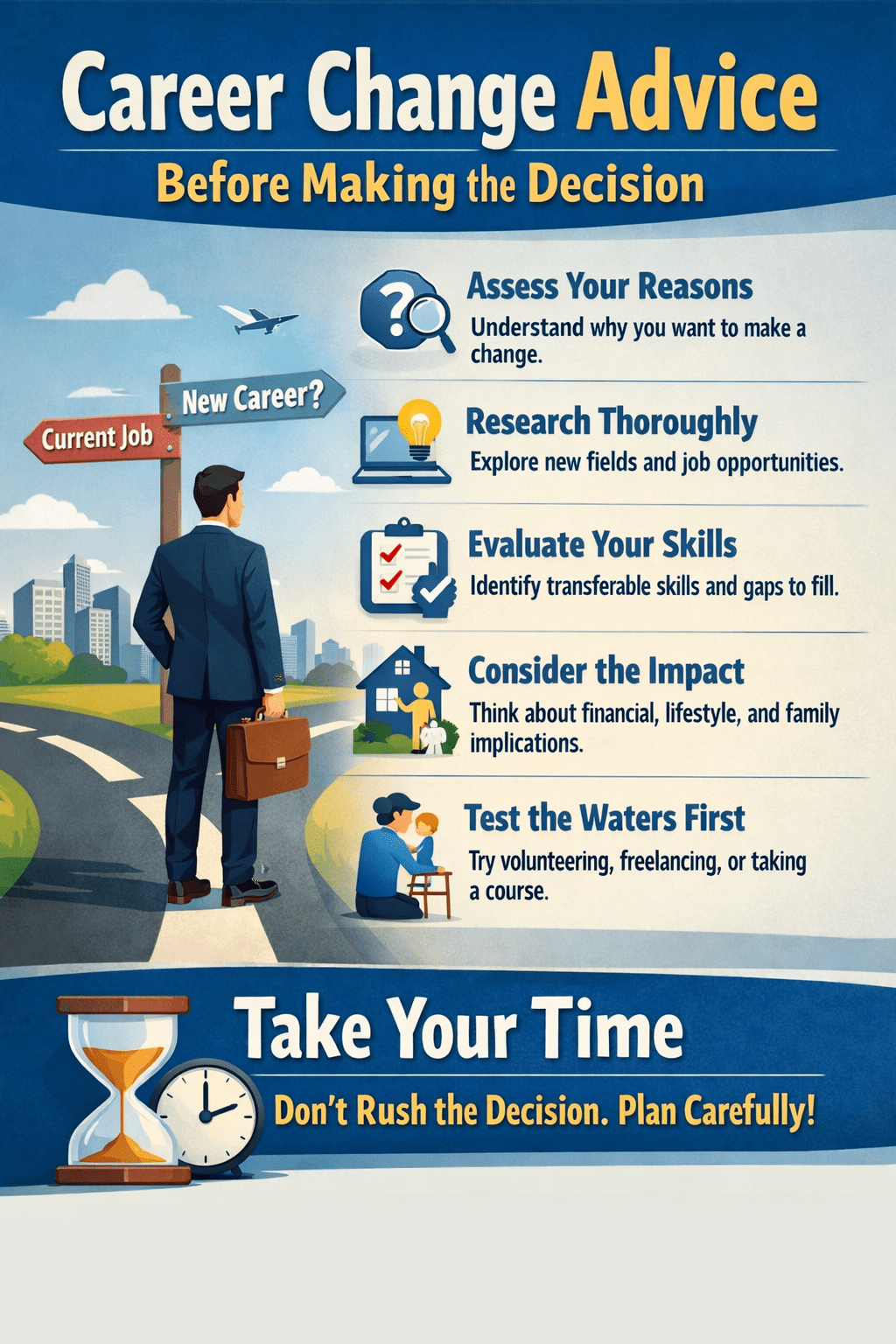
Career Change Advice Before Making the Decision
Knowing your strengths and skills is key for a smooth career shift. Before you decide to change careers, take time to review your current situation.
Assess your skills and strengths
Start by listing your skills, both hard (like programming) and soft (like teamwork). Think about:
- What are your greatest strengths?
- What skills have you developed over the years?
- What are your areas of expertise?
A report by The Gatsby Foundation shows that knowing your skills is vital. It says, “young people who have had careers guidance are more likely to be in education, employment, or training.”
Identify transferable skills
Transferable skills work in many industries and jobs. Examples include:
- Project management
- Problem-solving
- Leadership
- Time management
Knowing your transferable skills can make you stand out in a new career. As
“The key to a successful career change is to focus on the skills you have that are transferable to the new career.”
Understand your financial situation
Before changing careers, know your finances. Think about:
- What are your savings?
- What are your ongoing expenses?
- How will you support yourself during the transition?
The Australian Government’s MoneySmart website says a good financial plan can ease stress during a career change.
How to Plan a Successful Career Change
To change careers well, you need a solid plan. This means knowing why you want to change, what you’re good at, and finding a new career that fits your goals.
Research New Career Options
Looking into new career options is key. You should check out different industries, jobs, and companies to see where you’d fit best. Use online job sites and career websites to learn about various careers. Talking to people in your dream field can also give you great advice.
Key areas to research include: job demand, needed skills, pay, and chances for growth. For example, data science is in high demand, so knowing this can help you choose wisely.
Upskilling and Reskilling Strategies
Getting better at your job is vital for a career change. This means learning new skills or improving the ones you already have. Online courses, vocational training, and certifications are great ways to do this.
If you’re moving into digital marketing, you might take courses in SEO, social media, or Google Analytics. Finding the right training can really boost your chances in your new career.
Building a Career Transition Plan
A career transition plan outlines your steps to reach your career goals. It should have short-term and long-term goals, a timeline, and what resources you’ll need. Setting achievable milestones and keeping track of your progress helps you stay on track.
Your plan should also think about possible obstacles and have backup plans. For example, changing careers might mean earning less at first. Planning your finances is a big part of your transition plan.
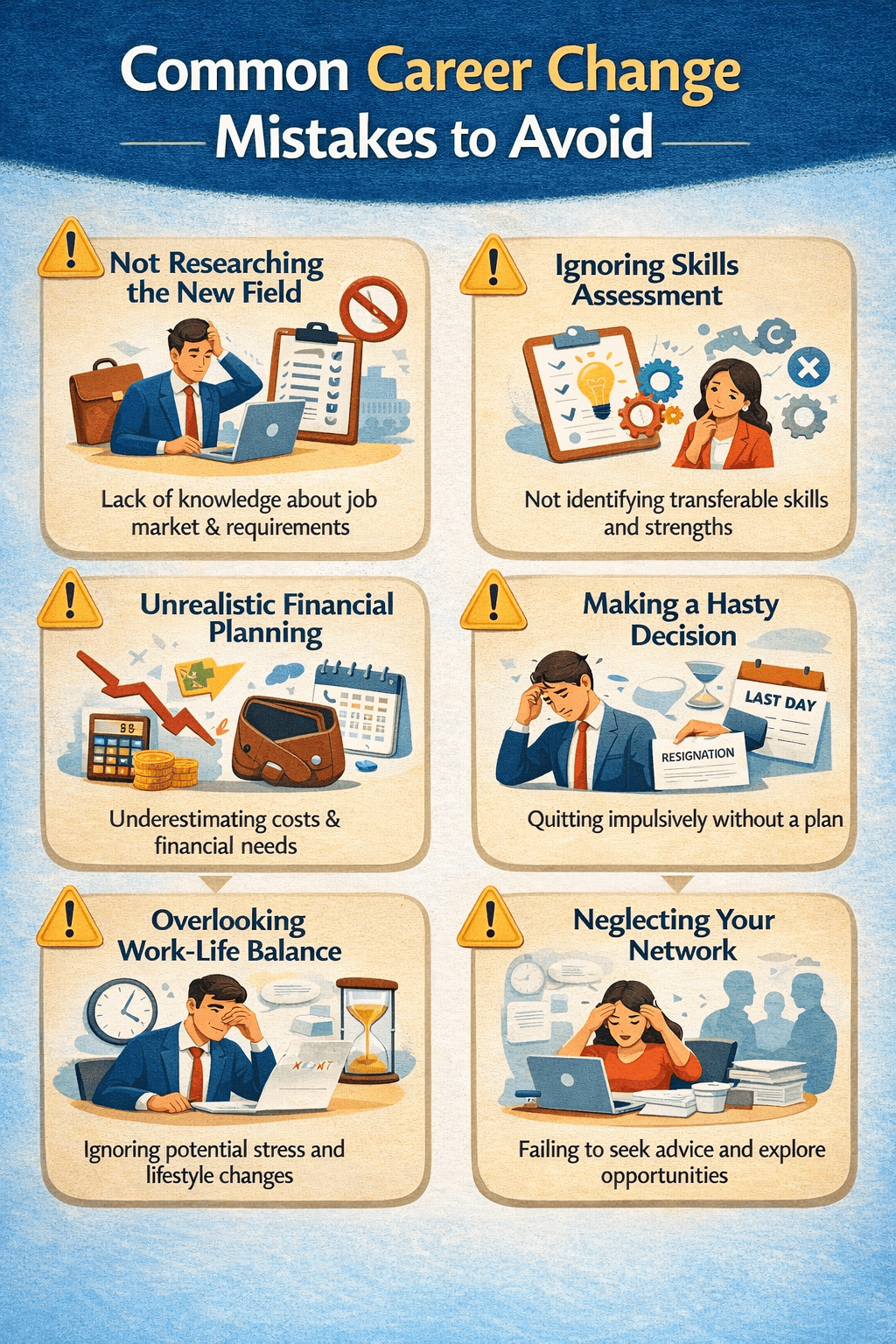
Common Career Change Mistakes to Avoid
Changing careers needs careful planning and knowing what to avoid. When you switch careers, you face many challenges. Knowing these pitfalls can help you overcome them.
Quitting without a Plan
One big mistake is quitting without a plan. It’s key to have a clear strategy before you make the switch.
- Research potential new careers thoroughly.
- Update your resume and online profiles to match the new career path.
- Network with professionals in the desired field.
For more insights on planning a successful career change, visit our section on How to Plan a Successful Career Change.
Ignoring Financial Realities
Ignoring your finances can cause a lot of stress during a career change. It’s important to know your financial situation and plan for it.
- Assess your savings and create a budget for the transition period.
- Consider the potential salary change in your new career.
- Explore financial assistance options if necessary.
Choosing Trends over Interests
Choosing a career for the wrong reasons can lead to unhappiness. It’s crucial to pick a career that matches your passions and strengths.
- Identify your core interests and skills.
- Research careers that align with these interests.
- Consider seeking advice from a career counselor.
“A career change is not just about moving to a new job; it’s about transitioning to a new life that aligns with your values and aspirations.”
John Lees, Career Expert
Understanding and avoiding common career change mistakes can make your transition much smoother.
Career Change Advice for Different Life Stages
Career changes can happen at any age. But the challenges and things to consider change with each life stage. Knowing these differences is key to a smooth career transition.
Career Change in Your 20s
Your 20s are a great time for a career switch. You might have fewer financial worries and more freedom to explore. Many people in this age group are moving from university to work or changing careers to follow their passions.
For example, a university graduate might start in a corporate job but find a love for graphic design. With some extra training, they could move into a creative field that brings them joy.
Mid-Career Change in Your 30s & 40s
Changing careers in your 30s or 40s can be harder due to financial and family commitments. Yet, this stage often brings a clearer view of what you want in life and work.
A successful mid-career change means using your current skills and learning new ones. For instance, a marketing pro in their 40s might move into digital marketing. They could do this by taking online courses and getting the right experience.
Career Change Later in Life
Changing careers later in life can be driven by many reasons. It might be to follow a long-held dream or to keep up with job market changes. Many people successfully start new careers in their 50s and beyond.
For example, a retired teacher might use their communication skills to enter corporate training or public speaking. This not only gives them a new purpose but also uses their experience and knowledge.
No matter your age, a successful career change needs careful planning, a desire to learn, and clear goals. By thinking about your life stage and using your current skills, you can smoothly transition into a new career.
How Long Does a Career Change Take?
The time it takes to change careers varies. It depends on the industry and your personal situation. Knowing this helps set realistic goals and plan well for your career shift.
Short-term vs Long-term Transitions
Career changes fall into two categories: short-term and long-term. Short-term changes might mean moving to a similar role in a new company. This can take a few months. Long-term changes, however, might need a lot of learning and can take years.
For short-term changes, consider these steps:
- Update your resume and online profiles for your new career
- Start networking with people in your desired field
- Be ready for a possible change in salary
For long-term changes, focus on:
- Investing in education or training
- Getting experience through internships or volunteering
- Building a strong professional network
Managing Expectations During Change
It’s important to manage your expectations when changing careers. Be realistic about the time and effort needed. Glassdoor says it usually takes 3-6 months, but it can vary a lot.
To manage your expectations well:
- Set clear, achievable goals for your career change
- Regularly check and adjust your plan as needed
- Stay positive and keep your long-term goals in mind
For more help managing your career change expectations, check out Career Contessa. They offer practical advice and support for those changing careers.
Is a Career Change Worth It?
Thinking about changing careers raises a big question: is it worth the risk? It’s a big decision, full of chances and hurdles.
Benefits of Changing Careers
Many people find that new careers make them happier. A study by the Harvard Business Review showed that those who changed careers felt more fulfilled.
Changing careers can also mean better job opportunities and higher pay. Learning new skills and entering a sought-after field can boost your earnings.
“I changed careers from finance to tech, and it was the best decision I ever made. Not only am I more fulfilled, but my salary has also increased significantly.” — Alex, Software Developer
Risks and Challenges to Consider
Changing careers comes with its own set of challenges. One major worry is a temporary reduction in income or a step back in job title or seniority.
Also, you might need to spend a lot of time and money on upskilling or reskilling. This can be both time-consuming and expensive.
To lessen these risks, having a solid job transition strategy is key. This includes researching the new field, networking, and possibly getting more education or certifications.
FAQ
Changing careers can feel overwhelming, and you might have many questions. We’re here to help with some common queries about career change advice and job transition tips. What should I think about when changing careers? It’s important to know why you want to change, check your skills, and look into new career paths. These steps are key to a smooth transition.
How long does it take to change careers? The time it takes varies for everyone. But, with a good plan and the right job transition tips, you can speed up the process. Is it too late to change careers? No, it’s never too late. But, think about your finances, skills, and goals before you decide. Getting career change advice can help you make a smart choice.
What are the benefits of changing careers? A career change can offer new challenges, growth opportunities, and a better work-life balance. It’s a good option for those seeking a change.
Q: What are the first steps to take when considering a career change?
A: First, assess your skills, strengths, and interests. Look for transferable skills for your new career. It’s also key to understand your finances and research new career paths.
Q: How do I know if a career change is right for me?
A: If you feel stuck or unmotivated, it might be time for a change. Think about why you want to switch careers. Weigh the good and bad sides to decide.
Q: What are some common mistakes to avoid when changing careers?
A: Don’t quit without a plan or ignore your finances. Avoid picking a career just because it’s trendy. Research and plan well for a smooth transition.
Q: How long does a typical career change take?
A: The time it takes varies. It depends on the industry, the education needed, and your situation. It can be a few months or several years.
Q: Can I change careers later in life?
A: Yes, it’s never too late. Many people change careers in their 30s, 40s, 50s, and beyond. Think about your skills, experience, and finances when planning a change.
Q: What are the benefits of changing careers?
A: Changing careers can make you happier and more fulfilled. It can improve your work-life balance and offer new challenges. It can also lead to personal growth and purpose.
Q: How do I manage my finances during a career change?
A: Understanding your finances is key. Create a budget and adjust your spending if needed. Look into financial help to support yourself during the change.
Q: What role do upskilling and reskilling play in a career change?
A: Upskilling and reskilling are crucial. They help you get the skills needed for your new career. This might involve courses, workshops, or certifications.
Q: How can I stay motivated during a career transition?
A: To stay motivated, set clear goals and celebrate small wins. Keep a positive mindset. Surround yourself with support and seek career advice.
Final Thoughts on Career Change Advice
Changing careers is a big decision that needs careful thought and planning. It’s about knowing why you want to change, understanding your strengths, and having a clear plan.
As we’ve seen, changing careers is more than just getting a new job. It’s about finding a path that matches your values, offers growth, and brings you joy. Planning and thinking it through are essential for a smooth transition.
“The biggest risk is not taking any risk… In a world that’s changing really quickly, the only strategy that is guaranteed to fail is not taking risks.” – Mark Zuckerberg
This quote highlights the need to be open to change and take smart risks. As you start your career change, remember it’s a journey of research, learning new skills, and facing challenges.
In conclusion, deciding to change careers is a big and personal choice. By following the career change guidance in this article, you can make this transition easier. The goal is to find a career that aligns with your professional aspirations and personal values, ultimately leading to a more fulfilling path.
With the right professional development advice and planning, you can explore new career path opportunities. These can lead to growth in both your personal and professional life, making your career change a valuable investment.
Good career change advice is key to a successful transition. It helps you make informed choices about your future.
About the Author & Disclosures
John Cosstick is Founder-Editor of TechLifeFuture.com and winner of the 2024 BOLD Award for Open Innovation in Digital Industries. He is a former banker, accountant, and certified financial planner. He is now a freelance journalist and author. John is a member of the Media Entertainment and Arts Alliance (Union). You can visit his Amazon author page by clicking HERE.
Reference Links:
- https://www.seek.com.au/career-advice
- https://www.linkedin.com/learning/
- https://www.yourcareer.gov.au/
- https://hbr.org/topic/subject/career-planning
- https://www.careerkey.org/
- https://www.indeed.com/career-advice
- https://www.psychologytoday.com/au/blog/career-transitions
- https://www.livecareer.com/
- https://resumegenius.com/