Executive Summary
The conversations that took place in Geneva during July 2026 may prove to be one of the most influential milestones in the evolution of global AI governance.

For one week, governments, international organisations, standards bodies, regulators, technology companies, academics, and civil society gathered to discuss how artificial intelligence should be governed as it becomes increasingly capable of acting independently. The inaugural UN Global Dialogue on AI Governance, the AI for Good Global Summit, and several standards initiatives all shared a common objective: building a safer, more trustworthy future for AI.
The progress was significant.
New international institutions were launched. Existing governance frameworks gained momentum. Technical discussions increasingly focused on identity, trust, interoperability, and the governance of autonomous AI agents rather than simply the ethical principles surrounding artificial intelligence.
Yet beneath this progress lies an important question that remains largely unanswered.
How can organisations prove that AI governance controls actually operated when an AI system made a significant decision?
That question sits at the heart of this article.
Most existing AI governance frameworks explain what organisations should do. They encourage responsible development, human oversight, risk management, transparency, accountability, and regulatory compliance. These remain essential foundations.
However, enterprise governance increasingly requires something more practical.
Organisations must be able to demonstrate – not merely declare – that governance controls functioned exactly as intended when AI systems acted.
For example:
- Was human approval genuinely obtained before an autonomous AI executed a high-risk action?
- Which governance policy authorised that action?
- Which identity initiated it?
- Can the organisation reconstruct the entire decision months later during an audit?
- Can regulators independently verify those records?
These questions become increasingly important as organisations deploy agentic AI capable of interacting with software, APIs, external systems, and even other AI agents without requiring continuous human supervision.
This article examines what Geneva 2026 achieved, where current international governance frameworks remain strong, and where significant gaps still exist between governance principles and operational evidence.
Drawing on TechLifeFuture’s review of 47 AI governance initiatives, standards, conference materials, and regulatory instruments, the analysis explores how AI governance is evolving through five increasingly demanding stages:
- Governance Principles
- Governance Requirements
- Operational Controls
- Verifiable Evidence
- Continuous Operational Assurance
The findings suggest that international governance has matured considerably at the policy level. By contrast, relatively few initiatives currently explain how organisations should generate interoperable, audit-ready evidence capable of demonstrating that governance controls actually operated in production environments.
This article therefore argues that the next major evolution in AI governance may not be another set of principles.
It may be the creation of a shared evidence layer capable of proving that governance worked when it mattered most.
Why This Matters
Imagine this scenario.
An AI procurement agent approves a multi-million-dollar supplier contract after evaluating hundreds of proposals.
The organisation has documented governance policies.
Risk committees approved the deployment.
Human oversight procedures were defined.
Access controls were configured.
Months later, internal auditors begin reviewing the transaction.
Many organisations would struggle to answer.
Not because they lack governance policies.
But because policies alone rarely prove operational behaviour.
Historically, governance programs focused on documentation.
Organisations created policies.
They established committees.
They assigned responsibilities.
They conducted periodic reviews.
These practices remain essential.
However, autonomous AI introduces a different challenge.
Instead of asking,
“Do governance policies exist?”
Boards, regulators, insurers, and auditors increasingly ask,
“Can governance be independently verified?”
That distinction changes everything.
As AI systems begin planning tasks, invoking external tools, interacting with multiple software platforms, and making decisions with limited human intervention, proving accountability becomes considerably more difficult than documenting compliance.
Traditional audit logs may show that an action occurred.
They often do not show:
- who delegated authority,
- which policy was evaluated,
- whether required approvals happened before execution,
- whether permissions changed during execution,
- or whether records remained tamper-evident afterward.
This emerging evidence challenge explains why discussions in Geneva increasingly shifted toward operational concepts such as digital identity, trust management, runtime controls, delegated authority, and interoperability.
Although each organisation approached the problem differently, a common theme emerged.
The future of AI governance will depend not only on defining responsible behaviour – but on proving that responsible behaviour occurred.
What Readers Will Learn
By the end of this article, you will understand:
- Why Geneva Digital Week 2026 represents a turning point in international AI governance.
- How the UN Global Dialogue, AI for Good Global Commission, and FG-TIDA serve different governance roles.
- Why governance principles alone are no longer sufficient for enterprise assurance.
- How the concept of AI governance evidence differs from traditional compliance documentation.
- What TechLifeFuture’s evidence review reveals about the current maturity of international AI governance.
- Why agentic AI creates new governance challenges that traditional audit models were not designed to address.
- What enterprises, regulators, boards, and technology leaders can do today to prepare for the next generation of AI governance.
Key Takeaways
Geneva 2026 successfully strengthened global AI governance institutions. The next challenge is operational rather than political: developing reliable, interoperable evidence that demonstrates AI governance controls actually worked when consequential decisions were made.

Geneva Digital Week 2026: The Week AI Governance Became Operational
“Geneva did not create a global AI regulator. It did something arguably more important: it established permanent institutions and accelerated the technical work needed to govern increasingly autonomous AI systems.“
Geneva Digital Week 2026: From Global Dialogue to Technical Implementation
July 2026 marked a significant moment in the evolution of international AI governance – not because governments reached a single binding agreement, but because governance discussions matured beyond high-level principles into long-term institutional cooperation and technical implementation.
For years, global conversations about artificial intelligence focused primarily on ethics, fairness, transparency, and responsible innovation. These discussions established important foundations, but they often remained fragmented across governments, standards organisations, industry groups, and academic institutions.
Geneva Digital Week 2026 represented a different stage of maturity.
Instead of asking whether AI should be governed, international stakeholders increasingly focused on how governance should operate in practice – particularly as AI systems become capable of making decisions, interacting with external services, and collaborating with other autonomous systems.
That evolution makes Geneva noteworthy. Rather than introducing one new framework, the week connected political dialogue, international cooperation, technical standardisation, and industry implementation into a more coordinated governance ecosystem.
A Week Built Around Complementary Events
One reason Geneva Digital Week stood out was the deliberate sequencing of its major events.
The week began with the inaugural UN Global Dialogue on AI Governance (6–7 July 2026) and transitioned directly into the AI for Good Global Summit (7–10 July 2026). The two events were deliberately scheduled back-to-back. It created a bridge between diplomatic discussions and technical implementation, allowing policy conversations to flow directly into standards development and industry collaboration.
Rather than operating in isolation, the events reinforced one another:
| Event | Primary Purpose | Main Contribution |
|---|---|---|
| UN Global Dialogue on AI Governance | International cooperation | Government dialogue, shared governance priorities, capacity building |
| AI for Good Global Summit | Technical collaboration | Industry engagement, standards discussions, practical AI deployment |
| Standards Initiatives (including FG-TIDA) | Technical foundations | Identity, trust, interoperability, and governance mechanisms for agentic AI |
Together, these events demonstrated that effective AI governance requires more than regulation alone. It also depends on internationally coordinated technical standards, interoperable governance practices, and ongoing collaboration between governments, industry, researchers, and standards bodies.
Governance Is Becoming a Continuous Process
Another important shift highlighted during Geneva Digital Week was the move away from one-off conferences toward recurring international governance.
Historically, many global AI meetings produced declarations, recommendations, or voluntary commitments before participants returned home. Progress often depended on what individual governments or Organisations chose to do afterward.
The UN Global Dialogue introduces a different model.
It was established by UN General Assembly Resolution A/RES/79/325 as a recurring international platform, with a second session already planned for May 2027 in New York. This signals that AI governance is increasingly being treated as an ongoing international process rather than a series of isolated events.
That continuity matters.
Artificial intelligence evolves far more quickly than traditional regulatory cycles. New models, capabilities, and deployment methods emerge within months rather than years. A recurring governance forum creates opportunities to revisit emerging risks, evaluate implementation progress, and coordinate international responses as technologies evolve.
Why Agentic AI Changed the Conversation
One of the strongest themes running throughout Geneva Digital Week was the growing focus on agentic AI.
Unlike traditional AI systems that primarily generate recommendations or assist human decision-makers, agentic AI systems are designed to interpret goals, create plans, invoke tools, interact with APIs, and execute actions with varying degrees of autonomy.
This article uses FG-TIDA’s framing of agentic AI: systems that can perform tasks without requiring human approval at every individual step.
This distinction has important governance implications.
A chatbot that drafts an email still depends on a human to decide whether to send it.
An autonomous procurement agent, however, may negotiate with suppliers, compare contracts, select vendors, and initiate purchases automatically.
Similarly, an AI security agent might isolate compromised systems, revoke credentials, or block network traffic without waiting for manual approval.
As AI systems become capable of taking consequential actions on behalf of organisations, governance questions naturally become more operational:
- Which identity authorised the AI to act?
- What limits were placed on its authority?
- Which policies were evaluated before execution?
- How can those decisions be reconstructed during an audit?
These questions extend beyond ethics into the domains of identity management, authorisation, auditability, and operational assurance.
A Shift from Principles to Implementation
For much of the past decade, international AI governance emphasised broad principles such as fairness, transparency, accountability, safety, and human oversight.
Those principles remain essential.
However, Geneva illustrated that the conversation is gradually expanding beyond what responsible AI should look like toward how responsible AI can be implemented and demonstrated in operational environments.
This transition is subtle but significant.
Earlier governance initiatives largely focused on defining expectations.
Current discussions increasingly explore the mechanisms required to implement those expectations consistently across organisations, industries, and jurisdictions.
Examples include:
- Digital identity for AI agents
- Trust frameworks
- Delegated authority
- Runtime governance
- Technical interoperability
- Governance evidence
- Continuous assurance
Collectively, these topics suggest that international governance is entering a more operational phase – one in which governance frameworks must support not only policy development but also implementation, verification, and independent assurance.
Why Geneva Matters Beyond 2026
It is tempting to judge conferences by the announcements made during the event itself.
Geneva’s longer-term significance, however, may depend less on individual announcements than on the institutional relationships it strengthened.
The week demonstrated increasing alignment between:
- governments developing policy,
- standards organisations building technical guidance,
- regulators considering future oversight,
- industry implementing AI systems,
- and researchers studying emerging governance challenges.
No single organisation currently possesses all the tools needed to govern increasingly autonomous AI.
Instead, Geneva highlighted a distributed governance model in which different institutions contribute complementary pieces of a larger international framework.
Whether that framework ultimately succeeds will depend not only on future policy development but also on whether organisations can translate governance principles into practical, verifiable operational controls.
Key Takeaways
Geneva Digital Week 2026 did not produce a single global AI rulebook. Instead, it connected international policy, technical standards, and industry collaboration into a recurring governance ecosystem. The conversation is shifting from defining responsible AI to demonstrating that responsible AI governance actually operates in practice.
Reference Links:
- UN Global Dialogue on AI Governance, Geneva 6–7 July 2026 – UNESCO announcement
- AI for Good Global Summit 2026 programme – ITU
- FAQ – Global Dialogue on AI Governance (second session, May 2027, New York

The Three Institutions Shaping the Future of AI Governance
“One of Geneva’s most significant achievements was not the creation of a single global AI authority. Instead, it strengthened three complementary institutions, each addressing a different dimension of international AI governance.”
Three Institutions, Three Different Missions
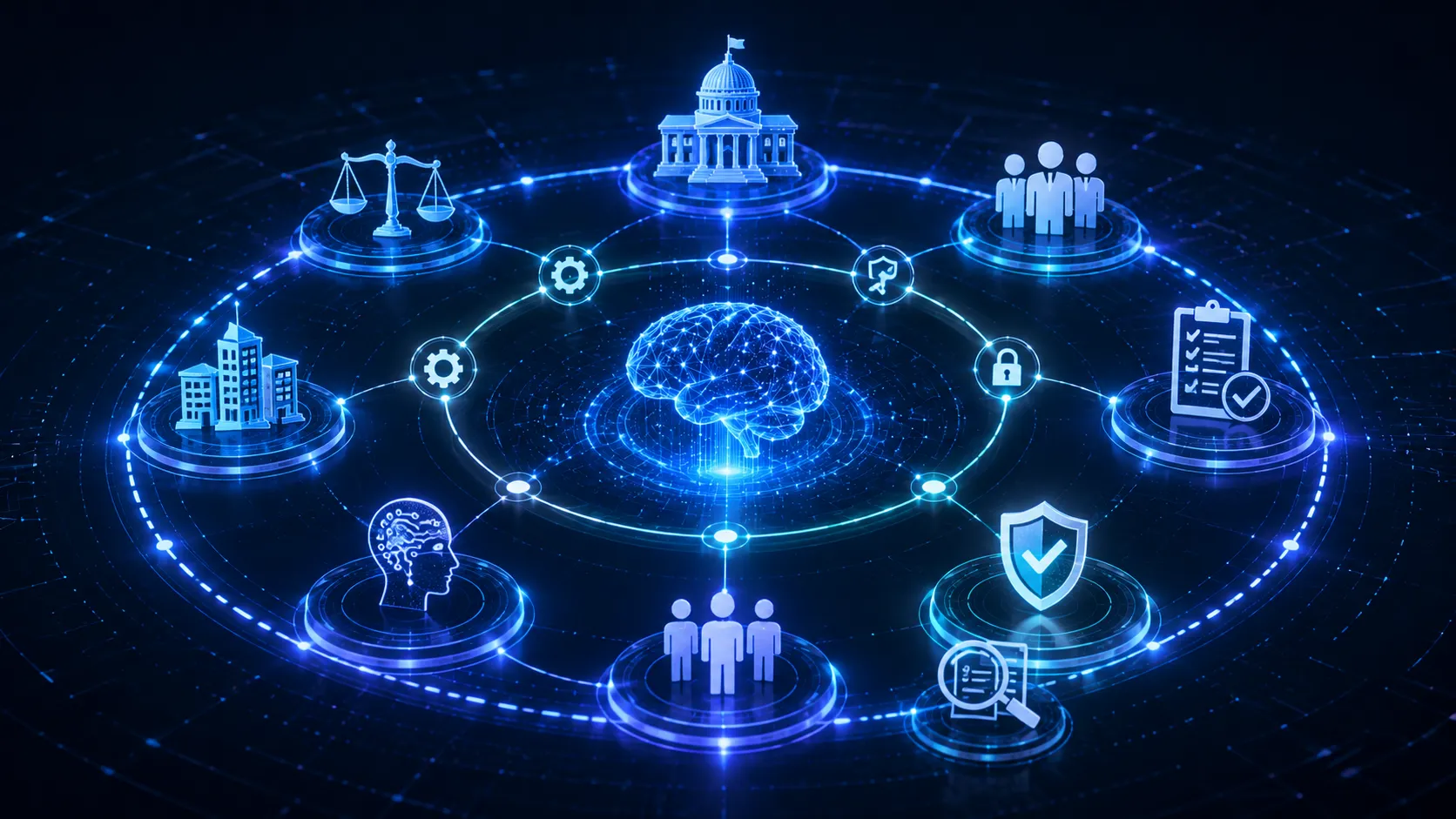
One of the most important insights from Geneva Digital Week 2026 is that AI governance is becoming an ecosystem rather than a single regulatory framework.
Unlike financial regulation or aviation safety – where one organisation often serves as the primary international authority – AI governance is distributed across multiple institutions, each with a distinct mandate and area of expertise.
Three initiatives collectively illustrate this emerging governance architecture:
- The United Nations Global Dialogue on AI Governance
- The AI for Good Global Commission
- ITU-T Focus Group on Trust and Identity for Humans and Agentic AI (FG-TIDA)
Although these initiatives were announced or advanced during the same period, they should not be viewed as competing organisations. Instead, they represent complementary layers of governance, addressing international policy, strategic coordination, and technical implementation respectively.
Understanding the distinct role of each institution helps explain both the progress made in Geneva and the challenges that remain.
1. United Nations Global Dialogue on AI Governance
Building a Permanent Forum for International Cooperation
The inaugural UN Global Dialogue on AI Governance, held on 6–7 July 2026, marked a significant institutional development in global AI policy. The Dialogue was established as a recurring international platform rather than a one-time conference, with a second session already scheduled for May 2027 in New York.
This distinction matters.
Many previous international AI meetings concluded with declarations or voluntary commitments but lacked a structured mechanism for ongoing collaboration. The Global Dialogue introduces continuity by providing governments with a forum to revisit emerging challenges, evaluate progress, and coordinate responses as AI technologies evolve.
Its primary objectives include:
- Encouraging international cooperation on AI governance.
- Supporting knowledge sharing between countries at different stages of AI adoption.
- Promoting capacity building and inclusive participation.
- Facilitating dialogue on policy priorities and emerging governance challenges.
Rather than creating binding global regulations, the Dialogue seeks to strengthen coordination across jurisdictions and reduce fragmentation in international AI governance.
Why It Matters
As AI technologies increasingly cross national borders, inconsistent governance approaches can create legal uncertainty, compliance burdens, and uneven levels of protection. A recurring global dialogue helps governments identify shared priorities while respecting national differences in regulation and implementation.
Reference Links:
- Global Dialogue on AI Governance – official UN site
- Resolution A/RES/79/325 background – Global Digital Compact
2. AI for Good Global Commission
Connecting Policy with Real-World Implementation
If the UN Global Dialogue focuses primarily on international cooperation, the AI for Good Global Commission represents a complementary effort to connect governance discussions with practical implementation.
Launched on 2 July 2026, the Commission is co-chaired by Rwanda’s President Paul Kagame and Salesforce Chair and CEO Marc Benioff, with ITU Secretary-General Doreen Bogdan-Martin as Vice-Chair. It builds on the model of the ITU/UNESCO Broadband Commission for Sustainable Development, which shaped global priorities for connectivity and digital inclusion. Its more than 40 Founding Members span heads of state and government, industry chief executives and heads of UN agencies, and it held its inaugural meeting during the AI for Good Global Summit in Geneva.
The Commission expands this work by encouraging collaboration across sectors and disciplines.
Its role is not to regulate AI directly but to help translate governance principles into practical initiatives that organisations can implement.
Key areas of focus include:
- Encouraging responsible AI deployment.
- Promoting international collaboration.
- Supporting technical innovation aligned with public interest.
- Identifying governance priorities for emerging technologies.
- Facilitating cooperation between policymakers, industry, and researchers.
Why It Matters
Good governance requires more than regulations.
Organisations also need practical guidance, technical expertise, and opportunities to share implementation experiences.
The Commission helps bridge the gap between policy discussions and operational reality by creating a forum where governance challenges can be explored collaboratively rather than solely through regulation.
Reference Link:
3. FG-TIDA: Building Trust for Autonomous AI
From Human Identity to Machine Identity
Perhaps the most technically significant development of the week was the creation of the ITU-T Focus Group on Trust and Identity for Humans and Agentic AI (FG-TIDA).
Unlike the previous two institutions, FG-TIDA concentrates on a highly specific challenge:
How can increasingly autonomous AI agents be identified, trusted, and governed when interacting with digital systems and one another?
This question has become increasingly important as AI systems evolve beyond simple assistants into autonomous software agents capable of:
- planning multi-step tasks,
- invoking external tools,
- accessing APIs,
- interacting with enterprise software,
- exchanging information with other AI agents,
- and executing actions with limited human intervention.
Traditional identity systems were designed primarily for people.
Agentic AI introduces new governance questions.
For example:
- How should an AI agent authenticate itself?
- How can organisations verify delegated authority?
- How should trust be established between autonomous systems?
- How can actions performed by AI agents be traced during an audit?
FG-TIDA explores these foundational technical questions by bringing together experts in digital identity, trust frameworks, interoperability, and AI governance.
Why It Matters
Without trusted identity mechanisms, organisations may struggle to answer basic governance questions such as:
- Which AI agent performed this action?
- Was it authorised?
- Which policies applied?
- Can the decision be reconstructed later?
These challenges become increasingly significant as enterprises deploy multiple autonomous agents operating across cloud platforms, enterprise applications, and external digital services.
Reference Links:
- ITU-T Focus Group on Trust and Identity for Humans and Agentic AI (FG-TIDA) – official page
- TIDA Community home page
Comparing the Three Institutions
Although the three initiatives were frequently discussed together during Geneva Digital Week, they perform fundamentally different functions.
| Institution | Primary Role | Main Contribution |
|---|---|---|
| UN Global Dialogue on AI Governance | International policy coordination | Builds long-term cooperation among governments and supports recurring global governance dialogue. |
| AI for Good Global Commission | Strategic collaboration | Connects policymakers, researchers, industry, and civil society to encourage responsible AI implementation. |
| FG-TIDA | Technical standardisation | Explores trusted identity, interoperability, and governance mechanisms for autonomous AI agents. |
Rather than competing, these institutions reinforce one another.
The Global Dialogue creates political momentum.
The Commission encourages practical collaboration.
FG-TIDA addresses technical challenges that increasingly determine whether governance can be implemented effectively in real-world systems.
What the Three Institutions Reveal About the Future of AI Governance
Viewed together, these initiatives illustrate an important shift in the international governance landscape.
Early AI governance efforts focused largely on developing ethical principles and regulatory expectations.
Geneva suggests that governance is becoming more comprehensive.
Future governance will likely require:
- international cooperation,
- practical implementation guidance,
- technical interoperability,
- trusted digital identities,
- operational governance controls,
- and mechanisms capable of demonstrating accountability across increasingly autonomous AI ecosystems.
No single institution can address every dimension of this challenge.
Instead, governance is evolving into a distributed ecosystem in which different organisations contribute complementary capabilities.
This distributed model reflects the complexity of modern AI itself.
As AI systems become more autonomous, governance must operate across legal, organisational, technical, and operational domains simultaneously.
Key Takeaways
The three institutions highlighted during Geneva Digital Week 2026 are not alternative governance models – they are complementary pillars of an emerging international AI governance ecosystem. The UN Global Dialogue strengthens international cooperation, the AI for Good Global Commission connects governance with implementation, and FG-TIDA explores the technical foundations needed to establish trust and accountability for autonomous AI systems.
From Governance Principles to Governance Evidence
The Next Evolution of AI Governance
Geneva Digital Week 2026 demonstrated that international AI governance has entered a new stage of institutional maturity. Governments are collaborating more closely, standards organisations are expanding their work, and enterprises are adopting increasingly sophisticated governance frameworks.
Yet one fundamental question remains only partially addressed:
How can organisations prove that governance controls actually operated when AI systems made important decisions?
This question represents the central finding of TechLifeFuture’s research.
Across the initiatives reviewed, governance frameworks provide extensive guidance on principles, responsibilities, risk management, transparency, accountability, and oversight. However, comparatively fewer frameworks explain how organisations should generate verifiable, interoperable evidence that governance controls functioned as intended in production environments.
This distinction – the difference between governance design and governance proof – forms the basis of what this article refers to as the AI Governance Evidence Gap.
It is not a criticism of existing frameworks. Rather, it reflects the rapid evolution of AI systems and the increasing need for governance mechanisms that extend beyond documentation into operational assurance.
Understanding the Difference: Governance vs. Governance Evidence
Many organisations use the terms governance, compliance, and audit interchangeably. In practice, they address different questions.
| Governance Element | Primary Question | Typical Output |
|---|---|---|
| Governance Principles | What values and objectives should guide AI? | Policies, ethical principles, governance charters |
| Governance Requirements | What obligations must organisations satisfy? | Standards, regulations, internal controls |
| Operational Controls | How are governance requirements implemented? | Approval workflows, monitoring systems, access controls |
| Governance Evidence | Can the organisation prove those controls operated correctly? | Logs, approvals, identity records, policy evaluations, immutable evidence |
| Operational Assurance | Can governance be continuously verified over time? | Continuous monitoring, assurance reporting, independent verification |
This progression illustrates why governance is no longer limited to policy creation.
As AI systems become more autonomous, organisations increasingly need evidence capable of demonstrating that governance controls operated exactly when AI systems executed significant actions.
Why Traditional Governance Is No Longer Enough
Traditional governance models evolved around human decision-making.
A manager approved a transaction.
A committee reviewed a proposal.
An executive signed a document.
Each step generated relatively straightforward evidence.
Autonomous AI changes this model.
An AI system may:
- evaluate hundreds of alternatives,
- invoke multiple external services,
- communicate with other software agents,
- perform complex reasoning,
- and execute actions within seconds.
The governance challenge therefore shifts from documenting intentions to reconstructing operational behaviour.
Organisations must increasingly answer questions such as:
- Who delegated authority to the AI?
- Which governance policy applied?
- What operational limits existed?
- Did required human approvals occur?
- Which version of the model was deployed?
- Were policy exceptions granted?
- Can the complete decision chain be reconstructed months later?
Many governance frameworks recognise these concerns conceptually.
Fewer specify the evidence architecture needed to answer them consistently across organisations.
The Auditor’s Question
To understand why governance evidence matters, consider a realistic enterprise scenario.
An autonomous financial AI approves a high-value payment after analysing contractual obligations, supplier performance, and internal procurement rules.
The transaction appears successful.
Nothing fails.
No alarms trigger.
Six months later, external auditors request evidence supporting the approval.
Their questions may include:
- Which AI system initiated the payment?
- Who authorised its operational scope?
- Which governance policy permitted autonomous execution?
- Were spending limits exceeded?
- Was human approval required?
- If so, where is the evidence?
- Can the organisation demonstrate that governance controls were enforced before execution?
These questions cannot always be answered by policy documents alone.
Policies describe expectations.
Evidence demonstrates reality.
That distinction is becoming increasingly important as AI assumes greater operational responsibility across finance, healthcare, cybersecurity, manufacturing, and public administration.
Introducing the AI Governance Evidence Gap
TechLifeFuture reviewed 47 governance initiatives, standards, regulatory instruments, and conference materials associated with Geneva Digital Week and the broader international AI governance landscape. The review found strong coverage of governance principles, accountability, transparency, and risk management. By comparison, relatively limited guidance addressed standardised approaches for generating interoperable governance evidence capable of supporting audits and operational assurance.
This observation forms the basis of the AI Governance Evidence Gap.
The gap does not suggest that governance frameworks are inadequate.
Instead, it highlights an emerging implementation challenge.
Organisations increasingly know what they should govern.
Many still lack consistent guidance on how to prove governance occurred when autonomous AI systems acted.
A Five-Layer Governance Maturity Model
One way to understand this evolution is to view AI governance as a series of progressively more demanding capabilities.
Level 1: Governance Principles
Organisations establish ethical commitments, governance objectives, and accountability structures.
Typical outputs include:
- AI principles
- Governance policies
- Ethical guidelines
Level 2: Governance Requirements
Organisations translate principles into formal obligations.
Examples include:
- Regulatory compliance
- Internal governance standards
- Risk management processes
- Documentation requirements
Level 3: Operational Controls
Governance becomes embedded within operational systems.
Examples include:
- Identity management
- Human approval workflows
- Access controls
- Model monitoring
- Policy enforcement
Level 4: Governance Evidence
Organisations generate reliable evidence demonstrating that governance controls operated correctly during AI execution.
Potential evidence may include:
- Identity verification
- Policy evaluation records
- Authorisation decisions
- Workflow approvals
- Event logs
- Decision histories
TechLifeFuture’s review identifies this layer as the area requiring the most attention across international governance initiatives.
Level 5: Continuous Operational Assurance
Governance evolves from periodic audits toward continuous verification.
Organisations monitor governance performance in near real time, enabling regulators, boards, and auditors to assess operational effectiveness throughout the AI lifecycle rather than only during scheduled reviews.
While aspects of continuous monitoring appear across several governance discussions, the reviewed materials indicate that comprehensive operational assurance remains an evolving area rather than a universally established practice.
Why Evidence Will Matter More Than Ever
The rapid growth of agentic AI changes the economics of governance.
A single autonomous AI system may perform thousands of actions every day.
Manual oversight becomes increasingly impractical.
Consequently, organisations will rely more heavily on automated governance controls and the evidence those controls generate.
This evidence supports multiple stakeholders:
| Stakeholder | Why Governance Evidence Matters |
|---|---|
| Boards | Demonstrates oversight and accountability. |
| Executives | Confirms governance policies operate effectively. |
| Risk Teams | Supports operational risk management. |
| Auditors | Enables independent verification of AI controls. |
| Regulators | Assesses compliance with governance obligations. |
| Insurers | Evaluates governance maturity and operational resilience. |
| Customers | Builds trust in AI-enabled services. |
As AI becomes embedded across critical business functions, the ability to produce trustworthy governance evidence may become a competitive advantage rather than merely a compliance obligation.
Key Takeaways
Governance frameworks increasingly explain what organisations should do. The next frontier is demonstrating that governance controls actually worked. As AI systems become more autonomous, operational evidence – not just documented policy – may become the foundation of trustworthy AI governance.
Reference Link:
Evidence Audit: What the Research Reveals About the Current State of AI Governance
Research Methodology
To understand how international AI governance is evolving beyond high-level principles, TechLifeFuture conducted a structured review of 47 AI governance initiatives, standards, regulatory instruments, technical publications, and conference outputs identified during Geneva Digital Week 2026 and the surrounding period. The objective was not to rank organisations or determine which framework is “best.” Instead, the review examined how comprehensively current initiatives address the governance lifecycle – from policy development to operational assurance.
The analysis focused on five governance dimensions introduced earlier in this article:
- Governance Principles
- Governance Requirements
- Operational Controls
- Governance Evidence
- Continuous Operational Assurance
Each initiative was evaluated against these dimensions to identify where international guidance is already well developed and where additional work may be needed.
It is important to note that this assessment reflects the scope of the 47-source research corpus used in this review. It should not be interpreted as a comprehensive evaluation of every AI governance initiative worldwide. Additional frameworks may address areas that fall outside the reviewed materials.
Research Objective
Rather than asking:
“Which governance framework is the strongest?”
the research asked a more practical question:
“How well do today’s governance initiatives explain how organisations can prove that governance controls actually operated when AI systems made important decisions?”
That shift in perspective is important.
Many governance frameworks were developed before the rapid emergence of highly autonomous AI agents capable of independently planning tasks, invoking external services, and making operational decisions.
Consequently, governance guidance has historically emphasised policy, risk management, oversight, and accountability, while giving comparatively less attention to runtime evidence and operational verification.
Evaluation Framework
Each governance initiative was reviewed against a common set of assessment criteria.
1. Governance Principles
Does the initiative define:
- Responsible AI objectives?
- Ethical principles?
- Accountability expectations?
- Governance responsibilities?
2. Governance Requirements
Does it specify:
- Regulatory obligations?
- Organisational responsibilities?
- Risk management expectations?
- Documentation requirements?
3. Operational Controls
Does it provide guidance regarding:
- Human oversight
- Identity management
- Access controls
- Policy enforcement
- Operational monitoring
4. Governance Evidence
Does it explain how organisations should demonstrate that governance controls actually operated?
Examples include:
- approval evidence
- identity verification
- decision records
- policy evaluation logs
- governance audit trails
- tamper-evident records
5. Continuous Operational Assurance
Does the framework support:
- continuous governance monitoring?
- ongoing verification?
- runtime assurance?
- operational transparency after deployment?
What the Review Found
Across the reviewed materials, one clear pattern emerged.
International AI governance has made substantial progress in defining governance expectations.
Most frameworks provide detailed guidance on:
- governance principles,
- responsible AI,
- accountability,
- organisational responsibilities,
- transparency,
- risk management,
- documentation,
- oversight.
These represent significant achievements and provide the foundation upon which effective governance programs should be built.
However, the review identified comparatively less guidance addressing how governance should be demonstrated operationally after deployment, particularly for increasingly autonomous AI systems.
This does not indicate that existing frameworks are incomplete or ineffective.
Rather, it suggests that governance is evolving.
The next phase may require stronger emphasis on implementation evidence in addition to governance design.
Where Current Frameworks Are Strong
The reviewed initiatives consistently perform well in several areas.
Governance Foundations
Nearly all major initiatives establish clear governance objectives, organisational accountability, and responsible AI principles.
These documents answer questions such as:
- Who is responsible?
- Which risks should be managed?
- What governance structures should exist?
- Which ethical principles should guide AI?
This represents a mature and increasingly consistent area of international AI governance.
Risk Management
Risk identification and mitigation receive extensive attention throughout the reviewed materials.
Frameworks commonly address:
- AI risk assessment
- lifecycle governance
- impact evaluation
- monitoring expectations
- documentation
- organisational accountability
This reflects the growing recognition that AI governance must extend beyond technical performance to include organisational risk management.
Transparency and Accountability
Transparency remains one of the strongest themes across the governance landscape.
Common recommendations include:
- documenting AI systems,
- explaining governance decisions,
- assigning accountability,
- maintaining records,
- supporting regulatory review.
These practices establish an important foundation for trustworthy AI deployment.
Where Opportunities Remain
The research also identified several areas where governance discussions appear to be evolving.
Governance Evidence
Many initiatives require organisations to document governance activities.
Fewer explain how organisations should generate standardised evidence capable of proving governance controls operated during AI execution.
Examples include:
- policy evaluation evidence,
- delegated authority records,
- AI identity verification,
- approval validation,
- runtime governance logs.
As AI autonomy increases, these evidence mechanisms may become increasingly important for auditability and accountability.
Interoperability
Organisations rarely operate within a single governance framework.
Large enterprises often combine:
- ISO standards,
- national regulations,
- internal governance policies,
- industry requirements,
- cloud platform controls.
The reviewed materials suggest growing interest in interoperability, although standardised governance evidence across multiple frameworks remains an area of active development.
Runtime Assurance
Governance traditionally focuses on planning, implementation, and periodic review.
Autonomous AI increasingly requires governance that operates continuously.
Future governance may depend upon:
- ongoing monitoring,
- continuous verification,
- automated policy enforcement,
- operational assurance throughout the AI lifecycle.
The reviewed materials indicate that this area is receiving increasing attention but remains comparatively less mature than governance policy itself.
Interpreting the Findings
One of the most important conclusions from the review is what it does not claim.
The research does not argue that existing governance initiatives have failed.
Nor does it suggest that entirely new governance frameworks are required.
Instead, the findings indicate that international governance is progressing through natural stages of maturity.
The first stage emphasised ethical AI.
The second emphasised governance frameworks.
The third focused on organisational implementation.
The emerging fourth stage increasingly asks:
How can governance be independently demonstrated through trustworthy operational evidence?
Viewed this way, governance evidence should not be seen as replacing existing standards.
Instead, it complements them by strengthening their implementation.
Practical Implications for Organisations
Organisations preparing for future governance expectations should begin asking practical operational questions today:
- Can we reconstruct AI decisions after deployment?
- Do we know which policies governed each action?
- Can we demonstrate delegated authority?
- Can we identify every AI system involved in a decision?
- Are governance records protected against unauthorised modification?
- Could an external auditor independently verify our governance process?
Answering these questions now may significantly improve future governance readiness, regardless of which regulatory framework ultimately applies.
Research Summary
The TechLifeFuture review suggests three overarching observations:
- International AI governance has matured significantly at the policy and institutional level.
- Operational implementation is receiving increasing attention as organisations deploy more autonomous AI systems.
- Governance evidence – demonstrating that controls actually operated – appears to represent an emerging area for future standards development, technical implementation, and enterprise governance practice.
These observations align with the central thesis of this article: the future of trustworthy AI governance will depend not only on establishing governance principles, but also on demonstrating that those principles functioned in practice.
Key Takeaways
The evidence audit found that current AI governance frameworks provide strong guidance on principles, accountability, and risk management. The next frontier is helping organisations generate verifiable, interoperable evidence that governance controls actually operated when autonomous AI systems made consequential decisions.
Reference Links:
Framework Comparisons: Where Today’s AI Governance Frameworks Converge
Comparing Today’s Leading AI Governance Frameworks
One of the clearest findings from the TechLifeFuture review is that modern AI governance is not built around a single global standard. Instead, organisations operate within a growing ecosystem of complementary frameworks, each designed to solve a different governance challenge.
Some focus on management systems.
Others emphasise risk management.
Some establish legal obligations.
Others provide technical implementation guidance.
Collectively, these initiatives create a stronger governance ecosystem than any individual framework could achieve on its own. However, the review also suggests that comparatively fewer frameworks provide detailed guidance on operational governance evidence – the ability to demonstrate that governance controls actually functioned when AI systems made consequential decisions.
Rather than ranking these frameworks, this section examines the unique contribution each makes to the broader governance landscape.
ISO/IEC 42001: Establishing AI Management Systems
What It Does Well
ISO/IEC 42001 represents one of the world’s first international management system standards specifically developed for artificial intelligence.
Its primary objective is Organisational governance.
Like other ISO management system standards, it encourages organisations to establish structured governance processes covering:
- leadership responsibilities,
- governance policies,
- risk management,
- documented procedures,
- continual improvement,
- operational oversight.
The standard helps organisations embed AI governance into everyday business operations instead of treating governance as a standalone compliance exercise.
Primary Strengths
- Organisational governance
- Management systems
- Governance documentation
- Continuous improvement
- Executive accountability
Where Organisations May Need Additional Controls
ISO/IEC 42001 establishes how governance should be managed, but TechLifeFuture’s review indicates that organisations may still require complementary mechanisms to generate runtime evidence, tamper-evident audit records, and cross-system operational verification when autonomous AI systems execute decisions.
This should not be viewed as a limitation of ISO itself. Rather, it reflects the different purpose of a management system standard.
NIST AI Risk Management Framework (AI RMF)
Managing AI Risk throughout the Lifecycle
The NIST AI Risk Management Framework approaches AI governance from the perspective of risk management.
Instead of prescribing detailed compliance obligations, it provides organisations with a structured process for identifying, assessing, managing, and monitoring AI-related risks across the system lifecycle.
The framework emphasises four core functions:
- Govern
- Map
- Measure
- Manage
Together, these encourage organisations to integrate AI risk management into existing enterprise governance processes.
Primary Strengths
- Risk identification
- Organisational governance
- Lifecycle management
- Continuous improvement
- Flexible implementation
Where Organisations May Need Additional Controls
The AI RMF provides strong governance guidance but does not function as an audit evidence framework. Organisations implementing autonomous AI may therefore supplement it with technical mechanisms that capture governance decisions during runtime.
EU AI Act
Turning Governance into Legal Obligations
Unlike ISO or NIST, the EU AI Act is fundamentally regulatory.
Its purpose is to establish legally enforceable requirements for organisations developing or deploying AI systems within its scope.
The legislation adopts a risk-based approach, introducing obligations that become progressively more demanding as AI systems present greater potential risks.
High-risk AI systems may require organisations to maintain:
- governance documentation,
- technical documentation,
- risk management processes,
- human oversight,
- transparency measures,
- post-market monitoring.
Primary Strengths
- Legal accountability
- Regulatory clarity
- High-risk AI obligations
- Human oversight requirements
- Compliance documentation
Where Organisations May Need Additional Controls
The reviewed materials indicate that while the EU AI Act establishes what organisations must demonstrate, enterprises may still require complementary operational capabilities to produce standardised evidence showing that governance controls functioned throughout the AI lifecycle.
IMDA AI Verify
Supporting Practical AI Assurance
Among the initiatives reviewed, Singapore’s AI Verify stands out for its emphasis on practical testing and assurance.
Rather than focusing exclusively on governance documentation, AI Verify helps organisations evaluate AI systems against measurable governance objectives through technical testing and assessment methodologies.
Primary Strengths
- Technical testing
- Practical assurance
- Governance validation
- Measurement methodologies
Contribution to the Ecosystem
AI Verify demonstrates how governance increasingly extends beyond documentation into measurable implementation.
Its practical orientation complements broader governance and regulatory frameworks by helping organisations evaluate how governance objectives perform in operational settings.
FG-TIDA
Preparing Governance for Autonomous Digital Agents
FG-TIDA addresses a different challenge.
Rather than governance policy or regulatory compliance, it focuses on technical capabilities required for trustworthy autonomous AI ecosystems.
Its work explores areas including:
- digital identity,
- trust,
- delegated authority,
- interoperability,
- authentication,
- secure interaction between autonomous agents.
These capabilities become increasingly important as organisations deploy AI systems capable of interacting with cloud platforms, enterprise software, APIs, and other AI agents.
Primary Strengths
- Trusted identity
- Agent interoperability
- Technical governance
- Delegated authority
- Digital trust
Contribution to Governance Evidence
Although FG-TIDA is not an audit framework, its emphasis on trusted identities and verifiable interactions provides foundational capabilities that could support stronger governance evidence in future AI ecosystems.
Comparative Overview
| Framework | Primary Focus | Strongest Contribution | Potential Complement |
|---|---|---|---|
| ISO/IEC 42001 | AI management systems | Organisational governance and continual improvement | Runtime governance evidence |
| NIST AI RMF | AI risk management | Risk identification and lifecycle governance | Operational verification |
| EU AI Act | Regulation | Legal obligations and compliance | Technical evidence supporting compliance |
| AI Verify | Assurance | Practical governance testing and validation | Enterprise-scale evidence integration |
| FG-TIDA | Technical standards | Identity, trust, and autonomous agent interoperability | Trusted foundations for governance evidence |
An Emerging Governance Stack
One important conclusion from the research is that organisations should not view these frameworks as competing alternatives.
Instead, they increasingly function as different layers of an enterprise governance architecture.
A practical governance stack might resemble the following:
| Governance Layer | Representative Frameworks |
|---|---|
| Governance Principles | OECD AI Principles, UNESCO Recommendation |
| Management Systems | ISO/IEC 42001 |
| Risk Management | NIST AI RMF |
| Regulatory Compliance | EU AI Act |
| Technical Assurance | AI Verify |
| Identity & Trust | FG-TIDA |
| Enterprise Implementation | Organisation-specific governance processes |
Viewed together, these frameworks provide complementary capabilities rather than overlapping responsibilities.
What the Comparison Reveals
Several themes emerge from the comparison.
First, governance has become increasingly multidisciplinary.
No single framework attempts to solve governance policy, regulation, technical implementation, identity, assurance, and interoperability simultaneously.
Second, governance is moving steadily from static documentation toward operational implementation.
Finally, the comparison reinforces the central observation of this research.
Most frameworks explain:
- how organisations should govern AI, and
- which responsibilities they must fulfil.
Comparatively fewer provide comprehensive guidance on how organisations should generate interoperable, verifiable governance evidence demonstrating that governance controls actually operated during AI execution.
The review suggests that this represents an important opportunity for future standards development and enterprise innovation rather than a deficiency in existing governance frameworks.
Practical Guidance for Enterprise Leaders
Organisations adopting AI governance today should avoid relying on a single framework.
Instead, they should build governance programs that combine complementary capabilities:
- Use ISO/IEC 42001 to establish governance processes.
- Apply the NIST AI RMF to strengthen risk management.
- Ensure compliance with applicable legal obligations such as the EU AI Act where relevant.
- Consider practical assurance approaches inspired by AI Verify.
- Monitor emerging work such as FG-TIDA for guidance on identity and trust in autonomous AI ecosystems.
Together, these initiatives provide a stronger governance foundation than any one framework alone.
Key Takeaways
The leading AI governance frameworks are complementary rather than competitive. ISO/IEC 42001 strengthens governance systems, NIST AI RMF manages risk, the EU AI Act establishes legal obligations, AI Verify supports practical assurance, and FG-TIDA advances trusted identity for autonomous AI. The common opportunity identified in the reviewed materials is the continued development of interoperable governance evidence capable of demonstrating that AI controls operated effectively in production environments.
Reference Link:

Enterprise Guidance: Turning AI Governance Principles into Operational Practice
Moving from Compliance to Operational Governance
For many organisations, AI governance has traditionally been viewed as a compliance initiative. The focus has been on developing policies, assigning accountability, documenting risks, and meeting regulatory expectations.
These activities remain essential.
However, the findings presented throughout this article suggest that governance is entering a new phase. As AI systems become more autonomous and capable of executing business-critical tasks, organisations must increasingly ensure that governance is embedded into day-to-day operations, not simply documented in policy manuals.
The question is no longer:
“Do we have an AI governance policy?”
Increasingly, boards, regulators, customers, and auditors are asking:
“Can you demonstrate that your governance controls worked when your AI systems acted?”
This shift – from documented governance to operational governance – requires organisations to rethink how governance is designed, monitored, and evidenced.
Governance Should Be Designed as an Operating Capability
One of the strongest themes emerging from the reviewed materials is that governance should not function as a standalone compliance exercise.
Instead, governance should become an operational capability integrated throughout the AI lifecycle – from planning and deployment to monitoring, review, and continual improvement.
Organisations should therefore think beyond isolated governance documents and consider governance as a system consisting of:
- clearly defined responsibilities,
- risk-based decision making,
- technical controls,
- operational monitoring,
- documented evidence,
- and continuous improvement.
When these elements work together, governance becomes a living business capability rather than a static set of policies.
A Practical Enterprise Governance Model
Based on the themes identified across the reviewed governance initiatives, organisations may find it helpful to think of AI governance as four interconnected layers.
Layer 1: Strategic Governance
This layer establishes organisational direction.
Typical activities include:
- defining AI governance policies,
- assigning executive accountability,
- establishing governance committees,
- determining organisational risk appetite,
- approving governance objectives.
This answers: “What governance do we expect?”
Layer 2: Operational Governance
Policies become operational processes.
Examples include:
- approval workflows,
- human oversight,
- model lifecycle management,
- access management,
- deployment controls,
- incident response.
This answers: “How is governance implemented?”
Layer 3: Governance Evidence
Operational activities generate evidence.
Examples include:
- approval records,
- identity verification,
- governance decisions,
- policy evaluations,
- workflow history,
- operational logs.
This answers: “Can governance be demonstrated?”
Layer 4: Continuous Assurance
Organisations continuously monitor governance performance.
Activities may include:
- ongoing monitoring,
- periodic governance reviews,
- internal audits,
- management reporting,
- governance improvement initiatives.
Together, these layers reinforce one another. Strong governance depends not only on policy design but also on implementation, evidence generation, and continuous improvement.
Enterprise AI Governance Checklist
The reviewed materials suggest that organisations preparing for the next phase of AI governance should assess their current maturity across several practical questions.
Governance Strategy
- Have we established a formal AI governance policy?
- Are executive responsibilities clearly assigned?
- Does our board receive regular AI governance reporting?
- Is governance integrated into enterprise risk management?
Risk Management
- Have we classified AI systems according to business risk?
- Do governance controls reflect different risk levels?
- Are governance responsibilities documented across the AI lifecycle?
- Are high-risk AI systems subject to enhanced oversight?
Operational Controls
- Are approval workflows documented?
- Are access controls consistently enforced?
- Are AI deployments formally reviewed before production?
- Are governance exceptions documented?
Governance Evidence
- Can we identify which governance policy applied to each AI system?
- Can governance decisions be reconstructed after deployment?
- Are governance records protected against unauthorised modification?
- Can auditors independently verify governance activities?
Continuous Assurance
- Is governance monitored continuously rather than only annually?
- Are governance metrics reported to leadership?
- Are governance lessons incorporated into future deployments?
- Is the governance program regularly reviewed and improved?
Organisations answering “No” to several of these questions may identify useful opportunities to strengthen operational governance, regardless of which regulatory framework they follow.
Questions Every Board Should Ask
Boards increasingly carry responsibility for overseeing AI governance.
Rather than focusing exclusively on technical performance, directors should consider governance from an organisational perspective.
Examples include:
Governance
- Who owns AI governance across the enterprise?
- Which committee provides oversight?
- How frequently is governance reviewed?
Risk
- Which AI systems present our highest operational risks?
- How are those risks monitored?
- Which controls reduce those risks?
Accountability
- Who authorises autonomous AI decisions?
- How are responsibilities delegated?
- What happens when governance controls fail?
Evidence
- Can we demonstrate governance during an audit?
- Which records prove governance operated?
- How long are governance records retained?
Future Readiness
- Is our governance program prepared for increasingly autonomous AI?
- Are we monitoring emerging international governance standards?
- How quickly can governance adapt as AI capabilities evolve?
These questions encourage governance discussions to move beyond policy documents toward operational readiness.
Building Governance That Can Scale
As AI adoption accelerates, governance must scale alongside it.
A governance program designed for five AI systems may struggle when an enterprise operates hundreds of models across multiple business units.
Scalable governance therefore depends on:
- standardised governance processes,
- consistent documentation,
- interoperable controls,
- repeatable workflows,
- and governance practices that remain effective as AI deployment grows.
This aligns with a recurring theme throughout the reviewed materials: governance should evolve alongside technology rather than reacting only after new capabilities emerge.
Preparing for the Next Phase of AI Governance
Although future international standards and regulations will continue to evolve, organisations do not need to wait before strengthening governance capabilities.
Practical steps include:
- Review existing AI governance policies.
- Identify high-risk AI systems.
- Strengthen governance accountability.
- Improve operational monitoring.
- Enhance documentation practices.
- Evaluate governance evidence capabilities.
- Align governance with applicable standards and regulations.
- Monitor developments from international governance initiatives.
These actions support stronger governance regardless of future regulatory changes.
Practical Recommendations
Drawing on the findings of the reviewed materials, organisations should consider the following priorities:
For Boards
- Treat AI governance as an enterprise governance issue, not solely an IT responsibility.
- Request regular governance reporting.
- Ensure accountability is clearly assigned.
For Executives
- Integrate AI governance into existing governance and risk management processes.
- Invest in governance capabilities that can scale with AI adoption.
- Encourage cross-functional collaboration between legal, compliance, technology, and business teams.
For Risk and Compliance Teams
- Map governance controls across the AI lifecycle.
- Review governance documentation regularly.
- Prepare for evolving assurance expectations.
For Technology Leaders
- Build governance into AI systems from the beginning rather than adding controls after deployment.
- Design systems that support monitoring, traceability, and operational transparency.
- Follow emerging work on identity, interoperability, and trustworthy AI ecosystems.
Key Takeaways
Effective AI governance is no longer just about writing policies – it is about embedding governance into everyday operations. Organisations that integrate governance strategy, operational controls, evidence, and continuous assurance will be better positioned to adapt as AI capabilities and regulatory expectations continue to evolve.

Conclusion: From AI Governance Principles to AI Governance Proof
Artificial intelligence has entered a new phase of development.
Organisations are no longer deploying AI simply to automate repetitive tasks or assist human decision-making. Increasingly, AI systems are planning workflows, interacting with enterprise software, communicating with external services, and executing actions with limited human intervention.
As AI capabilities evolve, governance must evolve alongside them.
Geneva Digital Week 2026 demonstrated that the international community recognises this challenge. The launch of the UN Global Dialogue on AI Governance, continued work through the AI for Good Global Commission, and technical initiatives such as FG-TIDA illustrate a growing commitment to building a coordinated governance ecosystem capable of supporting increasingly autonomous AI systems.
These developments are significant because they move global governance beyond isolated policy discussions. Instead, they establish recurring mechanisms for international cooperation, technical collaboration, and standards development.
Yet the research presented in this article suggests that an important transition is still underway.
Current governance frameworks provide extensive guidance on governance principles, organisational accountability, transparency, risk management, and regulatory compliance. These foundations remain essential and should continue to guide responsible AI adoption.
However, the emergence of autonomous AI introduces new operational questions that many organisations are only beginning to address.
- Can governance decisions be reconstructed after deployment?
- Can organisations demonstrate which policies governed an AI action?
- Can governance controls be independently verified?
- Can auditors, regulators, customers, or boards confirm that governance operated when consequential AI decisions were made?
These questions represent what this article describes as the AI Governance Evidence Gap.
Importantly, this gap should not be interpreted as a weakness in existing governance frameworks.
Rather, it reflects the natural evolution of governance itself.
Historically, governance focused on creating policies.
Today, organisations are implementing governance.
Tomorrow, organisations may increasingly need to demonstrate governance through reliable operational evidence.
Viewed in this context, governance evidence does not replace existing standards such as ISO/IEC 42001, the NIST AI Risk Management Framework, or the EU AI Act.
Instead, it strengthens them.
Policies establish expectations.
Operational controls implement those expectations.
Evidence demonstrates that those controls actually worked.
This progression mirrors the broader evolution of enterprise governance across many industries, where documentation alone eventually gave way to continuous monitoring, measurable controls, and independent assurance.
Whether AI governance follows the same trajectory remains to be seen.
What is clear, however, is that organisations adopting AI today should think beyond compliance alone.
The strongest governance programs will likely combine:
- clear governance policies,
- accountable leadership,
- effective operational controls,
- trustworthy governance evidence,
- continuous assurance,
- and ongoing adaptation as AI technologies evolve.
Geneva 2026 may therefore be remembered not simply as another international conference, but as the moment when global AI governance began shifting from defining responsible AI toward demonstrating responsible AI in practice.
For enterprises, regulators, researchers, and standards organisations alike, that shift may shape the next decade of trustworthy artificial intelligence.
Reference Links:
Frequently Asked Questions (FAQ)
Q1. What was AI for Good 2026?
A: ITU’s global AI summit, held in Geneva from 7–10 July 2026, organised by the International Telecommunication Union to advance AI standards, skills, policy, and partnerships in support of the UN Sustainable Development Goals.
Reference: ITU AI for Good Global Summit 2026
Q2. What is the Global Dialogue on AI Governance?
A: A recurring UN platform, established by General Assembly Resolution A/RES/79/325, where governments and stakeholders discuss international AI-governance cooperation. The first session was held 6–7 July 2026 in Geneva; the second is scheduled for May 2027 in New York.
Reference: UN Global Dialogue on AI Governance – official site
Q3. Is the Global Dialogue a world AI regulator?
A: No. It is a platform for dialogue, cooperation, and knowledge-sharing among governments and stakeholders – not a supranational regulator with binding enforcement powers.
Reference: Global Dialogue on AI Governance – FAQ
Q4. What happened during Geneva Digital Week 2026?
A: Geneva Digital Week 2026 brought together governments, standards bodies, industry leaders, and researchers through events including the inaugural UN Global Dialogue on AI Governance and the AI for Good Global Summit, strengthening international cooperation on AI governance.
Reference: Global Dialogue on AI Governance, Geneva 6–7 July – UNESCO
Q5. What is the AI for Good Global Commission?
A: A high-level multistakeholder initiative launched on 2 July 2026 with more than 40 founding members – heads of state, industry CEOs, and UN agency leaders – seeking practical pathways to strengthen trust, expand access, and unlock AI’s potential for real-world challenges.
Reference: ITU press release announcing the AI for Good Global Commission
Q6. What is FG-TIDA?
A: The ITU-T Focus Group on Trust and Identity for Humans and Agentic AI, announced on 9 July 2026 at the AI for Good Global Summit in Geneva. It addresses trust management and interoperable digital identity infrastructure for both humans and agentic AI. It reports to ITU-T Study Group 17, and is co-chaired by Debora Comparin and Amir Banifatemi. Its first meeting is scheduled for Paris in November 2026 and its second for Geneva in January 2027. Broad AI governance policy sits outside its terms of reference.
Reference: ITU-T Focus Group on Trust and Identity for Humans and Agentic AI (FG-TIDA)
Q7. What is AI governance evidence?
A: Records or artefacts capable of showing that a governance requirement or control operated as intended in practice – distinct from documentation that merely shows a control was designed.
Reference: IAASB – ISAE 3402, Assurance Reports on Controls || ISO/IEC 42001:2023
Q8. What is the AI Governance Evidence Gap?
A: A term introduced by this article’s research to describe the observed difference between governance frameworks that define expectations and the comparatively limited guidance on generating interoperable evidence that governance controls actually operated. It reflects the article’s own research findings rather than an established industry definition.
Reference: No external authority applies – this is the article’s original analysis.
Q9. Does this mean current AI governance frameworks are inadequate?
A: No. Existing frameworks provide strong guidance on governance principles, accountability, and risk management. The evidence gap represents an emerging implementation challenge rather than a failure of current frameworks.
Reference: No external authority applies – original conclusion of the article.
Q10. Why does governance evidence matter?
A: It helps organisations demonstrate that governance controls functioned as intended when AI systems made important operational decisions – supporting audits, accountability, and organisational trust.
Reference: NIST AI Risk Management Framework
Q11. How is governance evidence different from audit logs?
A: Audit logs typically record system events. Governance evidence adds context – approvals, delegated authority, policy evaluations, identity verification, and governance decisions – that explains why an action was permitted.
Reference: No single external authority – original distinction drawn by the article.
Q12. Does the EU AI Act require logging?
A: Yes. The Act includes record-keeping requirements for relevant high-risk AI systems, alongside human-oversight obligations.
Reference: Regulation (EU) 2024/1689 – Artificial Intelligence Act (EUR-Lex)
Q13. What does ISO/IEC 42001 cover?
A: Requirements for establishing, implementing, maintaining, and continually improving an AI management system (AIMS) – covering leadership responsibility, governance policy, risk management, and continual improvement.
Reference: ISO/IEC 42001:2023 – AI management systems
Q14. What role does the NIST AI Risk Management Framework play?
A: It helps organisations identify, assess, manage, and monitor AI-related risks throughout the AI lifecycle, structured around four core functions: Govern, Map, Measure, and Manage.
Reference: NIST AI Risk Management Framework
Q15. Why do AI agents create different governance risks?
A: Agents may act autonomously, access external systems, and exercise delegated authority without a human approving every individual step – raising new questions around identity, authorisation, and traceability.
Reference: NIST AI Agent Standards Initiative | FG-TIDA terms of reference
Q16. What is agentic AI?
A: AI systems capable of planning tasks, interacting with software tools, invoking external services, and executing actions with limited human intervention.
Reference: ITU-T FG-TIDA – working definition of agentic AI
Q17. Which organisations benefit most from stronger AI governance?
A: Enterprises deploying AI in finance, healthcare, manufacturing, cybersecurity, government, and other regulated industries, particularly where AI supports high-impact decisions.
Reference: OECD AI Principles
Q18. Can one framework address every AI governance need?
A: No. Organisations typically combine multiple frameworks, regulations, and technical standards, since each addresses a different dimension of governance.
Reference: OECD AI Principles (illustrates the multi-framework ecosystem)
Q19. What should organisations do now?
A: Identify agent deployments, apply strong identity and authorisation controls, bound agent authority, and retain reliable evidence of consequential actions.
Reference: IMDA Model AI Governance Framework for Agentic AI | NIST NCCoE concept paper – AI agent identity & authorisation
Q20. What is operational assurance?
A: Continuously monitoring and evaluating whether governance controls remain effective throughout the AI lifecycle, rather than relying solely on periodic reviews.
Reference: NIST AI Risk Management Framework (Govern–Map–Measure–Manage functions)
Q21. Is governance evidence likely to become more important?
A: The article suggests governance evidence may become increasingly significant as AI systems gain greater autonomy – a forward-looking observation based on the reviewed materials rather than a prediction.
Reference: No external authority applies – original forward-looking observation.
Q22. What is the main takeaway from this research?
A: International AI governance has matured significantly in terms of principles, institutions, and management frameworks. The next opportunity lies in strengthening organisations’ ability to demonstrate – through reliable operational evidence – that governance controls functioned as intended when AI systems made consequential decisions.
Reference: No external authority applies – original research conclusion.

About the Research
Research Basis: This article draws on TechLifeFuture’s review of 47 governance initiatives, standards, regulatory instruments and Geneva Digital Week 2026 materials. Where the article discusses future directions or enterprise implications, those sections are presented as analysis and interpretation grounded in the initiatives reviewed rather than as established industry consensus.
About the Author
John Cosstick is a writer, author, and the Founder-Editor of TechLifeFuture.com, drawing on deep prior experience across banking, financial planning, and accounting. A Retired Certified Financial Planner and retired Fellow of the Institute of Public Accountants (FIPA), he is also a partner and minor shareholder in Mindhive.ai and maintains a portfolio of patent applications pending before IP Australia and the World Intellectual Property Organization (WIPO) covering AI governance, cryptographic verification and insurability frameworks.
His work has been recognised internationally: in 2024, he won the BOLD Award for Open Innovation in Digital Industries, and in 2026, the BOLD Awards VII InsurTech category for AIMS Governance.
Earlier in his career, he served as a bank compliance manager and has since contributed to the UK Money and Pensions Service Debt Review and UN AI for Good initiatives. Writing from Melbourne, Australia, John focuses on AI governance, professional liability and the insurability of AI-enabled professional services. A preview of his recent book, The Governance Artifact System – How to Secure Professional Liability Insurance in the AI Era, is available on Amazon:
Mandatory Disclosure Block
This article reflects AI-governance institutions, standards, regulation and professional practices reviewed as at 28 July 2026 (AEST). Several initiatives discussed, including FG-TIDA and the NIST AI Agent Standards Initiative, remain under development. Readers should confirm whether subsequent standards, technical reports, regulatory guidance or institutional outputs have since been issued.
The quantitative findings are drawn from a TechLifeFuture review of 47 selected governance initiatives, standards, conference sessions and regulatory materials. The results describe that defined sample and should not be interpreted as a census of all global AI-governance activity.
Content on TechLifeFuture.com is provided for educational and informational purposes and does not constitute legal, accounting, audit, cybersecurity or financial advice. Organisations should obtain advice appropriate to their systems, jurisdictions and assurance obligations.
Some links may be affiliate or referral links, including Amazon Associates and links to Mindhive.ai, in which the author holds a minority shareholding. TechLifeFuture.com may receive a commission at no additional cost to the reader. TechLifeFuture.com is a participant in the Amazon Services LLC Associates Program. This article was reviewed under TechLifeFuture’s citation-verification and EEAT-aligned process. Portions were AI-assisted and human-reviewed for accuracy, context and compliance.
© 2026 TechLifeFuture.com | Creative Commons BY-NC 4.0.