The pace of technological change has fundamentally altered how professionals must approach skill development. Since GPT-4’s launch in March 2023, the definition of “good enough” code has shifted multiple times. Traditional skill-building strategies—master a framework, deploy it, move on—are now dangerously brittle in an AI-accelerated landscape.
This article presents a systems-thinking approach to career resilience, applying production system design principles (redundancy, observability, graceful degradation) to skill development. You’ll learn which capabilities resist automation, why edge computing expertise is increasingly valuable, and how to implement a continuous learning loop that adapts to any technological future.
“The best way to predict the future is to invent it.” — Alan Kay, Computer Scientist
Why Skills Now Expire Faster Than Ever
The half-life of technical skills is collapsing. Industry research suggests that skills once relevant for 5-10 years now require continuous updating on 6-24 month cycles. This acceleration creates three critical challenges for professionals:
The Acceleration Imperative
AI capabilities are advancing rapidly. The progression from GPT-3 (2020) to GPT-4 (March 2023) represented more than incremental improvement—it fundamentally transformed what developers can accomplish. Subsequent releases of Claude 3 (March 2023), GPT-4 Turbo, and advanced models throughout 2024-2025 have continued reshaping professional expectations at an unprecedented pace.
This acceleration forces a fundamental shift: professionals must develop meta-skills (learning how to learn) rather than just acquiring specific technical competencies.
The Core Tension: Capability vs. Learning Speed
Technology evolves faster than training programs can adapt. A professional completing a 12-month AI certification may find key content outdated before graduation. This creates a dangerous gap: the market demands expertise in technologies that educational institutions struggle to teach.
“The biggest risk is that we become irrelevant in a world where technology is advancing at an unprecedented rate.” — Satya Nadella, CEO, Microsoft
Skill Brittleness: The Hidden Vulnerability
Most developers treat skills like static assets rather than dynamic systems. This creates brittleness—a single market shift can render years of specialized expertise less valuable. The solution requires three concurrent strategies:
- Upskilling: Continuously updating existing skills to stay current
- Reskilling: Acquiring fundamentally new skills to adapt to changing roles
- Lifelong Learning: Building systematic approaches to continuous skill development
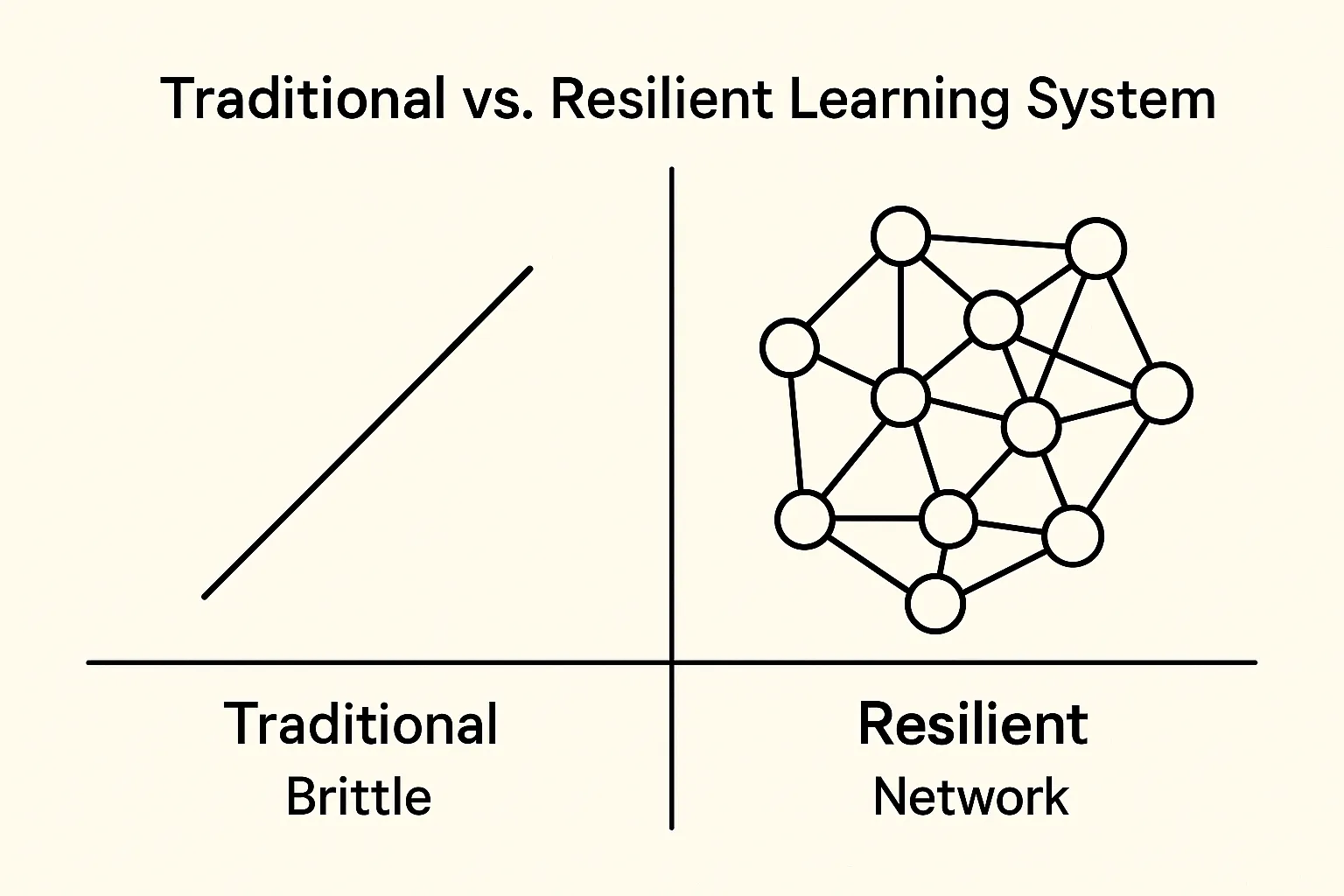
Figure 1: Traditional brittle learning paths versus resilient network-based skill development
Rethinking Learning: Treat Your Skills Like a Production System
System architects don’t build infrastructure that never fails—they design systems that recover gracefully when components break. Apply the same engineering principles to career development:
Redundancy: Maintain Backup Skill Tracks
Production systems never rely on single points of failure. Your skill portfolio shouldn’t either. For a React-focused frontend developer, redundancy might include:
- Adjacent track: js or Svelte (similar architecture, quick transfer)
- Complementary track: Backend with Node.js or Python (different domain, shared ecosystem)
- Foundational track: Core JavaScript, algorithms, design patterns (framework-agnostic)
When demand for React specialists softens, you pivot to adjacent runways rather than starting from zero.
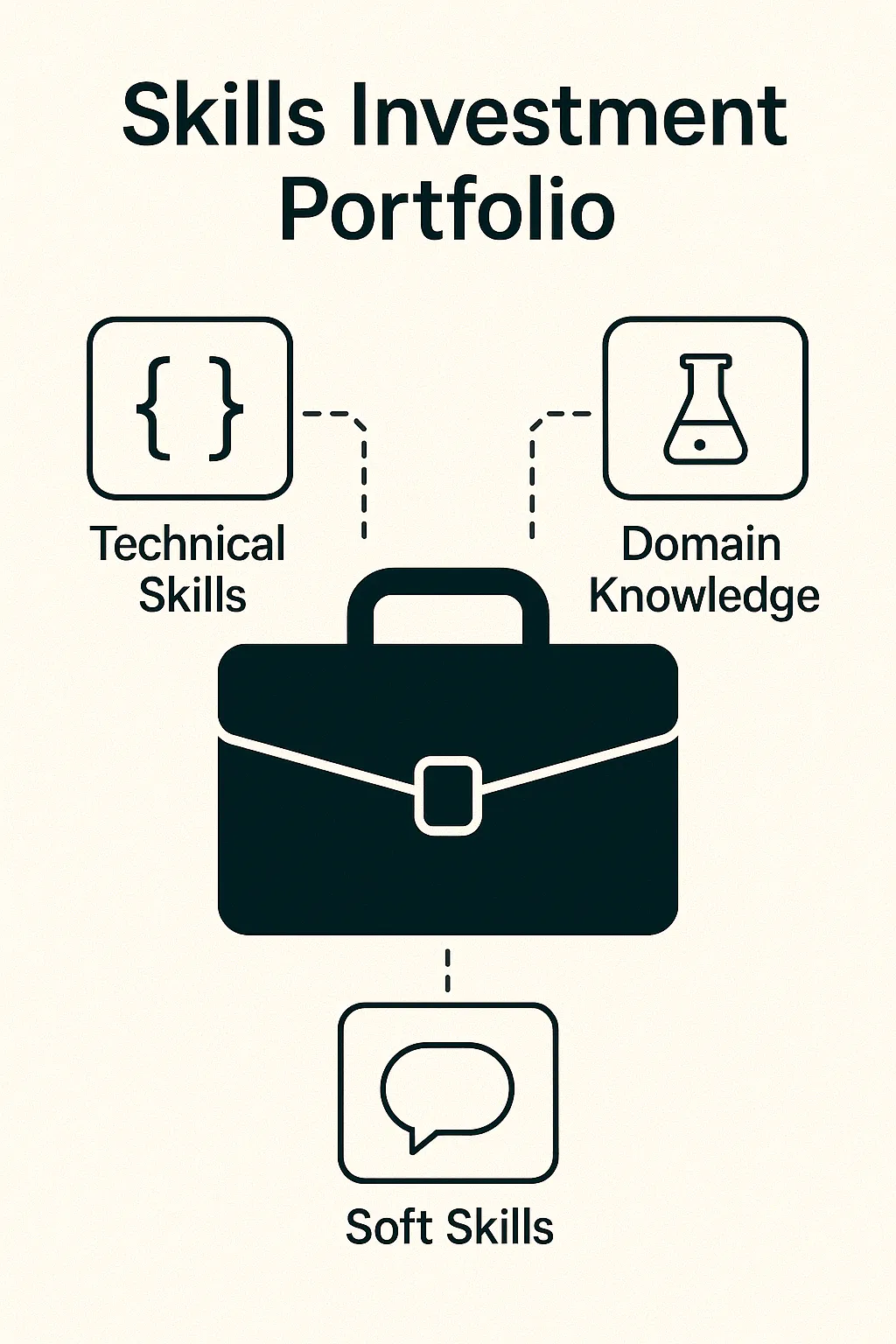
Figure 2: Diversified skills investment portfolio approach
Canary Deployments: Test Before You Invest
DevOps teams test new code with small user groups before full rollout. Apply the same principle to learning: before committing 100 hours to a new technology, invest 10 hours building a proof-of-concept project. This canary approach validates whether the skill merits deeper investment.
Observability: Metrics for Your Learning
Production systems require monitoring dashboards. Your learning system needs equivalent observability:
- Projects completed per quarter
- Skill proficiency assessments (peer code reviews, certification tests)
- Time-to-productivity for new technologies
- Career advancement indicators (interviews, promotions, market opportunities)
Track these metrics quarterly. Adjust your learning strategy based on data, not intuition.
Graceful Degradation: The Never-Expire Skills
When components fail, well-designed systems degrade gracefully rather than crashing completely. In career terms, this means cultivating foundational capabilities that remain valuable regardless of technological shifts: systems thinking, problem decomposition, technical communication, and collaborative debugging. These skills survived the transition from COBOL to Java, from jQuery to React, and will outlast whatever framework dominates in 2030.
The 5 Skills That Never Expire (And Why AI Cannot Automate Them)
Certain human capabilities resist automation because they require contextual judgment, creative synthesis, and nuanced understanding of organizational constraints. These five skills form the core of AI-resistant expertise:
1. System Design & Big-Picture Architecture
AI can generate code for individual components, but architecting how those components interact at scale requires understanding business context, technical constraints, and organizational dynamics. System design integrates:
- Translating business requirements into technical architecture
- Balancing scalability, reliability, cost, and time-to-market
- Anticipating future evolution paths and migration strategies
2. Complex Problem-Solving & Analytical Reasoning
Breaking down ambiguous, multi-dimensional problems into tractable components requires human judgment. While AI excels at pattern matching within defined domains, identifying which patterns matter in novel situations remains a distinctly human capability.
3. Debugging Methodology & Systems-Level Thinking
Debugging complex systems requires forming hypotheses about failure modes, designing experiments to test those hypotheses, and synthesizing evidence across multiple abstraction layers. This investigative reasoning—moving from symptoms to root causes through iterative testing—resists automation because each debugging session presents unique constraints and context.
4. Technical Communication & Stakeholder Management
Translating technical complexity for non-technical stakeholders, negotiating trade-offs between competing priorities, and building consensus across departments requires emotional intelligence and organizational awareness that AI cannot replicate.
5. Creative Synthesis & Innovation
AI generates within learned patterns. Human creativity involves connecting disparate concepts in novel ways, challenging fundamental assumptions, and imagining solutions that don’t yet exist in training data. This generative capacity—true innovation rather than recombination—remains uniquely human.
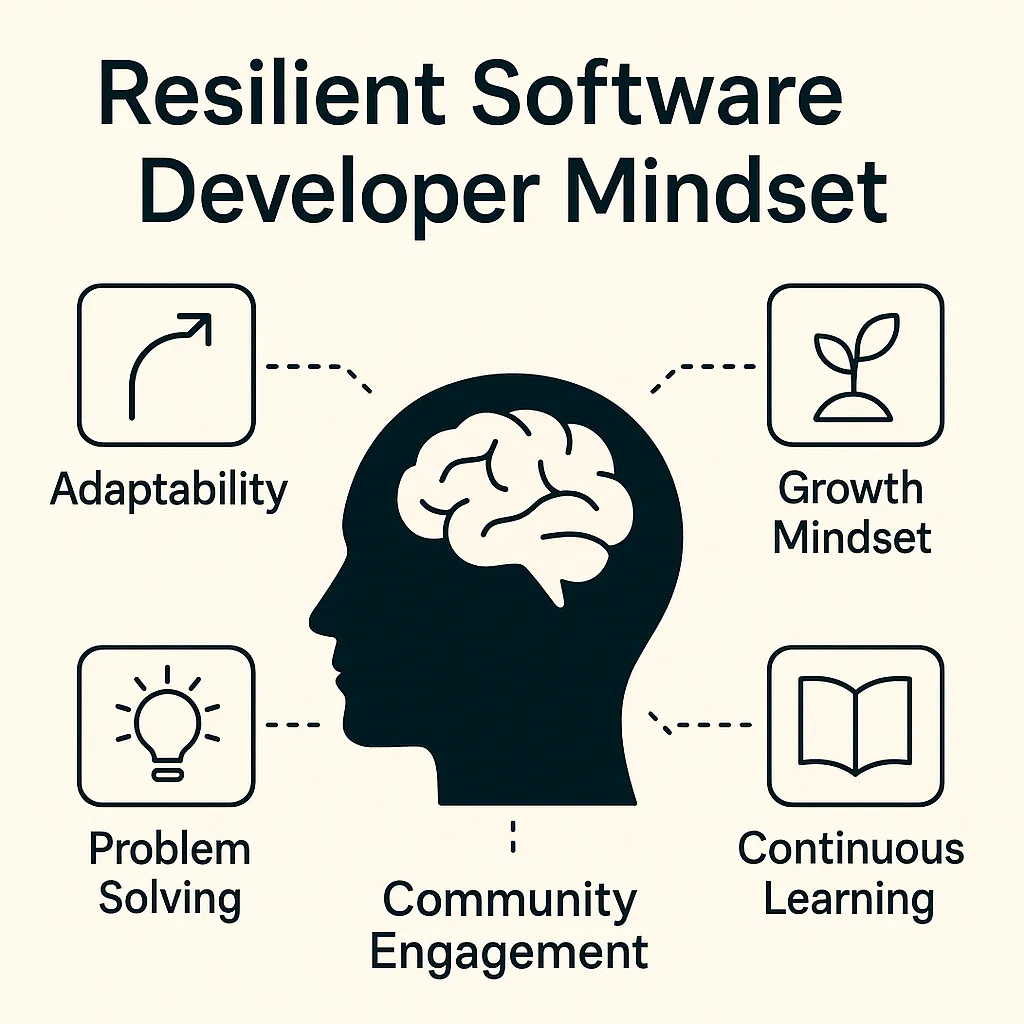
Figure 3: The five pillars of a resilient software developer mindset
The Edge Advantage: Why Future-Proof Skills Live at the Edge
As AI capabilities improve for cloud-abundant development tasks, the most valuable human expertise migrates to edge environments—where resource constraints, real-time requirements, and hardware integration create complexity AI struggles to navigate.
Cloud-Abundant vs Edge-Constrained: The Value Migration
AI can generate a Node.js REST API in seconds. But optimizing a machine learning model to run on a 4GB device? Designing embedded firmware that operates on 50mW power? Debugging why an IoT system drops packets every 47 seconds? These edge challenges require human expertise in resource optimization, hardware integration, and real-world constraint management.
| Cloud-Abundant Development (AI-Friendly Tasks) | Edge-Constrained Computing (Human Expertise Required) |
| • Standard CRUD applications • REST API development • Common design patterns • Frontend component libraries • Database query optimization |
• Model quantization & pruning • Embedded systems optimization • Hardware accelerator integration • Real-time constraint management • Edge networking protocols |
High-Value Edge Skills for 2026 and Beyond
Model quantization has emerged as critical for deploying AI on edge devices, enabling compression from 32-bit floating-point to 8-bit integer representations while maintaining acceptable accuracy. Edge AI development requires expertise in:
- Model quantization and pruning for edge deployment (TensorFlow Lite, PyTorch Mobile)
- ONNX runtime optimization for cross-platform inference
- WebAssembly (WASM) for near-native browser performance
- Hardware accelerators (NPUs, TPUs, specialized DSPs)
- IoT protocol optimization (MQTT, CoAP, edge networking)
Deconstructing the Automation Myth: Why AI Won’t Replace Developers
Recent research from MIT CSAIL, Stanford AI Lab, and GOTO conferences reveals a more nuanced reality than “AI will replace programmers.” While AI capabilities are advancing rapidly, fundamental roadblocks prevent autonomous engineering in the foreseeable future.
The Hype vs. Reality Gap
Headlines proclaim that AI will replace developers within 2-3 years. Yet production engineering requires capabilities AI fundamentally lacks:
- Understanding unstated requirements and organizational context
- Navigating technical debt and legacy system constraints
- Making judgment calls about acceptable trade-offs
- Coordinating across teams with competing priorities
The Great Bifurcation: Where AI Excels and Where It Fails
AI demonstrates remarkable capability for well-defined, pattern-matching tasks within training distribution. It struggles with novel problems requiring contextual reasoning beyond its training data. This creates a bifurcation:
- Low-context tasks: AI augments productivity significantly (boilerplate code, documentation, unit tests)
- High-context tasks: Human judgment remains essential (architecture decisions, security reviews, stakeholder negotiation)
The Human Mandate: Why You Must Prove Human Contribution
Legal frameworks governing intellectual property, professional liability, and regulatory compliance increasingly require demonstrable human contribution. Three areas demand particular attention:
Copyright Law: The Authorship Requirement
The U.S. Copyright Office emphasizes that AI-generated content requires disclosure, and protection extends only to elements demonstrating human creative control. Maintain:
- Design decision documentation
- Architectural choice rationale
- Version control history showing iterative human refinement
Patent Law: Natural Person Inventors
U.S. patent law recognizes only natural persons as inventors. When AI assists in invention, humans must document their conceptual contributions, problem formulation, and critical design choices that led to novel solutions.
Professional Liability: The Non-Delegable Duty
Licensed professionals cannot delegate core responsibilities to AI. Lawyers, engineers, and medical professionals remain accountable for AI-assisted work. This requires maintaining sufficient expertise to critically evaluate AI outputs and override incorrect recommendations.
Your 6-Week Capability-Building Loop: From Theory to Practice
Systematic skill development requires a repeatable framework. This 6-week cycle balances structured learning with hands-on application:
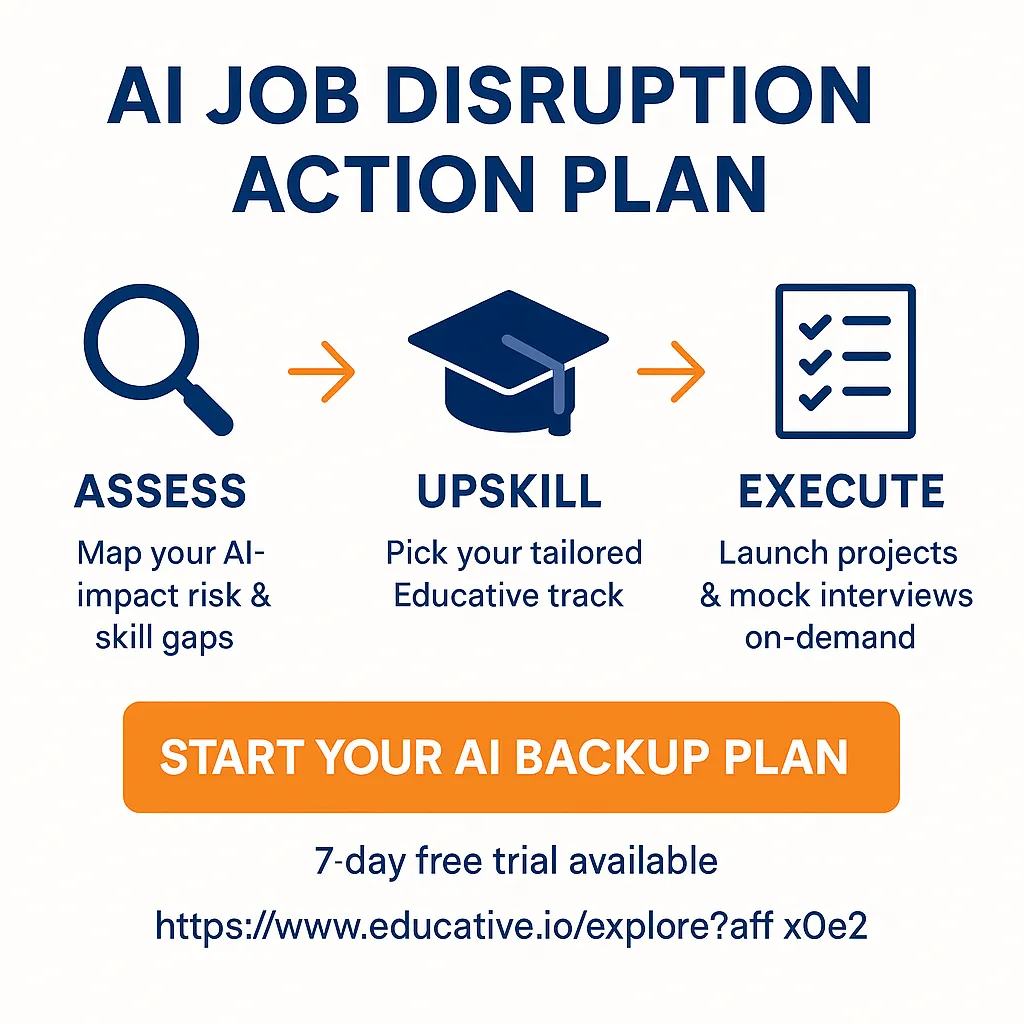
Figure 4: Three-phase action plan for building AI-resilient skills
Week 1-2: Explore a Learning Path
Select one skill aligned with your career trajectory. Complete 20-30% of a structured course to establish a foundational understanding. Focus on courses offering hands-on labs rather than passive video content.
Time investment: 12-14 hours (6-7 hours per week)
Week 3-4: Build a Micro-Project
Apply new concepts in a shippable demo. The project should be small enough to complete in two weeks but substantial enough to encounter real-world complexity. Document challenges and solutions as you build.
Time investment: 16-18 hours (8-9 hours per week)
Week 5: Deploy + Add Observability
Deploy your project to production (even if just personal hosting). Implement monitoring: error tracking, performance metrics, and user analytics. Real-world deployment reveals gaps theoretical learning misses.
Time investment: 8-10 hours
Week 6: Retrospect + Document
Conduct a formal retrospective. What worked? What didn’t? What would you do differently? Write a technical post documenting your learning journey. Publishing forces clarity and creates proof of capability for potential employers.
Time investment: 6-8 hours
Total time commitment: 42-50 hours over 6 weeks (7-8.5 hours per week)
Pro Tips for Maximum Learning Velocity
- Limit concurrent experiments: Learn one primary skill per month. Your brain isn’t multi-threaded.
- Schedule learning game days: Quarterly high-pressure challenges (24-hour builds, hackathons) reveal knowledge gaps.
- Maintain offline backup modes: Download courses, save PDFs, and keep physical books. Your learning system should work when infrastructure fails.
Conclusion: The Future-Proof Worker Is a System
Ten years ago, knowing React was an advantage. Five years ago, Kubernetes expertise set you apart. Today, knowing how to learn faster than AI evolves is the competitive edge that matters.
Your skillset isn’t a static asset—it’s a living system requiring architecture, monitoring, and continuous improvement. By applying production system design principles (redundancy, observability, graceful degradation) to career development, you create professional resilience that adapts to any technological future.
The question isn’t “What should I learn next?” It’s “How do I build a learning system that answers that question automatically?”
Focus on edge computing skills, cultivate AI-resistant capabilities (system design, complex problem-solving, technical communication), and implement systematic learning loops. The engineers who thrive in the AI era won’t be those who resist change—they’ll be those who’ve architected themselves for continuous adaptation.
Authoritative Sources & Further Reading
Recommended Videos
- Stanford HAI — Understanding Liability Risk from Healthcare AI:
- MIT Technology Review — AI and the Future of Work: https://www.technologyreview.com/video/ai-and-the-future-of-work/
Key References
- MIT CSAIL Research on AI Capabilities and Limitations
- Stanford AI Lab studies on edge computing and model optimization
- S. Copyright Office guidance on AI-generated works
- S. Patent and Trademark Office inventor requirements
- GOTO Conference proceedings on the future of software development
Frequently Asked Questions
Q1. What are the most in-demand AI skills for 2026?
A: Edge AI development (model quantization, TensorFlow Lite, PyTorch Mobile), system design, complex problem-solving, and technical communication are most valuable. Focus on skills at the intersection of AI and resource-constrained environments.
Q2. How can I future-proof my career in an AI-driven world?
A: Build skill redundancy (maintain backup skill tracks), implement systematic learning loops, focus on AI-resistant capabilities (judgment, creativity, systems thinking), and develop edge computing expertise where human optimization expertise remains essential.
Q3. What’s the difference between cloud skills and edge AI skills?
A: Cloud skills focus on resource-abundant environments where AI can generate solutions effectively. Edge AI skills involve resource-constrained computing (embedded systems, IoT, mobile devices) requiring human expertise in optimization, hardware integration, and real-time constraint management.
Q4. Will AI replace developers and software engineers?
A: AI will augment but not replace developers. While AI handles well-defined, low-context tasks effectively, complex system design, architectural decisions, stakeholder management, and novel problem-solving require human judgment. The bifurcation creates higher-value roles for developers who leverage AI productively.
Q5. How much time should I invest in continuous learning?
A: Aim for 7-10 hours per week following the 6-week capability-building loop: 2 weeks learning (20-30% course completion), 2 weeks building projects, 1 week deployment and observability, 1 week retrospective and documentation. This sustainable pace prevents burnout while maintaining skill currency.
Q6. What are the best AI certification courses?
A: Focus on hands-on platforms offering practical projects rather than passive certificates. Coursera, edX, and Educative.io provide interactive learning environments. Prioritize courses emphasizing system design, edge AI optimization, and real-world deployment over purely theoretical content.
Q7. How do I prove human contribution when using AI tools?
A: Maintain design decision documentation, architectural choice rationale, and detailed version control history. Document your problem formulation, critical design choices, and iterative refinement process. This evidence demonstrates creative control required for copyright protection and professional liability frameworks.
Q8. What skills are most resistant to AI automation?
A: System design, complex problem-solving requiring contextual judgment, debugging methodology, technical communication, and creative synthesis resist automation. These skills require understanding organizational constraints, stakeholder management, and novel situation navigation beyond AI’s pattern-matching capabilities.
Q9. How do I balance deep work with continuous learning?
A: Treat learning as structured deep work. Schedule dedicated learning blocks (not fragments). Use the canary deployment approach: 10 hours proof-of-concept before 100-hour commitment. Integrate learning into production work—refactor using new patterns, document discoveries, and share knowledge through tech talks or blog posts.
Q10. Does the edge computing shift apply to web developers?
A: Yes. WebAssembly (WASM) brings edge computing principles to browsers, enabling near-native performance for computationally intensive tasks. Progressive Web Apps (PWAs) with offline-first architecture, service workers for edge caching, and client-side ML inference (TensorFlow.js) all represent edge computing opportunities for web developers.
Disclosure & Legal Notice
This article reflects AI industry practices, copyright guidance, and professional development strategies as of November 22, 2025 (AEST). Readers should verify whether subsequent guidance has been issued by relevant regulatory bodies, professional associations, or technology platforms.
Content on TechLifeFuture.com is for educational and informational purposes only and does not constitute legal, career, or professional advice. Some links in this article may be affiliate or referral links, including Educative.io and Mindhive.ai. If you purchase through these links, TechLifeFuture.com may earn a small commission at no extra cost to you.
This article was reviewed under TechLifeFuture’s citation-verification and EEAT-aligned editorial process. Portions were AI-assisted and comprehensively human-edited for accuracy, authority, and compliance with professional standards.