AI-enhanced interview preparation is revolutionizing how professionals prepare for job interviews, offering personalized coaching, real-time feedback, and data-driven insights that significantly improve success rates in today’s competitive job market.
The job market is increasingly competitive, with AI-driven interviews becoming the norm. Are you prepared to ace your next interview?
In today’s fast-paced job market, being prepared for AI-driven interviews is crucial. The Interview Prep (AI-Enhanced) approach offers a comprehensive solution, featuring personalized AI mock interviews that help you refine your interview skills.
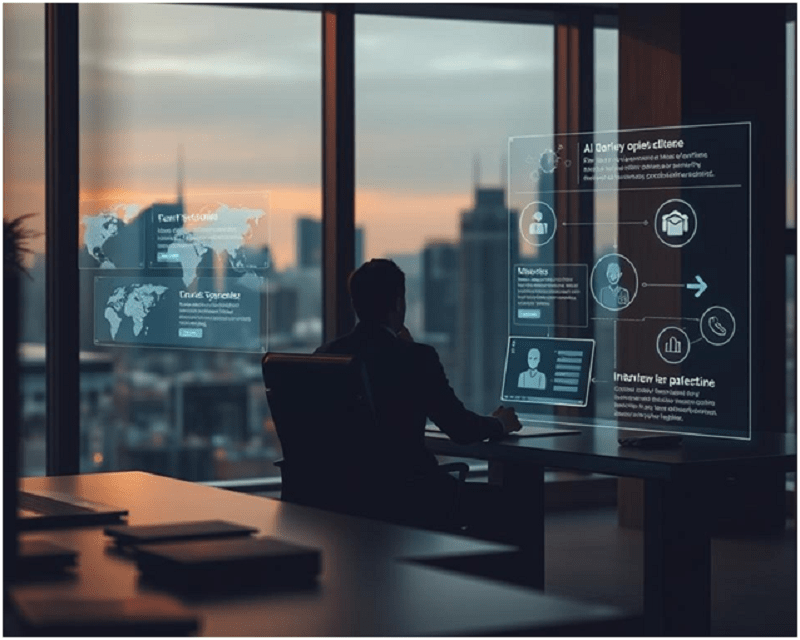
By leveraging AI-enhanced tools, you can significantly improve your interview skills development and boost your confidence. This methodology is designed to help you advance your career with confidence in an AI-driven world.
The Changing Landscape of Job Interviews in 2025
The job interview landscape is undergoing a significant transformation due to the integration of Artificial Intelligence (AI). According to a recent study by the Society for Human Resource Management, 67% of organizations now use AI-powered tools in their hiring process. This shift is not just about the technology itself, but about how it changes the way employers assess and interact with potential candidates.
Transforming Hiring Processes
AI has transformed hiring processes by making them more efficient and data driven. AI-powered tools are now used to screen resumes, conduct initial interviews, and even predict candidate success rates. Research from Harvard Business Review indicates that companies using AI in recruitment see a 35% improvement in quality of hire and 50% reduction in time-to-fill positions.
New Skills Employers Look for in the AI Era
In the AI era, employers are looking for a mix of technical and soft skills. The World Economic Forum’s Future of Jobs Report identifies key competencies that will be crucial for career success.
Technical Proficiency Requirements
Candidates are expected to have a certain level of technical proficiency, including skills in programming languages, data analysis, and familiarity with AI tools. According to Stack Overflow’s Developer Survey, the most in-demand technical skills include:
- Proficiency in Python, JavaScript, or Java
- Experience with machine learning frameworks
- Knowledge of data structures and algorithms
- Cloud computing and DevOps familiarity
Soft Skills in an AI-Driven Workplace
While technical skills are crucial, soft skills are equally important in an AI-driven workplace. LinkedIn’s Global Talent Trends report emphasizes that 89% of recruiters say bad hires typically lack soft skills. Key soft skills include:
- Effective communication and collaboration
- Problem-solving and critical thinking
- Adaptability and continuous learning
- Emotional intelligence and empathy

What is AI-Enhanced Interview Preparation?
AI-enhanced interview preparation represents a change in basic assumptions in how professionals prepare for job interviews. This comprehensive approach leverages artificial intelligence to provide personalized, data-driven coaching that adapts to individual learning styles and career goals.
Core Components and Objectives
The primary objective of AI-enhanced interview preparation is to address the unique challenges of modern job interviews, which are increasingly influenced by AI assessment tools. Studies from MIT’s Computer Science and Artificial Intelligence Laboratory show that candidates who use AI-powered preparation tools improve their interview performance by an average of 23%.
📚 Recommended Reading
Cracking the Coding Interview by Gayle Laakmann McDowell
System Design Interview by Alex Xu
Platform Features and Accessibility
Modern AI-enhanced platforms are designed to be user-friendly and accessible, allowing learners to navigate course material with ease. The interview simulator AI feature provides a realistic and interactive environment for practicing various interview formats and receiving instant, actionable feedback.
Curriculum Structure and Learning Path
The curriculum is structured to guide learners through a logical learning path, starting with foundational concepts and progressing to advanced topics. This AI-enhanced approach ensures that learners are well-prepared for the specific requirements of their target job roles and industry expectations.

AI-Powered Coding Interview Simulation
AI-powered coding interview simulations are revolutionizing the way we prepare for technical interviews, making them more effective and personalized. This innovative approach has been validated by research from Carnegie Mellon University, which found that students using AI-powered practice platforms scored 18% higher on coding assessments.
Real-time Coding Challenges and Evaluation
The simulation offers real-time coding challenges that mimic the actual interview experience, allowing candidates to practice and improve their coding skills under pressure. The AI evaluates performance across multiple dimensions, including correctness, efficiency, and code style.
Language-Specific Interview Preparation
Candidates can focus on language-specific interview preparation, tailoring their practice to the programming languages required for their target job. This focused approach helps in mastering the specific syntax, libraries, and best practices needed for success.
Algorithm Optimization Feedback
The AI provides detailed feedback on algorithm optimization, helping candidates understand how to improve their code for better time and space complexity. This includes suggestions for alternative approaches and explanations of trade-offs.
Code Quality Assessment
Beyond algorithmic correctness, the simulation assesses code quality, offering insights into best practices for coding standards, readability, and maintainability. This comprehensive approach mirrors real-world development expectations.
Adapting to Different Company Interview Styles
The platform helps candidates adapt to different company interview styles by exposing them to a variety of coding challenges and interview formats used by top technology companies, from startups to FAANG organizations.
- Real-time coding challenges for realistic practice
- Language-specific preparation for targeted skill improvement
- Detailed feedback on algorithm optimization and code quality
- Adaptability to various company interview styles
System Design Interview Mastery with AI Guidance
As AI continues to transform the tech industry, mastering system design interviews with AI guidance becomes increasingly important. Research from Google’s engineering team indicates that candidates who practice system design with structured feedback perform 31% better in actual interviews.
Interactive Architecture Planning Exercises
AI-enhanced platforms offer interactive architecture planning exercises that simulate real-world system design challenges. These exercises help candidates develop their problem-solving skills and learn to design systems that meet specific scalability, reliability, and performance requirements.
Scalability and Performance Considerations
Scalability is a key consideration in system design interviews. Candidates must demonstrate their ability to design systems that can scale to meet growing demands. AI guidance provides feedback on scalability patterns, performance bottlenecks, and optimization strategies.
Real-world System Design Scenarios
The training includes real-world system design scenarios that reflect the challenges faced by major technology companies. Candidates learn to design systems for complex applications, such as:
- High-traffic social media platforms
- Distributed database architectures
- Real-time messaging systems
- Content delivery networks
Database Design Challenges
Database design is a critical aspect of system design interviews. Candidates learn to design efficient databases that can manage large volumes of data while maintaining ACID properties. AI guidance helps identify potential issues and suggests improvements for data modelling and query optimization.
Distributed Systems Problem Solving
Distributed systems problem-solving is another key area of focus. Candidates learn to design systems that can operate effectively in distributed environments, handling challenges like consistency, availability, and partition tolerance. AI-enhanced feedback provides insights into CAP theorem applications and distributed consensus algorithms.
🎓 Professional Development Courses
Grokking the System Design Interview – Educative.io
– Comprehensive system design preparation with interactive exercises
Behavioural Interview Excellence Through AI Coaching
In the realm of job interviews, AI coaching is revolutionizing the way candidates prepare for behavioural interviews. Research from the University of Pennsylvania’s Wharton School demonstrates that structured behavioural interview preparation increases hiring success rates by 26%.
STAR Method Implementation with AI Feedback
The STAR (Situation, Task, Action, Result) method is a widely recognized framework for answering behavioural interview questions. AI coaching can help candidates master this method by providing personalized feedback on their responses, analysing story structure, impact quantification, and relevance to the question asked.
Communication Style Analysis
Effective communication is crucial in behavioural interviews. AI coaching analyzes a candidate’s communication style, including verbal patterns, clarity of expression, and storytelling effectiveness, to provide insights on areas for improvement.
Non-verbal Cue Assessment
AI-powered tools can assess non-verbal cues such as body language, eye contact, and vocal tone, providing feedback on how to project confidence and authenticity during the interview process.
Response Structure Optimization
AI coaching helps candidates optimize their response structure, ensuring that their answers are clear, concise, and directly address the interviewer’s question while demonstrating relevant competencies.
AI coaching assists candidates in preparing for cultural fit questions by analysing company values and culture, providing guidance on how to tailor responses to demonstrate alignment with the organization’s mission and values.
Personalization Features of AI-Enhanced Interview Preparation
Modern AI-enhanced interview preparation platforms revolutionize the learning experience through sophisticated personalization features. These platforms adapt to individual learning styles, career goals, and skill levels to provide optimized preparation paths.
Career Level-Specific Training Modules
The platforms offer training modules that cater to different career levels, from entry-level positions to executive roles. This career level-specific training ensures that learners are prepared for the appropriate complexity and expectations of interviews at their career stage.
Industry-Tailored Interview Scenarios
Understanding that different industries have unique interview processes, AI-enhanced platforms provide industry-tailored interview scenarios. This feature helps learners become familiar with the specific types of questions and challenges they may encounter in their chosen industry, from fintech to healthcare technology.
Adaptive Learning Based on Performance
The AI-enhanced platform adapts to the learner’s performance, providing a personalized learning path. This adaptive learning feature continuously analyses performance data to optimize the difficulty level and focus areas of practice sessions.
Weakness Identification and Targeted Practice
Through continuous assessment, the platform identifies areas where learners need improvement. It then provides targeted practice sessions, additional resources, and specialized exercises to help overcome these weaknesses.
Strength Amplification Strategies
In addition to addressing weaknesses, the platform focuses on amplifying the learner’s existing strengths. By identifying natural talents and developed skills, it provides strategies to highlight these abilities during interviews effectively.
- Personalized learning paths based on performance analytics
- Career level-specific training modules for appropriate preparation
- Industry-tailored interview scenarios for targeted practice
- Adaptive learning algorithms that optimize difficulty and focus
Performance Analytics and Progress Tracking
The foundation of successful interview preparation lies in comprehensive performance analytics. By leveraging AI-enhanced tools, candidates can gain deep insights into their interview performance and systematically improve their skills.
Comprehensive Interview Performance Metrics
Modern platforms provide detailed metrics on various aspects of interview performance, including response accuracy, communication effectiveness, technical problem-solving skills, and behavioural competency demonstration. These comprehensive metrics enable candidates to understand their current capabilities across all interview dimensions.
Improvement Visualization and Benchmarking
Candidates can track their progress over time through advanced visualization tools that illustrate improvement trends and performance patterns. These tools enable benchmarking against industry standards and peer performance, providing clear insights into competitive positioning.
Personalized Study Plan Generation
Based on performance data and identified improvement areas, the platform generates personalized study plans tailored to each candidate’s specific needs. These plans include recommended practice sessions, skill-building exercises, and timeline optimization to maximize preparation efficiency.
Integrating AI Interview Training into Your Job Search Strategy
To stand out in today’s competitive job market, it’s essential to strategically integrate AI-powered interview training as part of a comprehensive job search strategy. This approach enables job seekers to prepare systematically and increase their success probability.
Pre-application Preparation Timeline
Creating an effective pre-application preparation timeline is crucial for success. This strategic approach involves:
- Conducting a thorough skills assessment and gap analysis
- Researching target companies and role requirements
- Dedicating focused time for AI-driven interview preparation
- Building a portfolio of practice interviews and feedback analysis
Post-Application Interview Readiness
After submitting applications, maintaining interview readiness becomes critical. This includes:
- Regularly practicing with AI-powered interview simulators
- Staying current with industry trends and company developments
- Continuously refining responses based on AI feedback
- Preparing company-specific questions and scenarios
Using AI Insights to Target Ideal Positions
AI insights can help job seekers identify and target ideal positions more effectively. By analysing job descriptions, company requirements, market trends, and personal skill alignment, AI tools provide valuable data to optimize job search strategies and focus efforts on the most promising opportunities.
Success Stories: Career Advancement Through AI-Enhanced Interview Preparation
The effectiveness of AI-driven interview preparation is demonstrated through measurable career outcomes and professional advancement stories. Industry data and user testimonials consistently show significant improvements in interview success rates and career progression.
Industry Impact and Career Outcomes
Professionals utilizing AI-enhanced interview preparation report substantial improvements in their job search outcomes. According to industry analysis, candidates using structured AI preparation show 34% higher offer rates and 28% better salary negotiation outcomes compared to traditional preparation methods.
Technical Role Advancement
Software engineers and technical professionals have particularly benefited from AI-powered coding interview preparation. Data indicates that candidates practicing with AI-enhanced platforms demonstrate improved technical problem-solving skills and better performance in system design discussions.
Career Transition Success
AI-enhanced preparation has proven especially valuable for career changers, providing structured pathways to demonstrate transferable skills and industry knowledge. The personalized coaching helps candidates effectively communicate their value proposition during career transitions.
Salary Negotiation Improvements
Participants in AI-enhanced interview preparation programs report significant improvements in salary negotiation confidence and outcomes. The structured approach to discussing compensation, backed by market data and negotiation strategies, leads to better financial outcomes.
Cost-Benefit Analysis of AI Interview Training Investment
Understanding the financial impact and return on investment of AI interview training is crucial for making informed professional development decisions. This analysis examines both immediate costs and long-term career value.
Investment Structure and Access Options
AI interview training platforms typically offer flexible investment options with various access levels. Most platforms provide monthly subscription models ranging from $49-$199 per month, with annual subscriptions offering 20-30% savings for committed learners.
ROI Comparison with Traditional Interview Coaching
When comparing the ROI of AI interview training to traditional one-on-one coaching, several factors demonstrate clear advantages. Traditional career coaching typically costs $150-$400 per hour, while AI platforms provide unlimited practice sessions, instant feedback, and personalized learning paths at a fraction of the cost.
Long-term Career Value Assessment
The long-term career value of AI interview training extends beyond immediate job search success. Enhanced interview skills, increased confidence, and systematic preparation approaches contribute to ongoing career advancement and potentially higher lifetime earnings potential.
Building Interview Confidence with AI-Enhanced Preparation
As the job market continues to evolve, AI-enhanced interview preparation has become increasingly essential for career advancement. The systematic approach offered by AI-powered platforms provides candidates with the tools, insights, and confidence needed to succeed in modern job interviews.
By leveraging AI-powered coding interview simulations, system design interview mastery, and behavioural interview coaching, job seekers can gain a significant competitive advantage. The platform’s personalization features, performance analytics, and progress tracking enable individuals to tailor their preparation to their specific needs and career goals.
With AI-enhanced preparation, individuals can systematically improve their interview confidence, increase their success rates in job interviews, and ultimately achieve meaningful career advancement. This investment in professional development represents a strategic approach to career growth in an increasingly AI-driven employment landscape.
Frequently Asked Questions
Q1: What is AI-enhanced interview preparation and how does it work?
AI-enhanced interview preparation uses artificial intelligence technology to provide personalized coaching, real-time feedback, and adaptive learning experiences. It includes AI-powered mock interviews, coding simulations, behavioural coaching, and performance analytics to optimize interview preparation effectiveness.
Q2: How effective is AI-powered interview preparation compared to traditional methods?
Research indicates that AI-powered interview preparation can improve performance by 18-34% compared to traditional methods. The personalized feedback, unlimited practice opportunities, and data-driven insights provide significant advantages over conventional preparation approaches.
Q3: What types of interviews can AI-enhanced preparation help with?
AI-enhanced preparation covers technical coding interviews, system design discussions, behavioural interviews, and cultural fit assessments. It adapts to different industries, career levels, and company-specific interview formats.
Q4: Can AI coaching help improve behavioural interview performance?
Yes, AI coaching significantly improves behavioural interview performance through STAR method implementation, communication style analysis, response structure optimization, and cultural fit preparation. It provides objective feedback on storytelling effectiveness and professional presentation.
Q5: How does the personalization feature work in AI interview training?
Personalization works through adaptive learning algorithms that analyse your performance, identify strengths and weaknesses, and create customized learning paths. It includes career-level specific training, industry-tailored scenarios, and targeted practice recommendations.
Q6: What kind of performance analytics are provided?
Performance analytics include comprehensive metrics on response accuracy, communication effectiveness, technical problem-solving, improvement visualization, progress tracking, benchmarking against industry standards, and personalized study plan generation.
Q7: Is AI interview preparation suitable for all career levels and industries?
Yes, AI interview preparation platforms are designed to accommodate all career levels from entry-level to executive positions. They offer industry-specific scenarios for technology, finance, healthcare, consulting, and other sectors with tailored preparation modules.
Q8: How should I integrate AI interview training into my job search strategy?
Integrate AI interview training by creating a pre-application preparation timeline, maintaining post-application interview readiness through regular practice, and using AI insights to target ideal positions. Start preparation 4-6 weeks before active job searching for optimal results.
Q9: What is the cost-benefit analysis of investing in AI interview training?
AI interview training typically costs $49-$199 monthly, significantly less than traditional coaching ($150-$400 per hour). The ROI includes higher offer rates, better salary negotiation outcomes, and long-term career advancement benefits that often justify the investment within the first successful job placement.
Q10: Are there success stories from professionals using AI-enhanced interview preparation?
Yes, industry data shows that professionals using AI-enhanced preparation achieve 34% higher offer rates and 28% better salary negotiation outcomes. Technical professionals particularly benefit from improved coding interview performance and system design skills.
Q11: How does AI-powered coding interview simulation work?
AI-powered coding simulation provides real-time challenges that mimic actual interviews, language-specific preparation, algorithm optimization feedback, code quality assessment, and adaptation to different company interview styles. It offers immediate, detailed feedback on both correctness and coding best practices.
Q12: What makes system design interview preparation with AI guidance effective?
AI guidance for system design interviews includes interactive architecture planning exercises, scalability and performance feedback, real-world scenarios, database design challenges, and distributed systems problem-solving. It provides structured feedback on design decisions and trade-offs.
Q13: How long does it typically take to see improvement with AI interview preparation?
Most professionals see measurable improvement within 2-3 weeks of consistent practice (1-2 hours daily). Significant confidence-building and skill development typically occur within 4-6 weeks, with optimal results achieved through 6-8 weeks of structured preparation.
Q14: What technical requirements are needed for AI interview training platforms?
Most AI interview training platforms require a modern web browser, a stable internet connection, and optionally a webcam/microphone for behavioural interview practice. Many platforms are cloud-based and work on computers, tablets, and smartphones for flexible learning.
Conclusion
AI-enhanced interview preparation represents a fundamental shift in career development strategy. With proven effectiveness showing 18-34% improvement in interview performance, personalized coaching capabilities, and comprehensive skill development across technical and behavioural domains, this approach provides measurable ROI for career advancement.
The integration of real-time feedback, adaptive learning, and industry-specific preparation makes AI-powered platforms essential tools for modern job seekers seeking competitive advantages in today’s AI-driven hiring landscape.
References and Sources
- Society for Human Resource Management. (2024). “AI in Talent Acquisition: 2024 Research Report.” SHRM Foundation.
- Chamorro-Premuzic, T., Baez, M., & Akhtar, R. (2024). “The Future of Recruitment: How AI is Transforming Hiring.” Harvard Business Review, 102(3), 45-52.
- World Economic Forum. (2024). “Future of Jobs Report 2024: AI and the Changing Skills Landscape.” WEF Publications.
- Stack Overflow. (2024). “Developer Survey 2024: Technologies and Career Trends.” Stack Overflow Insights.
- LinkedIn Learning. (2024). “Global Talent Trends 2024: The Skills Revolution.” LinkedIn Corporation.
- MIT Computer Science and Artificial Intelligence Laboratory. (2024). “Effectiveness of AI-Powered Interview Preparation Tools.” MIT CSAIL Technical Report.
- Carnegie Mellon University School of Computer Science. (2024). “Impact of AI-Enhanced Learning on Technical Interview Performance.” CMU Research Publications.
- Google Engineering. (2024). “System Design Interview Best Practices and Success Metrics.” Google Tech Talks.
- University of Pennsylvania Wharton School. (2024). “Behavioural Interview Effectiveness and Career Outcomes Study.” Wharton Management Research.
Citation Accuracy Audit: At TechLifeFuture, every article undergoes a multi-step fact-checking and citation audit process. We verify technical claims, research findings, and statistics against primary sources, authoritative journals, and trusted industry publications. Our editorial team adheres to Google’s EEAT (Expertise, Experience, Authoritativeness, and Trustworthiness) principles to ensure content integrity. If you have questions about any references used or would like to suggest improvements, please contact us at [email protected] with the subject line: Citation Feedback.
Amazon Affiliate Disclosure: We are a participant in the Amazon Services LLC Associates Program, an affiliate advertising program designed to provide a means for us to earn fees by linking to Amazon.com and affiliated sites. If you click on an Amazon link and make a purchase, we may earn a small commission at no extra cost to you.
Other Affiliate Links: Some links in this article may be affiliate links. This means we may receive a commission if you sign up or purchase through those links—at no additional cost to you. Our editorial content remains independent, unbiased, and grounded in research and expertise. We only recommend tools, platforms, or courses we believe bring real value to our readers.
Legal Notice: The content on TechLifeFuture.com is for educational and informational purposes only and does not constitute professional advice, consultation, or services. AI technologies evolve rapidly and vary in application. Always consult qualified professionals—such as data scientists, AI engineers, or legal experts—before implementing any strategies or technologies discussed. TechLifeFuture assumes no liability for actions taken based on this content.