The use of Artificial Intelligence (AI) in healthcare settings could change patient care and make things more efficient. But, it’s vital to make sure AI systems are safe and work well.
Creating skilled professionals who can work with AI is key. This is why AI safety training is so important, especially in prompt engineering.
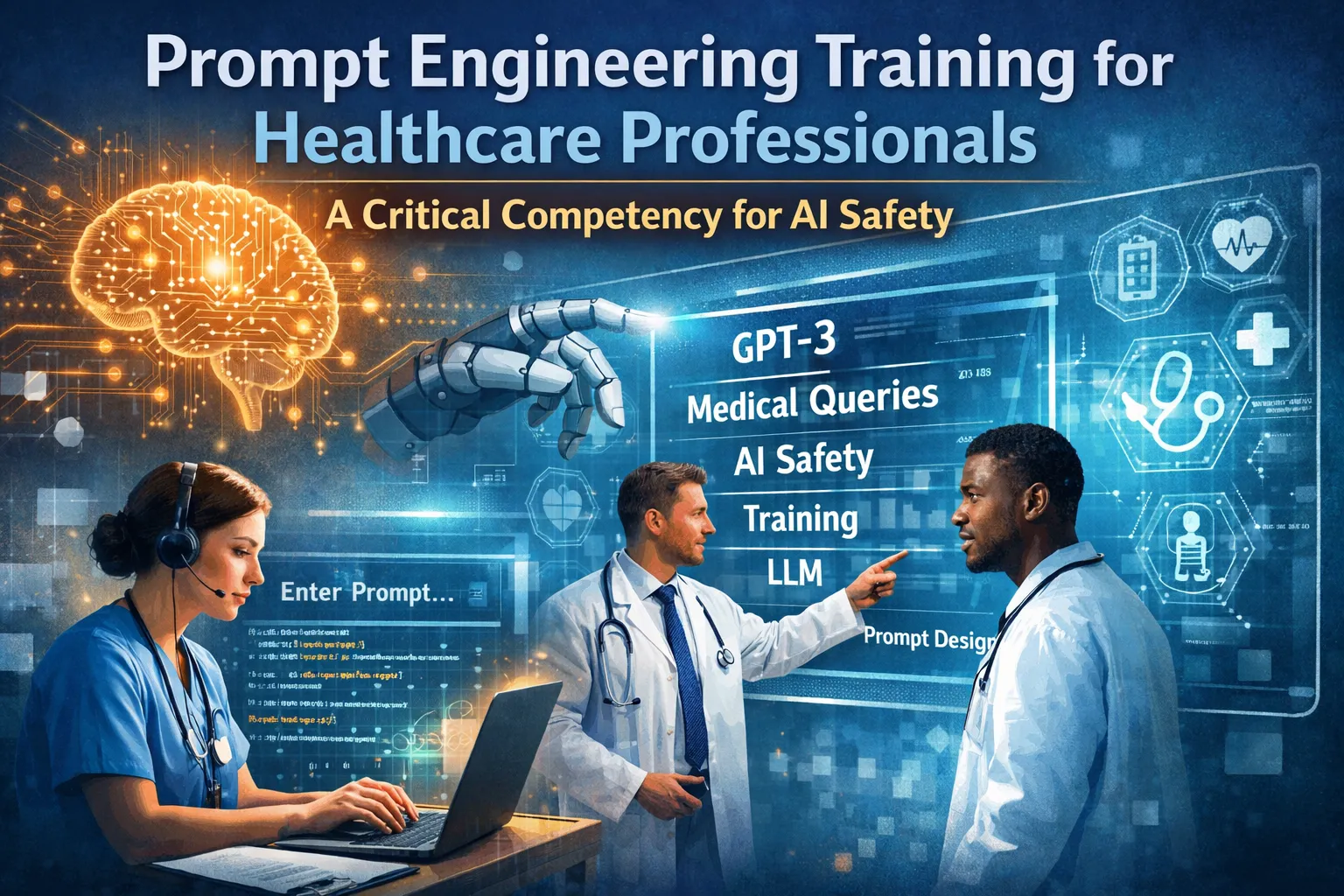
As AI grows, it’s more important for healthcare professionals to know how to handle AI. Good training is essential to avoid mistakes and make sure AI gives accurate results.
By improving these skills, healthcare groups can make their AI systems safer and more effective. This leads to better care for patients.
Why Prompt Engineering Matters in Healthcare AI
Healthcare AI safety training is now a top priority. Prompt engineering training for professionals is key. As AI changes healthcare, the need for safe AI use in healthcare is clear.
The Role of AI in Modern Healthcare Decision-Making
AI is changing how healthcare decisions are made. It gives healthcare pros data-driven insights. A report by the Australian Digital Health Agency says AI can better patient outcomes by improving diagnosis and treatment plans.
AI is used in more than just diagnosis. It helps with patient care, admin tasks, and research. But, AI’s success depends on the data it’s trained on and the prompts it gets.
How Poor Prompts Can Lead to Clinical AI Errors
Poor prompts can cause big errors in healthcare decisions. A study in the Journal of Healthcare Engineering found AI hallucinations happen when prompts are bad. This means AI might give wrong or silly info.
If a prompt is too vague, AI might get the context wrong. This leads to bad advice. So, prompt engineering training for professionals is vital. It helps them make clear, context-aware prompts.
Good prompt engineering is key to avoiding AI risks in healthcare. By knowing how to use AI right, healthcare pros can make AI care safer and more effective.
Understanding Prompt Engineering for Healthcare Professionals
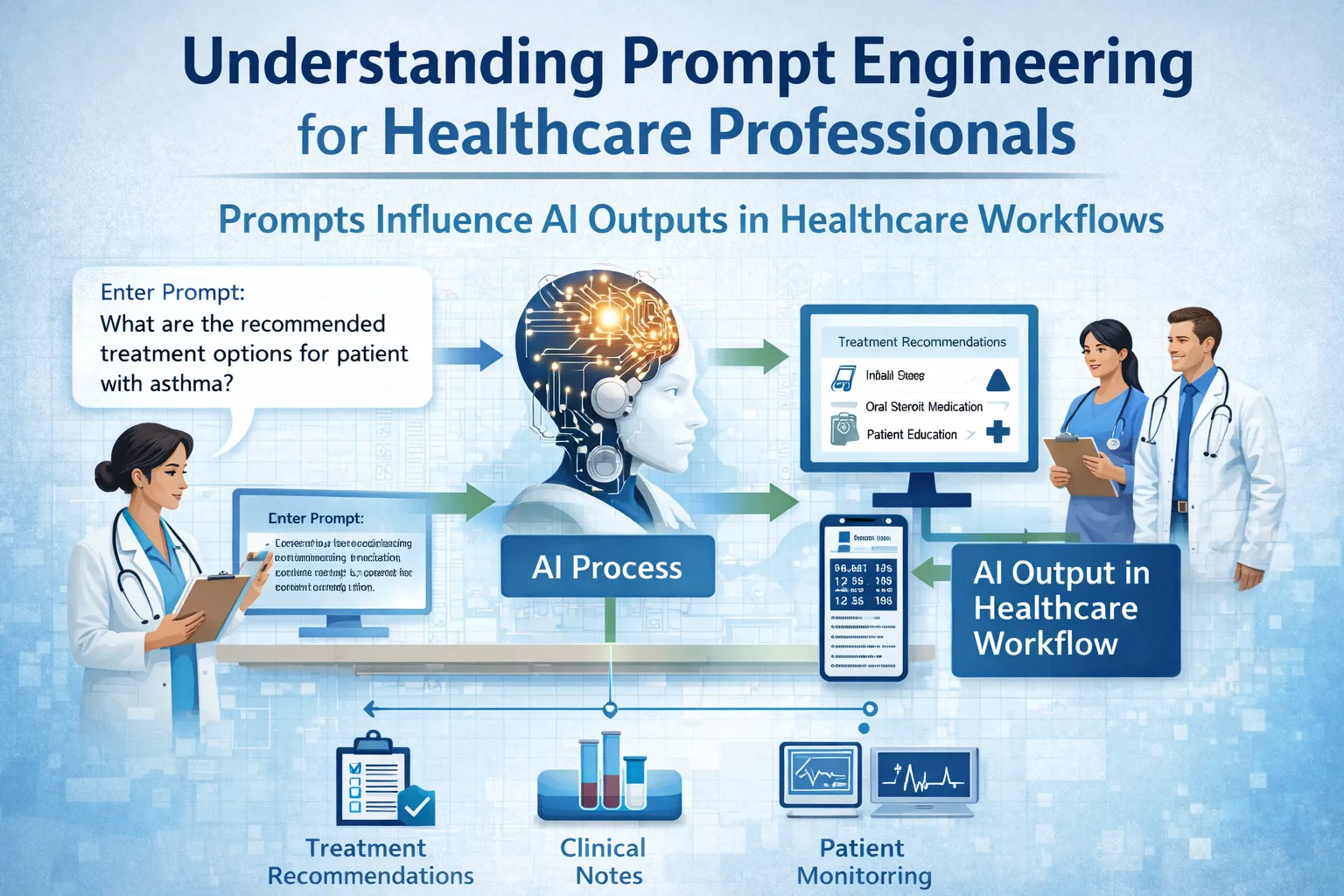
AI is changing healthcare, and healthcare workers need to understand prompt engineering. As AI use grows in clinics, ai literacy for healthcare workers is crucial. It helps them work well with AI systems.
What Prompt Engineering Means in a Medical Context
In healthcare, prompt engineering means creating inputs for AI to get the right answers. It’s about asking the right questions to get useful AI responses. This is key for healthcare system optimization.
Good prompt engineering means AI gives insights that help doctors make better decisions.
Differences Between General and Healthcare Prompting
Prompt engineering is used in many areas, but healthcare has its own specific requirements. Healthcare prompts must be exact, know the context, and follow medical rules. This is different from general prompts, where the risks are lower and the context is less important.
Learning prompt engineering helps healthcare workers use AI better. This leads to better patient care and more efficient healthcare. This skill is vital in today’s healthcare world, where AI plays a big role in decision-making and patient care.
AI Hallucinations and Safety Risks in Clinical Settings
AI hallucinations, where AI gives out wrong or misleading info, are a big worry in healthcare. As AI gets more use in hospitals, knowing the risks of AI hallucinations is key. It helps keep patients safe and makes healthcare reliable.
How AI Hallucinations Can Affect Patient Care
AI hallucinations can really impact how we care for patients. If AI gives out wrong or misleading info, it can cause wrong diagnoses and bad treatment plans. For example, AI might not understand medical images or patient data right, leading to wrong diagnoses.
The FDA says it’s very important for AI to be accurate and reliable in hospitals. This is to keep patients safe.
Data analysis in healthcare engineering is very important in fixing these problems. By checking data well, we can lower the chance of AI hallucinations messing up patient care. The NHS says it’s crucial to test and check AI systems before using them in hospitals.
Real-World Examples of AI Safety Failures
There have been cases where AI failures have caused big problems. For example, a study showed AI gave wrong advice because of bad training data or poor design. These examples show we need technology solutions for medical industry that focus on safety and working well.
The WHO says we need to work on innovation in healthcare systems to tackle AI hallucinations. By focusing on safety and always trying to get better, hospitals can handle AI risks better.
Essential Prompt Engineering Skills for Healthcare Workers
Healthcare professionals are now using AI tools more often. It’s vital for them to learn prompt engineering skills. This helps in making better decisions and improving patient care.
Asking Precise and Context-Aware Prompts
Healthcare workers need to learn how to ask the right questions. They must understand the situation and ask in a way that gets the most useful answers. For example, when looking for diagnosis ideas, they might say: “What could be wrong with a 55-year-old man with symptoms X, Y, and Z, given his past and meds?”
Here are some tips for making good prompts:
- Be clear about what you need to know
- Include all important details about the patient
- Avoid unclear language
Verifying and Cross-Checking AI Outputs
It’s also important to check and double-check what AI says. Healthcare workers need to be good at checking if the AI’s answers are right and fair. They should compare AI’s answers with what’s known in medicine, patient records, and other trusted sources.
Here are some ways to check AI’s answers:
- Compare AI’s answers with known medical facts
- Use different sources to confirm the information
- Keep up with the latest medical studies and guidelines
By learning these skills, healthcare workers can use AI better. This leads to more efficient care and helps in improving medical software.
Training Models for Prompt Engineering in Healthcare
AI is changing healthcare fast. We need special training for prompt engineering. This training helps healthcare workers use AI safely and well.
Formal AI Training Programs vs On-the-Job Learning
There are two main ways to train healthcare pros in prompt engineering. Formal training programs give a set path with a certificate at the end. They’re great for learning AI basics.
On-the-job learning lets workers practice with AI right away. It’s good for learning how AI works in real clinics. A study found that this training boosts a worker’s AI skills a lot.
“The future of healthcare AI depends on our ability to train professionals in prompt engineering, ensuring that they can harness the full potential of AI while minimizing risks.”
Integrating Prompt Engineering into Medical Education
It’s key to add prompt engineering to medical school. This way, future doctors know about AI and how to use it. Medical schools can make sure students learn about the latest in healthcare tech.
Also, ongoing training is important for current doctors. It keeps them updated with AI and prompt engineering news. This whole education plan is crucial for AI to help healthcare fully.
Healthcare groups should mix formal education with on-the-job training. This mix helps create a culture of AI and prompt engineering knowledge. It will make patient care better and more effective.
Regulatory and Ethical Expectations Around AI Use
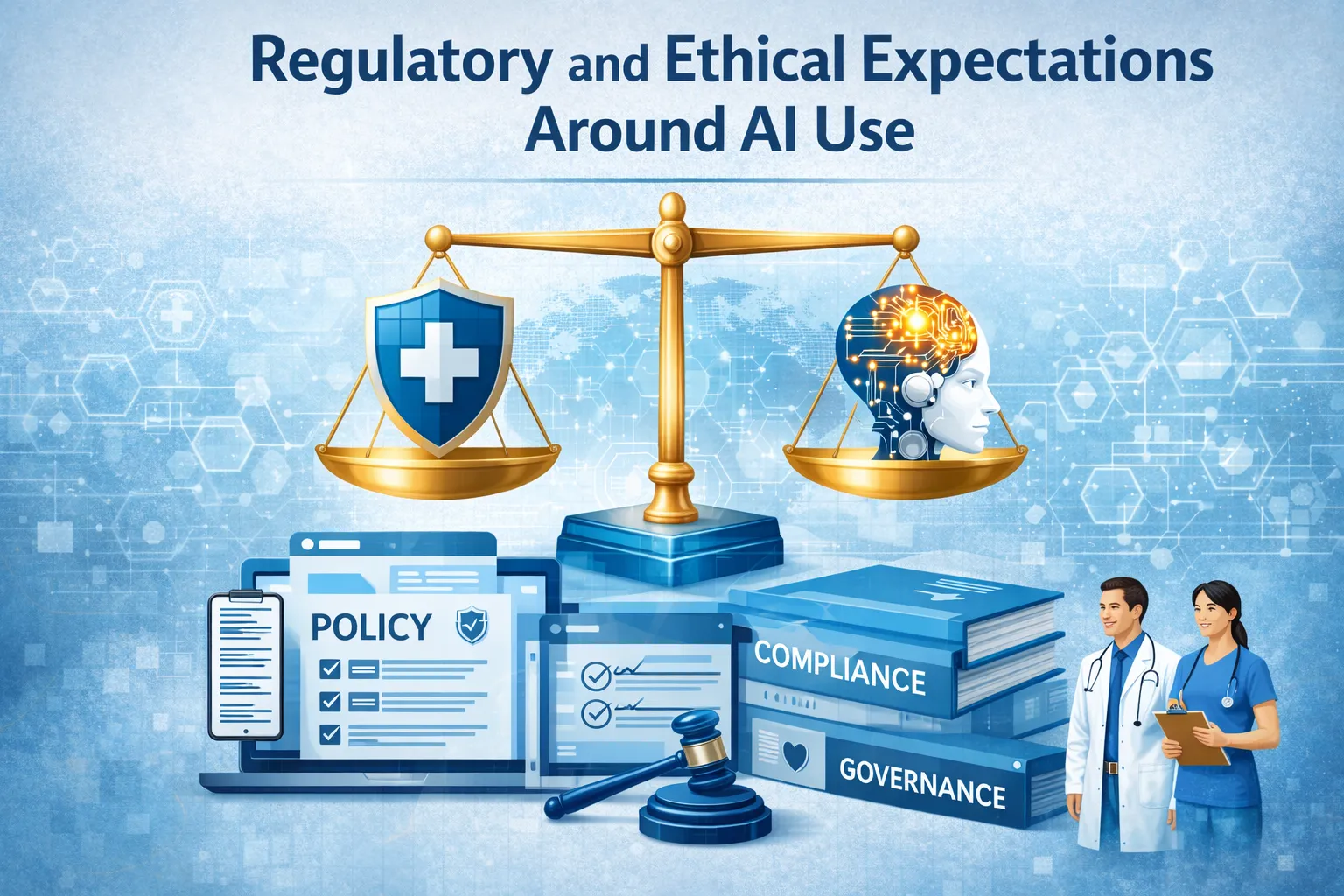
AI is becoming a big part of healthcare. This means we need to look closely at rules and ethics. Healthcare groups must follow many guidelines to make sure AI is used safely.
AI Governance and Clinical Accountability
Good AI governance is key in healthcare. It means having clear rules for AI use. A report by the Australian Digital Health Agency says we need to focus on data quality and how AI works (Australian Digital Health Agency, 2022).
Healthcare workers need to trust AI. They must know its limits. This is why healthcare AI safety training is important in medical school. It helps doctors use AI wisely and safely.
Why Prompt Engineering Supports Ethical AI Use
AI prompt engineering in healthcare is vital for ethical AI use. It helps make sure AI gives the right answers. This improves care and reduces AI mistakes.
Studies show good prompts make AI better in healthcare (Bajwa et al., 2021). So, adding prompt engineering to healthcare AI safety training is key for ethical AI use.
In summary, AI use in healthcare comes with many rules and ethics. By focusing on AI governance, accountability, and prompt engineering, we can use AI safely and ethically.
The Future of Prompt Engineering as a Core Healthcare Skill
Prompt engineering is becoming key in healthcare, changing how we use AI. It’s clear that making good prompts will be essential for healthcare system optimization. This is especially true for safely using AI in hospitals.
Prompt Literacy as Part of Clinical Competency
Prompt literacy is becoming a must-have skill for doctors and nurses. They need to know how to talk to AI systems well. This means knowing how to ask the right questions to get the best answers from AI.
Training programs will have to change to include more about AI. They will focus on teaching how to make precise and relevant prompts. This will help healthcare workers get the most out of AI and avoid its risks.
Preparing Healthcare Systems for AI-Driven Care
Adding AI to healthcare needs a big effort, including innovation in healthcare systems and strong medical software development. As AI gets more common, health organizations must invest in the right tech and training.
This means more than just the tech. It also means training staff and setting rules for AI use. By focusing on prompt engineering and AI knowledge, healthcare can use AI to better care for patients and make things more efficient.
The future of healthcare is linked to AI, and prompt engineering is leading this change. By taking on this challenge, healthcare workers can make sure AI is used well. This will help make healthcare better and more efficient.
FAQ
Healthcare professionals often wonder about using AI safely. They ask how to use AI well without risking patient care. The answer is through healthcare AI safety training. This includes learning about prompt engineering to guide AI outputs right.
They might also ask, “What’s the best way to learn about prompt engineering?” The answer is to join prompt engineering training for professionals. These programs teach how to make precise and context-aware prompts. This training is key to checking and verifying AI outputs to avoid mistakes.
Another common question is, “How does AI prompt engineering affect healthcare?” Effective AI prompt engineering in healthcare makes AI-assisted decisions safer and more reliable. By learning to create the right prompts, healthcare workers can lower the risk of AI errors.
By adding prompt engineering to their skills, healthcare professionals can help improve patient care. They contribute to a safer and more efficient healthcare system.
Q1: What is prompt engineering in the context of healthcare AI?
Prompt engineering in healthcare AI means making sure the inputs to AI systems are right. This ensures the AI gives accurate and safe advice for patient care.
Q2: Why is prompt engineering critical for healthcare professionals?
Prompt engineering is key because it affects the quality and safety of AI advice in patient care. It helps avoid AI mistakes that could harm patients.
Q3: How can poor prompts lead to clinical AI errors?
Bad prompts can cause AI to give wrong or misleading advice. This might lead to wrong diagnoses or treatments, causing harm to patients.
Q4: What skills are essential for healthcare workers to master prompt engineering?
Healthcare workers need to know how to ask the right questions and check AI answers. They must also understand what AI can and can’t do in healthcare.
Q5: How can healthcare professionals be trained in prompt engineering?
Training can happen through AI courses, on-the-job learning, or medical school. It’s best to use real examples and scenarios to teach prompt engineering.
Q6: What role does AI governance play in ensuring safe AI use in healthcare?
AI governance sets rules and ethics for AI in healthcare. It makes sure AI is used safely and responsibly, keeping patients safe.
Q7: How does prompt engineering support ethical AI use in healthcare?
Prompt engineering helps make AI use transparent and fair. It ensures AI advice is clear and follows medical standards, building trust in AI.
Q8: What is the future of prompt engineering in healthcare?
The future of prompt engineering is in making it a key part of healthcare education and practice. This will help healthcare use AI safely and effectively for better patient care.
Q9: How can healthcare systems prepare for AI-driven care?
Healthcare systems should invest in AI training for staff and create strong AI rules. They should also make prompt engineering part of daily work to ensure AI is used safely and well.
Conclusion
Prompt engineering is key for healthcare workers. It lets them use AI safely and effectively. We’ve seen how important it is for prompt engineering for healthcare professionals.
It helps ensure AI is used right in hospitals and clinics. This is crucial for better patient care.
AI literacy for healthcare workers is vital. It helps them use AI well. By making smart prompts, they can avoid AI mistakes.
As AI grows in healthcare, so does the need for safe use. It’s important to train healthcare staff in prompt engineering. This way, they can use AI safely and well.
In short, adding prompt engineering to healthcare education is a must. It’s not just smart thinking. It’s essential for making the most of AI in healthcare.
About the Author & Disclosures
John Cosstick is Founder-Editor of TechLifeFuture.com and winner of the 2024 BOLD Award for Open Innovation in Digital Industries. He is a former banker, accountant, and certified financial planner.
He is now a freelance journalist and author. John is a member of the Media Entertainment and Arts Alliance (Union). You can visit his Amazon author page by clicking HERE.
Reference Links
- https://www.who.int/news/item/19-10-2023-who-outlines-considerations-for-regulation-of-artificial-intelligence-for-health
- https://www.fda.gov/news-events/press-announcements/fda-releases-artificial-intelligencemachine-learning-action-plan
- https://www.fda.gov/media/177030/download
- https://www.england.nhs.uk/long-read/artificial-intelligence-ai-and-machine-learning/
- https://transform.england.nhs.uk/information-governance/guidance/artificial-intelligence/
- https://www.health.gov.au/topics/health-technologies-and-digital-health/what-we-do/artificial-intelligence-ai-in-health-care
- https://consultations.health.gov.au/medicare-benefits-and-digital-health-division/safe-and-responsible-artificial-intelligence-in-he/
- https://pmc.ncbi.nlm.nih.gov/articles/PMC10552880/
- https://www.medrxiv.org/content/10.1101/2025.02.28.25323115v1.full
- https://medinform.jmir.org/2024/1/e54345
- https://pmc.ncbi.nlm.nih.gov/articles/PMC10585440/
- https://arxiv.org/html/2304.14670v2
- https://www.nature.com/articles/s41746-025-01800-1