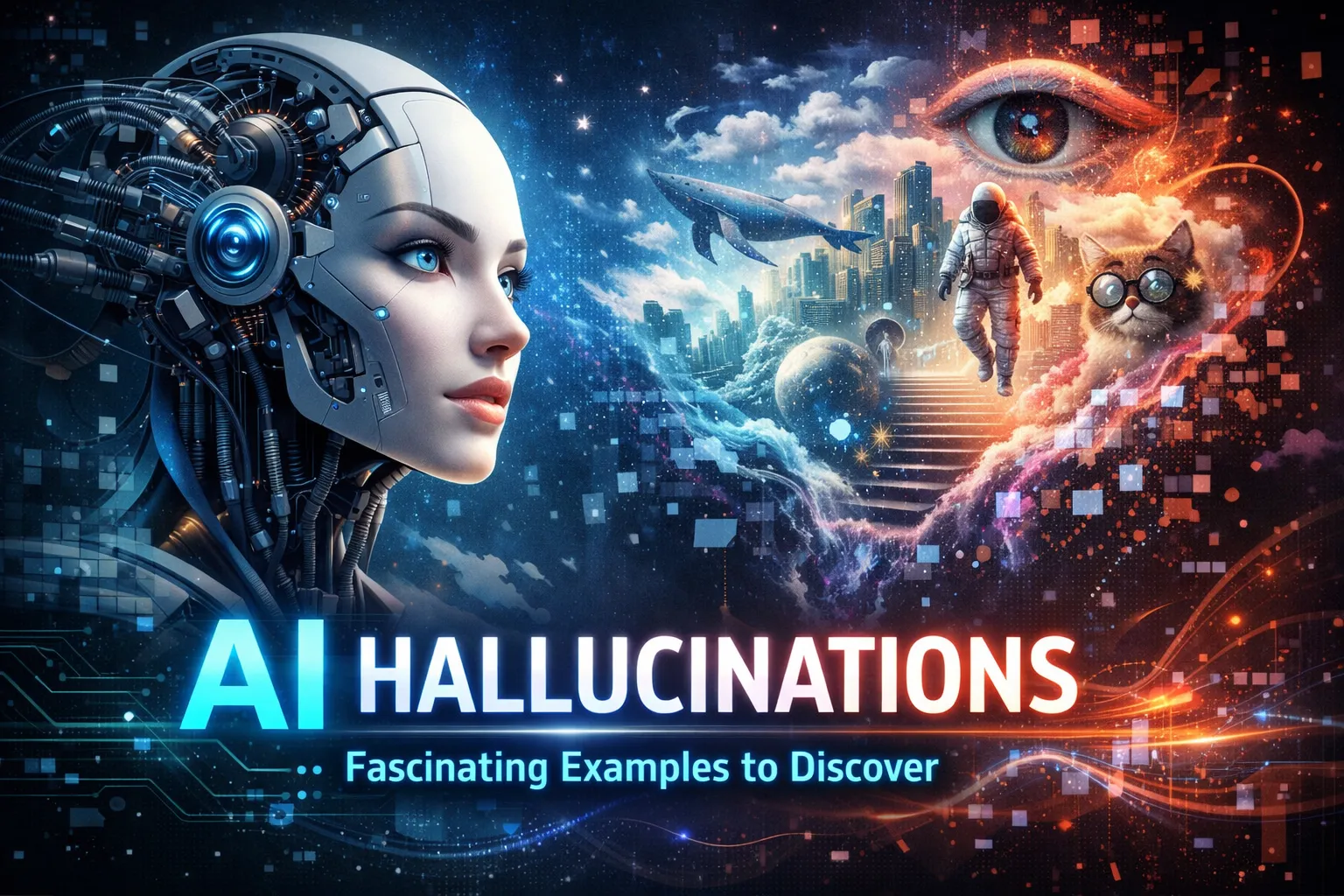
Artificial intelligence has made tremendous progress in recent years, but it is not without its imperfections.
One of the most intriguing phenomena in the AI world is AI hallucinations, where machines perceive or generate information that is not there.
This can lead to some fascinating and sometimes unsettling examples of AI behaviour. Understanding these phenomena is crucial for developing more reliable AI systems.
Research shows that even the best AI models are prone to hallucinations when dealing with entities that lack Wikipedia pages, with accuracy dropping significantly for lesser-known topics. Stanford’s 2025 AI Index Report documents that AI-related incidents rose to 233 in 2024—a record high and a 56.4% increase over 2023.
As we explore the world of AI hallucinations, we will examine various cases that highlight the complexities and challenges of artificial intelligence.
Key Takeaways
- AI hallucinations can lead to fascinating and sometimes dangerous behaviour
- Examining various cases of AI hallucinations provides insights into AI complexities
- Artificial intelligence hallucination cases help us improve AI development
- Recognizing the limitations of AI is essential for its future development
- Current research shows hallucination rates remain significant across all major AI systems
- Real-world consequences range from minor errors to serious safety and financial risks
Understanding AI Hallucinations
Delving into the world of AI hallucinations reveals a complex interplay between data, algorithms, and perception. AI hallucinations refer to the phenomenon where artificial intelligence systems, particularly those based on neural networks, perceive or generate information that is not based on actual data.
This can occur in various domains, including computer vision, natural language processing, and speech recognition.
Definition and Concept
AI hallucinations are often described as the generation of unreal or fabricated information by a machine learning model. This can happen when a model is trained on limited or biased data, leading to the creation of false patterns or features that are not present in the real world.
Unlike traditional software bugs that produce obvious errors, AI hallucinations generate content that appears plausible, well-reasoned, and authoritative while being fundamentally incorrect or fabricated. The concept of AI hallucinations has become a significant concern in the scientific community, with some researchers avoiding the term “hallucination” as potentially misleading, preferring terms like “confabulation” for processes involving creative gap-filling.
How AI Hallucinations Differ from Human Hallucinations
Unlike human hallucinations, which are typically associated with psychological or neurological conditions, AI hallucinations are a result of algorithmic and data-related issues. AI systems do not perceive reality in the same way humans do; instead, they process and generate information based on complex mathematical models.
While humans make mistakes due to memory lapses, cognitive biases, or incomplete information, AI hallucinations emerge from the fundamental architecture of current AI systems. Modern large language models work by predicting the most likely next word or phrase based on patterns learned from vast datasets, rather than maintaining explicit knowledge representations or fact-checking mechanisms.
This distinction matters because it affects how we approach detection and prevention. Human errors often follow predictable patterns related to cognitive limitations, while AI hallucinations can appear in contexts where the AI system seems most confident and authoritative.
The Science Behind AI Hallucinations
The science behind AI hallucinations is multifaceted, involving aspects of neural networks, pattern recognition, and decision-making confidence. To understand how AI hallucinations occur, it is essential to explore the underlying mechanics of artificial intelligence systems.
Neural Network Fundamentals
Neural networks are a crucial component of AI systems, designed to mimic the human brain’s ability to learn and process information. These networks consist of layers of interconnected nodes or “neurons” that work together to recognize patterns and make decisions. Deep learning models, a subset of neural networks, are particularly prone to hallucinations due to their complex architecture and ability to process vast amounts of data.
Current generative AI models, including large language models like GPT series, Claude, and Gemini, use neural networks trained to generate text by predicting probable continuations of input sequences. This process, while enabling remarkable fluency and creativity, also creates inherent tendencies toward hallucination.
Pattern Recognition Gone Wrong
Pattern recognition is a fundamental aspect of AI functionality, enabling systems to identify objects, understand language, and make predictions. However, when pattern recognition goes wrong, AI systems can produce hallucinations. This can occur due to overfitting or underfitting of the training data, leading to misinterpretation or misclassification of information.
When faced with queries that push beyond their training data or require synthesis of information across domains, these models may generate plausible-sounding responses by combining patterns learned from similar contexts. The resulting output can appear authoritative while containing significant factual errors or entirely fabricated information.
Confidence Scores and Uncertainty
AI systems often provide confidence scores to indicate the certainty of their predictions or decisions. However, these scores can be misleading, as high confidence does not always equate to accuracy. Understanding the uncertainty associated with AI decision-making is crucial for mitigating hallucinations and improving overall system reliability.
Research has shown that AI models often display higher confidence when generating incorrect information compared to accurate responses, using phrases like “definitely” and “certainly” more frequently in hallucinated content [16]. This counterintuitive pattern makes hallucinations particularly dangerous, as users may be more likely to trust confidently stated false information.
Common Causes of AI Hallucinations
The phenomenon of AI hallucinations can be attributed to several key factors related to their development and training. AI systems, particularly those based on deep learning models, are prone to hallucinations due to various reasons that can be broadly categorized into data-related issues, model complexities, and external influences.
Insufficient Training Data
One of the primary causes of AI hallucinations is the lack of sufficient and diverse training data. When AI models are trained on limited datasets, they may not learn to recognize and interpret all possible scenarios accurately. This inadequate exposure to various data points can lead to the generation of hallucinatory content.
Even the largest language models are trained on finite amounts of text data, inevitably creating knowledge gaps about specific topics, recent events, or specialized domains. When these models encounter queries about underrepresented areas, they may fill gaps by extrapolating from related but distinct information.
For example, if a model has limited training data about a particular medical condition, it might generate treatment recommendations by combining information from similar conditions, potentially creating dangerous medical misinformation.
Overfitting and Underfitting
Overfitting and underfitting are two significant factors that contribute to AI hallucinations. Overfitting arises when a model becomes too closely aligned with its training data, capturing noise and outliers rather than the underlying patterns. This causes the model to perform well on familiar examples while struggling to generalise effectively to new or unseen data.
This can cause the model to generate hallucinatory outputs that are not grounded. Conversely, underfitting happens when a model is too simple to capture the underlying patterns in the training data, leading to inaccurate or hallucinated outputs.
Adversarial Examples
Adversarial examples are another cause of AI hallucinations. These are inputs to a model that are specifically designed to cause it to misbehave or produce incorrect outputs. For instance, a subtle, imperceptible change to an image of a stop sign might cause an autonomous vehicle’s AI to misinterpret it as a yield sign. By subtly manipulating the input data, adversaries can induce AI models to hallucinate, generating outputs that are not based on actual data.
Certain types of queries consistently trigger higher hallucination rates across different AI systems. Requests for specific facts about obscure topics, demands for citations and references, questions requiring synthesis across multiple domains, and prompts asking for recent information not covered in training data all show elevated hallucination frequencies.
Research on AI factuality found that models perform significantly worse on entities without Wikipedia pages compared to well-documented topics, suggesting that the availability of training data directly impacts hallucination likelihood.
AI Hallucinations Examples in Language Models
AI hallucinations in language models represent a fascinating yet challenging area of study, as these models generate text that may not be grounded. Language models, such as ChatGPT, BERT, and GPT, have demonstrated the ability to produce coherent and sometimes creative text. However, they can also generate content that is factually incorrect or entirely fabricated.
ChatGPT’s Creative Fabrications
ChatGPT, a popular language model, has been observed to produce a range of hallucinatory content. This includes:
Fictional References and Citations
ChatGPT may generate references or citations that are entirely fictional. For instance, it might provide a bibliography with made-up authors, titles, and publication details, which can be problematic for users relying on this information for academic or professional purposes.
Scientists have documented numerous instances where ChatGPT created non-existent academic papers with convincing but fabricated titles and author names. These fabricated citations often follow proper academic formatting conventions, making them difficult to identify without manual verification. The implications for students, researchers, and professionals who rely on AI assistance for literature reviews and academic writing are significant.
Invented Historical Events
In some cases, ChatGPT has been known to invent historical events or attribute false quotes to historical figures. This can lead to the dissemination of misinformation if not properly verified.
AI systems have been documented creating detailed accounts of historical events that never occurred, attributing false quotes to real historical figures, and generating biographical information that mixes accurate details with entirely fictional elements. These fabrications often maintain historical plausibility while introducing significant inaccuracies that could mislead users researching historical topics.
BERT and GPT Hallucination Cases
Other language models, such as BERT and various versions of GPT, have also exhibited hallucination behaviours. These models can generate text that is not only fluent but also appears factual, making it challenging to distinguish between real and hallucinated content.
Legal and Academic Citation Hallucinations
A significant concern with AI hallucinations in language models is the generation of false legal and academic citations. This can have serious implications, particularly in legal and academic contexts where accuracy is paramount.
The legal profession has experienced particularly high-profile cases of AI citation hallucinations. In 2023, lawyer Steven Schwartz gained international attention when he submitted a legal brief containing citations to six non-existent court cases generated by ChatGPT. U.S. District Judge P. Kevin Castel ordered Schwartz, his colleague Peter LoDuca, and their law firm to pay $5,000 in sanctions for submitting the fabricated citations and for their subsequent lack of candour about the incident.
Subsequent research found that legal AI tools hallucinate between 17% and 33% of the time when answering legal queries, with some systems producing fabricated case law in significant numbers of responses. This finding has prompted bar associations across multiple states to issue guidelines requiring lawyers to verify AI-generated legal research.
Academic professionals, particularly academic librarians, have observed a significant increase in workload related to verifying the accuracy of references, with some institutions considering implementing their own citation auditing to track the problem of fictitious references.

Visual AI Hallucination Phenomena
The realm of visual AI has given rise to fascinating phenomena known as hallucinations. These are instances where AI systems generate or interpret visual information in ways that are not grounded. This can result in intriguing and sometimes unsettling images that challenge our understanding of AI capabilities.
DeepDream and Neural Style Transfer
DeepDream, a program developed by Google, uses a convolutional neural network to identify and enhance patterns in images, resulting in surreal and dreamlike visuals. Neural style transfer, another technique, allows for the transformation of images into the style of famous artworks or other reference images. These technologies demonstrate how AI can creatively hallucinate visual content.
GAN-Generated Hallucinatory Images
Generative Adversarial Networks (GANs) have become a powerful tool for generating realistic images. However, they can also produce hallucinatory images that are entirely fictional. GANs work by pitting two neural networks against each other, resulting in highly realistic but sometimes entirely fabricated visuals.
Face Morphing Anomalies
One of the issues with GAN-generated images is face morphing anomalies, where the AI blends faces in unexpected ways, creating unsettling or unnatural results. This can have implications for security and privacy.
Impossible Object Generation
GANs can also generate images of objects that are impossible, such as objects with contradictory features or structures that defy physical laws. For example, a GAN might generate an image of a chair with a built-in staircase or a building with doors that open directly into walls. This showcases the creative but sometimes erratic nature of AI hallucinations.
Computer Vision Misidentifications
Computer vision systems, while advanced, can misidentify objects or patterns, leading to hallucinations. This can occur due to insufficient training data, adversarial examples, or overfitting. Understanding these misidentifications is crucial for improving the reliability of computer vision systems.
Mitigating these hallucinations requires robust training datasets and ongoing testing to ensure that AI systems can accurately interpret visual information.
These visual hallucinations can include impossible architectural structures, non-existent geographical locations, or manipulated historical photographs that appear authentic but contain significant factual errors. The challenge with visual hallucinations is that they often require specialized knowledge or technical analysis to detect, making them particularly problematic for general audiences.
Audio and Speech Recognition Hallucinations
The phenomenon of AI hallucinations extends into the realm of audio and speech recognition, presenting unique challenges. As AI continues to advance in these areas, understanding the nature of these hallucinations is crucial for improving system accuracy and reliability.
Phantom Words in Speech-to-Text
Phantom words in speech-to-text systems refer to the occurrence of words or phrases that are not present in the original audio input. This phenomenon can be attributed to the complex algorithms used in speech recognition, which sometimes misinterpret background noise or other audio signals as speech.
Comprehensive research led by Cornell University’s Allison Koenecke examined OpenAI’s Whisper speech-to-text system, revealing significant hallucination issues. The study found that roughly 1% of Whisper’s audio transcriptions contained entire hallucinated phrases or sentences that did not exist in the original audio.
More concerning, the research revealed that 38% of these hallucinations included explicit harms such as perpetuating violence, making up inaccurate associations, or implying false authority. The study analysed over 13,000 audio clips and found that hallucinations were significantly more likely to occur for speakers with aphasia and those whose audio contained longer pauses or silences.
The Cornell research found that Whisper hallucinations often included fabricated medical information, violent rhetoric, and invented personal details. In one documented case, Whisper correctly transcribed a simple sentence but then generated five additional sentences containing words like “terror,” “knife,” and “killed”—none of which appeared in the original audio.
These findings are particularly concerning given that hospitals and healthcare providers are increasingly adopting Whisper-based tools for transcribing patient consultations, despite OpenAI’s warnings that the tool should not be used in high-risk domains.
Notably, the Cornell researchers found no evidence of similar hallucinations in competing speech recognition systems from Google, Microsoft, Amazon, AssemblyAI, or RevAI when tested on the same audio samples.
Music Generation Anomalies
Music generation AI models, like those used in composition or audio synthesis, can also exhibit hallucinatory behaviour. This might manifest as the generation of musical notes or patterns that are not based on any input data or that deviate significantly from the expected style or genre.
Research into music generation anomalies is ongoing, with efforts focused on refining these AI systems to produce more coherent and contextually appropriate music. This involves not only improving the algorithms but also ensuring that the training data is diverse and representative of various musical styles.
Medical AI Hallucination Case Studies
The integration of AI in medical diagnostics has led to significant advancements, but it has also introduced instances of AI hallucinations. These cases highlight the need for more robust and reliable AI systems in healthcare.
Diagnostic Imaging Misinterpretations
AI-powered diagnostic imaging has shown remarkable capabilities, but it is not immune to errors. Misinterpretations can occur due to various factors, including insufficient training data or complex imaging scenarios.
False Tumor Identifications
In some cases, AI systems have incorrectly identified tumors in diagnostic images, leading to unnecessary patient anxiety and additional testing. Research has documented instances where AI systems misidentified benign lesions as malignant in significant percentages of examined cases.
Recent research on medical AI chatbots has revealed concerning patterns of hallucination in healthcare applications. Studies found that AI chatbots had hallucination rates ranging from 37% to 62% when asked to provide medical references, with particularly high error rates for reference relevancy and publication dates.
Missed Pathology Cases
Conversely, AI systems have also missed actual pathology cases, potentially delaying diagnosis, and treatment. Reviews of AI-assisted diagnostic imaging have revealed instances where AI failed to detect abnormalities that were later confirmed by human radiologists.
Clinical Decision Support Errors
AI-driven clinical decision support systems are designed to aid healthcare professionals in making informed decisions. However, these systems can also produce erroneous recommendations due to AI hallucinations.
For example, an AI system might suggest an inappropriate treatment plan based on misinterpreted patient data or an incomplete medical history. Such errors underscore the importance of rigorous testing and validation of AI systems in clinical settings.
The IBM Watson for Oncology Case
One of the most extensively documented cases of medical AI hallucinations involved IBM’s Watson for Oncology system. Internal IBM documents obtained by STAT News revealed that the system frequently generated “unsafe and incorrect” cancer treatment recommendations that conflicted with established medical guidelines.
The investigation found that Watson for Oncology was trained on hypothetical patient cases rather than real patient data, which inherently limited its ability to generalize to the complexities and variability of actual clinical scenarios. Its recommendations were based on the opinions of a few specialists rather than evidence-based guidelines.
The Watson for Oncology program was ultimately sold to Francisco Partners in 2022 for approximately $1 billion, significantly less than IBM’s estimated $4-5 billion investment in Watson Health.
By examining these case studies, we can better understand the challenges associated with AI hallucinations in medical AI and work towards developing more accurate and reliable systems.
Autonomous Vehicle Perception Hallucinations
As autonomous vehicles become more prevalent, understanding AI-induced perception hallucinations is crucial for their safe operation. Autonomous vehicles rely on complex AI systems to interpret sensory data from their environment, making decisions based on this interpretation. However, these systems can sometimes misinterpret or hallucinate data, leading to potentially dangerous situations.
Phantom Objects and Obstacles
One common form of hallucination in autonomous vehicles is the perception of phantom objects or obstacles. This occurs when the AI system misinterprets sensor data, such as from cameras or lidar, and perceives objects that are not actually present. For instance, a shadow on the road might be misidentified as a pedestrian, causing the vehicle to unnecessarily brake or change course.
Weather and Lighting-Induced Hallucinations
Weather and lighting conditions can also induce hallucinations in autonomous vehicle perception systems. For example, heavy rain or fog can cause the AI to misinterpret sensor data, perceiving obstacles where none exist. Similarly, unusual lighting conditions, such as glare from the sun or reflections off surfaces, can lead to misinterpretation of the environment.
These computer vision hallucination patterns can be particularly challenging to mitigate, requiring sophisticated algorithms and extensive training data to accurately distinguish between real and hallucinated objects.
Financial and Trading AI Hallucinations
As AI continues to permeate the financial sector, the occurrence of AI hallucinations poses a significant challenge to traders and investors alike. AI-generated hallucinations in financial trading are becoming a growing concern as they can lead to misinformed investment choices.
The financial industry’s reliance on AI for market analysis and trading decisions has introduced new risks, primarily due to AI hallucinations. These hallucinations can manifest in various ways, including the misidentification of market patterns and the generation of false signals in algorithmic trading.
Market Pattern Misidentification
AI systems, particularly those using machine learning algorithms, are trained on historical data to identify patterns that can predict future market movements. However, when these systems hallucinate, they may misidentify patterns or see patterns where none exist, leading to incorrect predictions.
Examples of market pattern misidentification include AI models incorrectly predicting stock prices based on perceived patterns that are not there. This can lead to significant financial losses if traders act on these predictions without human oversight.
Algorithmic Trading False Signals
Algorithmic trading relies heavily on AI to generate trading signals based on complex algorithms analysing vast amounts of market data. However, AI hallucinations can result in the generation of false trading signals. These false signals can trigger trades that are not based on real market conditions, potentially leading to substantial financial losses.
For example, an AI system might generate a buy signal based on a hallucinated pattern in the market data. If executed, this trade could result in losses if the pattern does not materialize as predicted.
Recent research has documented cases where AI-driven trading systems generate spurious buy or sell signals based on non-existent market patterns, particularly during periods of low liquidity or unusual market conditions.
In conclusion, while AI has the potential to revolutionize financial trading, it is essential to be aware of the risks associated with AI hallucinations. By understanding these risks and implementing appropriate safeguards, the financial industry can mitigate the impact of AI-generated hallucinations.
Social Media Content Moderation Hallucinations
As social media platforms increasingly adopt AI for content moderation, they face challenges related to AI hallucinations. These hallucinations can manifest in various ways, affecting the accuracy and fairness of content moderation.
One of the significant issues arising from AI hallucinations in content moderation is the occurrence of false positive content flags. This happens when the AI system incorrectly identifies harmless content as violating the platform’s policies.
False Positive Content Flags
False positives can lead to unnecessary censorship and frustration for users. For instance, a post might be flagged due to a misinterpretation of context or cultural nuances that the AI fails to understand. Research into AI hallucination case studies has shown that improving the training data for AI models can help reduce such errors.
Context Misinterpretation Cases
Another challenge is the misinterpretation of context by AI systems. This can result in content being moderated incorrectly due to a lack of understanding of the subtleties involved. Artificial intelligence hallucination cases in social media often highlight the need for more sophisticated AI that can grasp context more accurately.
Addressing these challenges requires ongoing research and development in AI technology, focusing on improving the accuracy and contextual understanding of content moderation systems.
Creative AI Hallucinations in Art and Design
As AI models like DALL-E and Midjourney gain prominence, their propensity for generating hallucinatory content is becoming more apparent. These models, based on complex neural networks, can produce a wide range of artistic outputs, from surreal landscapes to abstract art pieces.
DALL-E and Midjourney Anomalies
DALL-E and Midjourney are at the forefront of AI-generated art, using sophisticated algorithms to create images from textual descriptions. However, their creativity sometimes results in hallucinatory images that are unexpected or unconventional. For instance, DALL-E might generate an image that combines elements not present in the original prompt, creating a surreal or dreamlike scenario.
Artistic Style Hallucinations
AI models can also hallucinate when mimicking specific artistic styles. For example, when tasked with generating art in the style of a particular painter, the AI might introduce elements not characteristic of that style, effectively creating a new, hybrid form of art. This phenomenon highlights both the potential and the limitations of AI in creative fields.
The study of these AI-generated hallucinations not only provides insights into the workings of neural networks but also opens new avenues for artistic expression. As AI continues to evolve, understanding and harnessing its creative potential will be crucial for artists, designers, and technologists alike.
Research has documented cases where AI systems generate images claiming to represent specific historical events or cultural practices while including anachronistic elements or cultural misrepresentations that could mislead viewers about historical or cultural facts.
Detecting and Preventing AI Hallucinations
Ensuring the integrity of AI decision-making processes requires effective strategies to mitigate hallucinations. As AI systems become increasingly sophisticated, the need to detect and prevent hallucinations has become a critical aspect of machine learning research.
Technical Approaches to Mitigation
Several technical approaches have been developed to mitigate AI hallucinations. These include methods that quantify uncertainty and techniques that leverage ensemble learning.
Uncertainty Quantification Methods
Uncertainty quantification methods aim to measure the confidence of AI models in their predictions. By understanding when a model is uncertain, it is possible to flag potentially hallucinatory outputs. Techniques such as Bayesian Neural Networks are being explored for their ability to provide uncertainty estimates.
Research from institutions like the University of Pennsylvania has developed techniques such as Bayesian Neural Networks and Monte Carlo Dropout that provide uncertainty estimates alongside AI predictions [15].
Ensemble Learning Techniques
Ensemble learning involves combining the predictions of multiple models to improve overall performance and reduce hallucinations. By aggregating outputs from diverse models, ensemble methods can help identify and mitigate hallucinatory content. This approach has shown promise in various AI hallucination scenarios.
Additional technical methods showing promise include:
Retrieval-Augmented Generation (RAG): This approach integrates AI models with reliable databases, enabling real-time access to accurate information and reducing reliance on potentially hallucinated content from training data.
Multi-Model Consensus: Using multiple AI models to analyse the same input and comparing their outputs can help identify inconsistencies that may indicate hallucinations.
Source Verification Systems: Automated systems that check AI-generated citations and references against legitimate databases can catch fabricated sources before they are accepted as factual.
Human-in-the-Loop Verification
While technical approaches are crucial, human oversight remains essential for detecting and preventing AI hallucinations. Human-in-the-loop verification involves having human evaluators review AI outputs to identify potential hallucinations. This hybrid approach combines the strengths of AI processing with human judgment, enhancing the reliability of AI systems.
Despite advances in automated detection, human oversight remains crucial for identifying and preventing AI hallucinations:
Expert Review: Domain specialists can identify subtle inaccuracies or implausible claims that automated systems might miss.
Cross-Reference Checking: Systematic verification of AI-generated claims against authoritative sources helps catch hallucinated information.
Red Team Testing: Deliberate attempts to trigger hallucinations through adversarial prompting can help identify system vulnerabilities.
By integrating technical mitigation strategies with human verification, it is possible to significantly reduce the occurrence of AI hallucinations, thereby improving the trustworthiness of AI outputs.

Ethical Implications of AI Hallucinations
As AI continues to evolve, the phenomenon of AI hallucinations raises critical ethical questions. AI hallucinations, where AI systems generate or perceive information not based on actual data, have significant implications across various sectors.
Misinformation and Trust Issues
One of the primary ethical concerns surrounding AI hallucinations is the potential spread of misinformation. When AI systems, especially those in critical domains like healthcare or finance, provide false information, it can lead to misinformed decisions.
For instance, an AI system misdiagnosing a medical condition due to hallucination can have severe consequences. The erosion of trust in AI systems is another significant issue, as repeated instances of AI hallucinations can make users sceptical about the reliability of AI-generated information.
Research suggests that the confident presentation of hallucinated information may be particularly damaging to trust, as users naturally associate confidence with accuracy. This mismatch between AI confidence and reliability creates ongoing challenges for AI adoption in critical applications.
Responsibility and Accountability
The ethical implications of AI hallucinations also extend to questions of responsibility and accountability. When an AI system hallucinates, who is to blame? Is it the developer, the user, or the AI system itself? Determining accountability is crucial for addressing the consequences of AI hallucinations. Moreover, establishing clear guidelines and regulations can help mitigate the risks associated with AI hallucinations, ensuring that AI is developed and used responsibly.
Questions of liability for AI hallucinations remain largely unresolved in most legal jurisdictions. When an AI system hallucinates information that leads to harmful decisions, determining responsibility among developers, deploying organizations, and end users presents complex legal challenges.
Recent legal cases, such as the sanctions faced by lawyers who submitted AI-generated fabricated citations, suggest that courts are beginning to hold users accountable for verifying AI outputs [7][14]. However, the broader question of AI developer liability for hallucination-related harms remains an active area of legal and policy development.
In conclusion, the ethical implications of AI hallucinations are multifaceted, involving issues of misinformation, trust, responsibility, and accountability. Addressing these concerns is essential for the ethical development and deployment of AI systems.
Future Research Directions in AI Hallucination
Future advancements in AI depend heavily on our ability to reduce hallucinations in neural networks. As AI systems become increasingly integrated into various aspects of life, the need for accuracy and reliability grows. Researchers are actively exploring new methods to mitigate hallucinations, enhancing the overall performance of AI models.
Emerging Techniques for Hallucination Reduction
Recent studies have focused on developing techniques to reduce hallucinations in AI. One promising approach involves improving the quality and diversity of training data. By exposing AI models to a broader range of scenarios, researchers aim to enhance their ability to recognize and accurately respond to real-world inputs. Additionally, advancements in neural network architecture, such as the development of more sophisticated attention mechanisms, are showing potential in minimizing hallucinations.
Researchers are exploring several promising approaches to hallucination reduction:
Improved Training Methodologies: Better data curation, more diverse training datasets, and techniques for handling uncertainty during training may reduce hallucination rates.
Real-Time Fact-Checking: Integration of AI systems with live databases and fact-checking resources could help prevent the generation of verifiably false information.
Constitutional AI: Training approaches that embed truthfulness and accuracy requirements directly into AI system objectives.
Cross-Domain Hallucination Studies
Cross-domain hallucination studies represent another critical area of research. By investigating how hallucinations manifest across different domains and applications, scientists can identify common underlying causes and develop more universally applicable solutions. This involves comparing hallucination phenomena in areas such as computer vision, natural language processing, and speech recognition to uncover patterns and potential mitigation strategies.
Governments and regulatory bodies are beginning to address AI hallucination risks through policy initiatives:
Transparency Requirements: Proposed regulations that would require disclosure of AI capabilities and limitations, including hallucination rates.
Safety Standards: Development of testing protocols and safety standards for AI systems used in critical applications.
Liability Frameworks: Legal frameworks for addressing responsibility when AI hallucinations cause harm.
Practical Guidance for AI Users
For individuals and organizations working with AI systems, several practical strategies can help mitigate hallucination risks:
Best Practices for AI Verification
Always Verify Critical Information: Never rely solely on AI-generated content for important decisions without independent verification.
Check Sources and Citations: Manually verify that cited sources exist and support the claims attributed to them.
Cross-Reference Multiple Sources: Compare AI outputs with information from authoritative, independent sources.
Understand AI Limitations: Recognize that AI systems are most likely to hallucinate when dealing with specialized, recent, or controversial topics.
Use Domain Expertise: When possible, have subject matter experts review AI-generated content in their areas of specialization.
Red Flags for Potential Hallucinations
Users should be particularly cautious when AI outputs include:
- Highly specific claims without verifiable sources
- Overly confident statements about controversial or uncertain topics
- Citations to obscure or non-existent publications
- Technical or specialized information outside the AI’s likely training data
- Recent events or information that may not have been included in training datasets
Organizational Policies
Many organizations have implemented policies and procedures to address AI hallucination risks:
Disclosure Requirements: Some institutions now require explicit labelling of AI-generated content and warnings about potential inaccuracies.
Verification Protocols: Formal processes for fact-checking AI outputs before they are used in critical applications.
Training Programs: Educational initiatives to help users understand AI limitations and develop skills for detecting potential hallucinations.
FAQ
Q1: What are AI hallucinations?
AI hallucinations refer to the phenomenon where artificial intelligence models, particularly those based on neural networks, generate or perceive information that is not based on actual data or reality.
Q2: How do AI hallucinations differ from human hallucinations?
Unlike human hallucinations, which are a product of the human brain’s perception and can be influenced by various psychological and neurological factors, AI hallucinations are a result of the complex interactions within AI algorithms and models.
Q3: What are some common causes of AI hallucinations?
Common causes of AI hallucinations include insufficient training data, overfitting, underfitting, and adversarial examples, which can lead to the misinterpretation or generation of incorrect information.
Q4: Can AI hallucinations occur in language models like ChatGPT?
Yes, language models like ChatGPT can generate hallucinatory content, including fictional references, invented historical events, and incorrect citations, which can be misleading or false.
Q5: How do AI hallucinations affect computer vision?
In computer vision, AI hallucinations can lead to misidentifications, such as phantom objects or obstacles, and can be induced by factors like weather and lighting conditions.
Q6: What are some methods for detecting and preventing AI hallucinations?
Technical approaches like uncertainty quantification, ensemble learning, and human-in-the-loop verification can help detect and prevent AI hallucinations.
Q7: What are the ethical implications of AI hallucinations?
AI hallucinations can lead to the spread of misinformation, trust issues, and questions of responsibility and accountability, highlighting the need for careful consideration of their ethical implications.
Q8: Can AI hallucinations occur in other domains like art and design?
Yes, AI hallucinations can also occur in creative fields like art and design, where models like DALL-E and Midjourney can produce anomalies and hallucinations in artistic styles.
Q9: How can AI hallucinations be mitigated in enterprise AI systems?
Mitigating AI hallucinations in enterprise AI systems requires a combination of technical approaches, such as uncertainty quantification and ensemble learning, and human-in-the-loop verification.
Q10: What are some future research directions in AI hallucination?
Future research directions in AI hallucination include emerging techniques for reducing hallucinations and cross-domain hallucination studies, which can help improve our understanding and mitigation of AI hallucinations.
Conclusion
As explored in the preceding sections, AI hallucinations manifest in diverse forms across various industries, from language models and visual AI to medical diagnostics and autonomous vehicles. The AI hallucinations examples discussed illustrate the complex challenges posed by these phenomena.
Artificial intelligence hallucination case studies reveal that insufficient training data, overfitting, and adversarial examples are common causes of AI hallucinations. Understanding these causes is crucial for developing effective mitigation strategies.
Detecting and preventing AI hallucinations requires a multifaceted approach, including technical solutions and human-in-the-loop verification. As AI continues to evolve, addressing these hallucinations is vital for maintaining trust and ensuring the reliability of AI systems.
By examining AI hallucination examples and artificial intelligence hallucination case studies, we can better understand the implications of AI hallucinations and work towards creating more robust AI systems.
The key takeaway is that while AI hallucinations present significant challenges, awareness, proper verification protocols, and continued research into detection and prevention methods can help us harness AI’s benefits while minimizing its risks.
About the Author
John Cosstick is a writer, author, and the Founder-Editor of TechLifeFuture.com, drawing on deep prior experience across banking, financial planning, and accounting. A Retired Certified Financial Planner and retired Fellow of the Institute of Public Accountants (FIPA), he is also a partner and minor shareholder in Mindhive.ai and maintains a portfolio of patent applications pending before IP Australia and the World Intellectual Property Organization (WIPO) covering AI governance, cryptographic verification and insurability frameworks. His work has been recognised internationally: in 2024, he won the BOLD Award for Open Innovation in Digital Industries, and in 2026, the BOLD Awards VII InsurTech category for AIMS Governance.
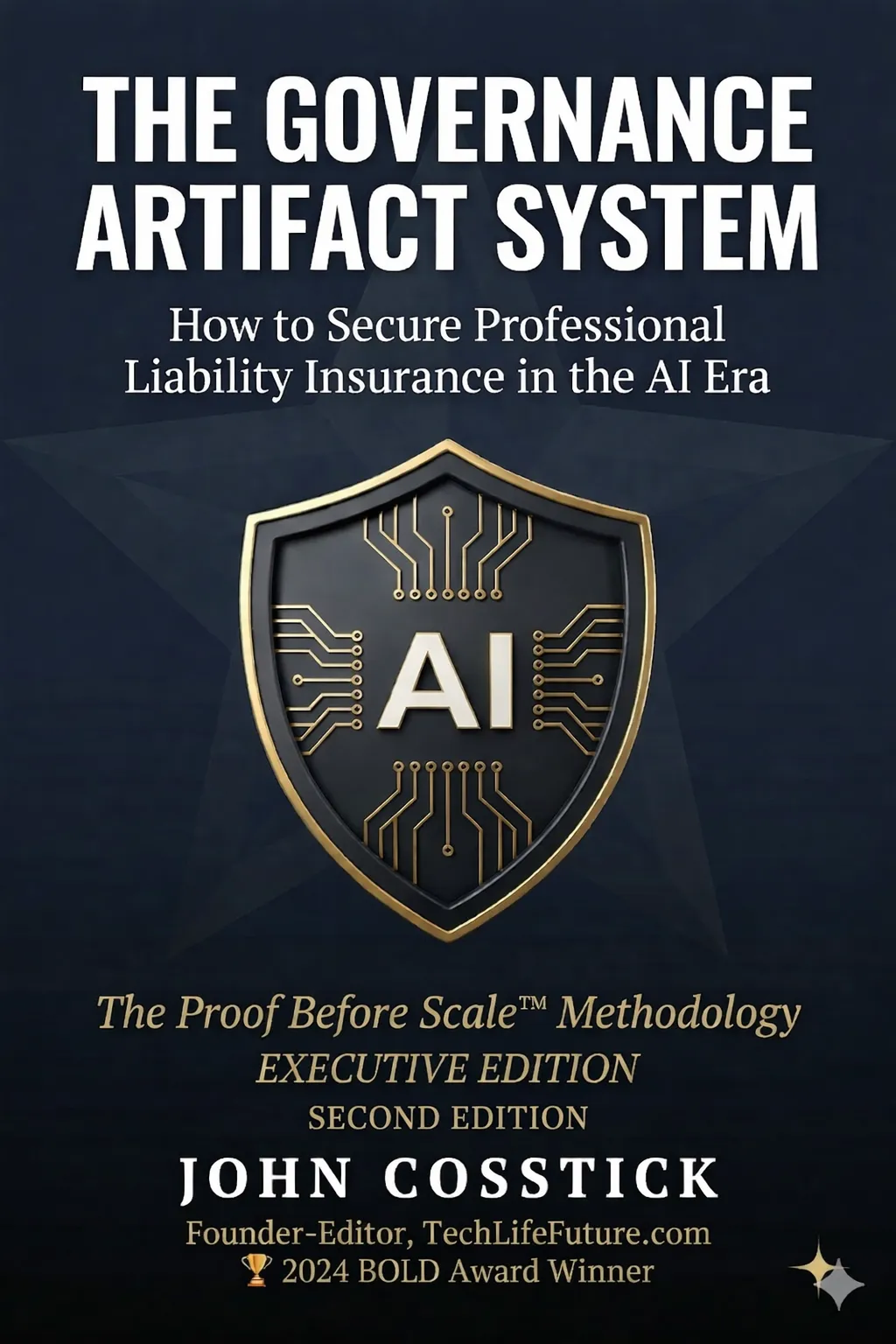
Earlier in his career, he served as a bank compliance manager and has since contributed to the UK Money and Pensions Service Debt Review and UN AI for Good initiatives. Writing from Melbourne, Australia, John focuses on AI governance, professional liability and the insurability of AI-enabled professional services. A preview of his recent book, The Governance Artifact System — How to Secure Professional Liability Insurance in the AI Era, is available on Amazon: view the preview here.
Verified Citations
[1] Koenecke, A., et al. (2024). “Careless Whisper: Speech-to-Text Hallucination Harms.” Proceedings of the ACM Conference on Fairness, Accountability, and Transparency.
[2] Stanford Institute for Human-Centered AI (2025). “The AI Index Report 2025.” Stanford University.
[3] Tao, Y., Yoo, C., & Animesh, A. (2024). “Detection of AI Hallucinations: The Impact of Information Characteristics.” ICIS 2024 Proceedings.
[4] Edwards, B. (2024). “AI speech-to-text can hallucinate violent language.” Ars Technica.
[5] Ross, C. & Swetlitz, I. (2017). “IBM pitched its Watson supercomputer as a revolution in cancer care. It’s nowhere close.” STAT News.
[6] Ross, C. & Swetlitz, I. (2018). “IBM’s Watson recommended ‘unsafe and incorrect’ cancer treatments.” STAT News.
Editorial Disclosures
1. Citation Accuracy & Verification Statement
At TechLifeFuture, every article undergoes a multi-step fact-checking and citation audit process. We verify technical claims, research findings, and statistics against primary sources, authoritative journals, and trusted industry publications.
Our editorial team adheres to Google’s EEAT (Expertise, Experience, Authoritativeness, and Trustworthiness) principles to ensure content integrity. If you have questions about any references used or would like to suggest improvements, please contact us at [email protected] with the subject line: Citation Feedback.
2. Amazon Affiliate Disclosure
We are a participant in the Amazon Services LLC Associates Program, an affiliate advertising program designed to provide a means for us to earn fees by linking to Amazon.com and affiliated sites. If you click on an Amazon link and make a purchase, we may earn a small commission at no extra cost to you.
3. General Affiliate Disclosure
Some links in this article may be affiliate links. This means we may receive a commission if you sign up or purchase through those links—at no additional cost to you. Our editorial content remains independent, unbiased, and grounded in research and expertise. We only recommend tools, platforms, or courses we believe bring real value to our readers.
4. Legal and Professional Disclaimer
The content on TechLifeFuture.com is for educational and informational purposes only and does not constitute professional advice, consultation, or services. AI technologies evolve rapidly and vary in application. Always consult qualified professionals—such as data scientists, AI engineers, or legal experts—before implementing any strategies or technologies discussed. TechLifeFuture assumes no liability for actions taken based on this content.
This article was reviewed under TechLifeFuture’s citation-verification and EEAT-aligned editorial process. Portions were AI-assisted and human-edited for accuracy, clarity, and compliance with professional publishing standards.