Crafting a compelling freelance proposal is crucial for securing clients and growing your business. A well-written proposal showcases your skills, understanding of the project, and the value you bring to the client.

In this article, we will guide you through the process of creating a winning freelance proposal, providing you with proposal writing tips and a template to help you get started. By following our step-by-step guide, you’ll be able to create a professional and effective proposal that stands out from the competition.
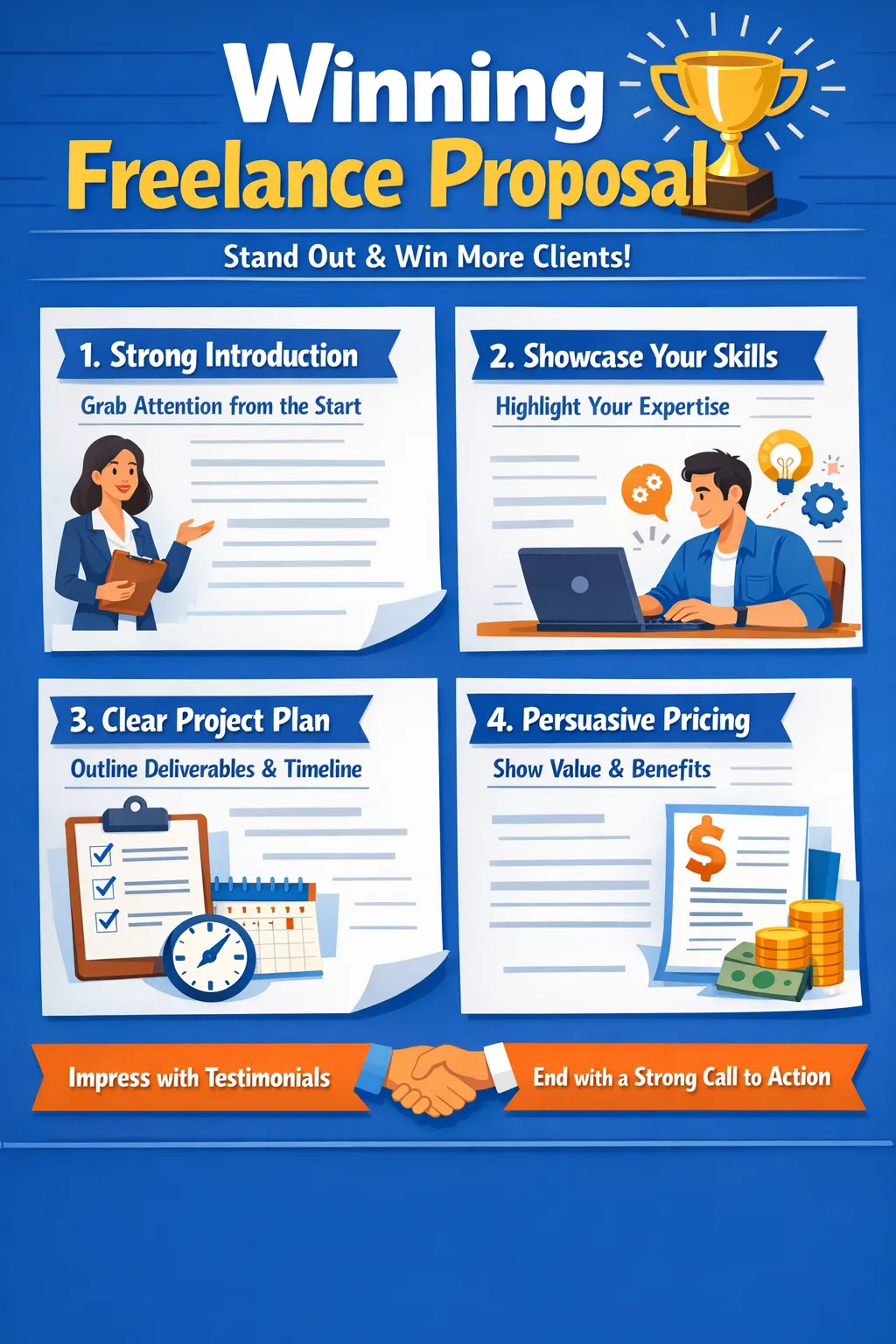
Winning freelance proposal
A winning freelance proposal is not just about presenting your services; it’s about aligning your expertise with the client’s goals and objectives. To achieve this, you need to understand what makes a proposal stand out and how to tailor it to meet client expectations.
Key Elements That Make a Freelance Proposal Stand Out
A standout freelance proposal includes several key elements that differentiate it from generic submissions. First, it demonstrates a clear understanding of the client’s project and its requirements. Second, it highlights your unique value proposition and how your skills and experience make you the ideal candidate for the job.
For instance, a freelance writer might include a brief sample of their work that is relevant to the client’s project, showcasing their writing style and expertise. This not only shows that you have the necessary skills but also gives the client a glimpse into what they can expect from your collaboration.
Understanding What Clients Look for in a Winning Proposal
Clients look for proposals that are not only well-written but also demonstrate a deep understanding of their needs and goals. They want to see that you have taken the time to research their project and understand their pain points.
A successful proposal also communicates your ability to deliver results. For example, if you’re applying for a SEO project, you might highlight your experience with keyword research and link building, and provide examples of how you’ve improved search engine rankings for previous clients.
How to Align Your Proposal With Client Goals
Aligning your proposal with client goals involves more than just using the right keywords. It requires a strategic approach to showcasing your skills and experience in a way that resonates with the client’s objectives.
One effective strategy is to use specific examples or case studies that demonstrate your ability to achieve the client’s desired outcomes. For instance, if a client is looking to increase their online presence, you could describe a previous project where you helped a client achieve a significant increase in website traffic through targeted social media campaigns.
By following these best practices and tailoring your proposal to the client’s specific needs, you can significantly improve your chances of winning the project. Real-life examples have shown that personalized proposals can lead to a substantial increase in conversion rates, sometimes by as much as 20-30%.
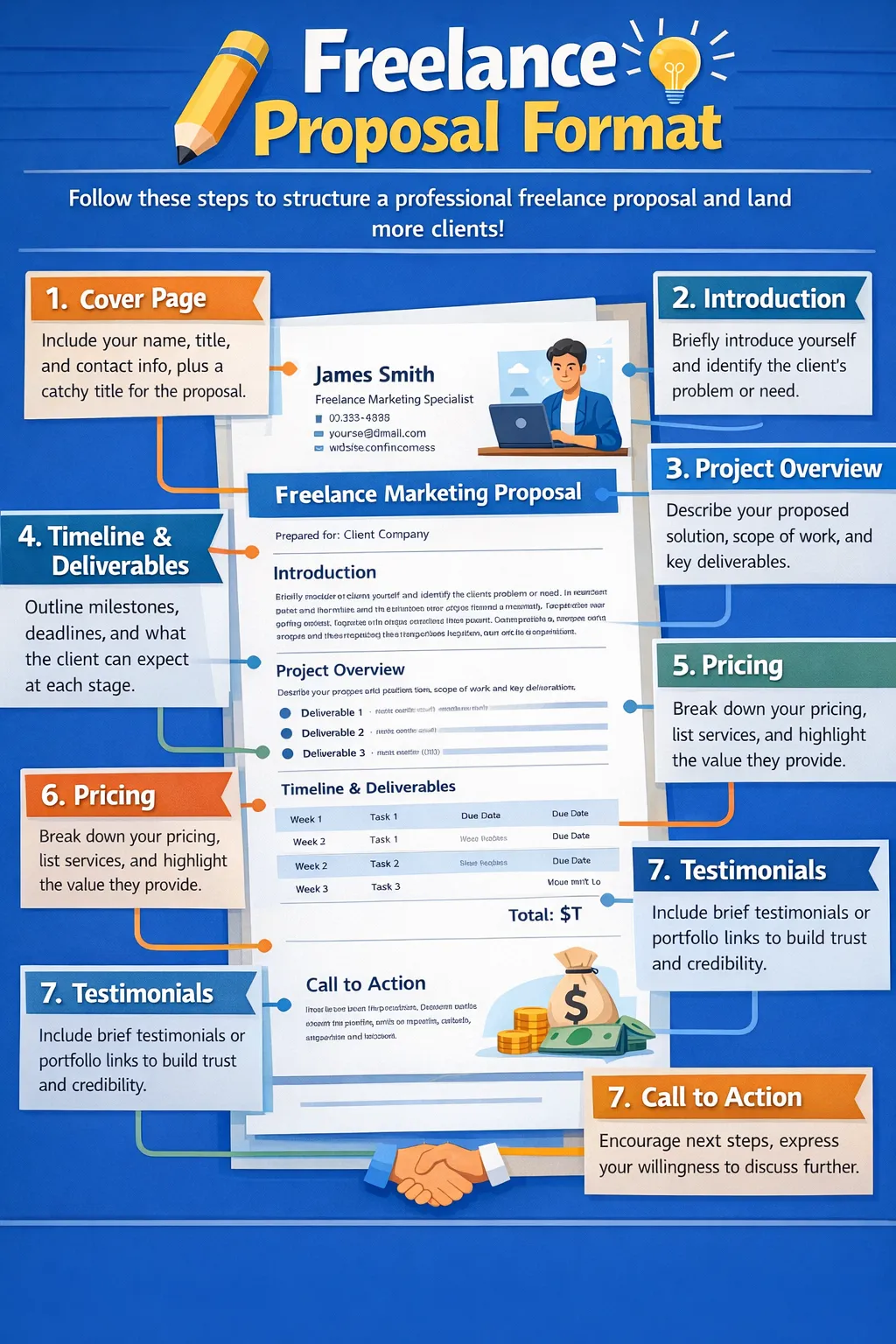
Freelance proposal format
The right freelance proposal format can make all the difference in convincing clients to choose your services. A well-structured proposal not only showcases your professionalism but also makes it easier for potential clients to understand your offer.
Standard Freelance Proposal Structure Explained
A standard freelance proposal typically includes several key elements. These are:
- Introduction: A brief overview of your services and how they meet the client’s needs.
- Scope of Work: A detailed description of the tasks you will perform.
- Timeline: A project schedule, including milestones and deadlines.
- Pricing: A clear breakdown of your costs and payment terms.
- Conclusion: A summary of your proposal and a call to action.
Using a freelance proposal template can help you ensure that you include all necessary information and present it in a clear, organized manner. Many templates are available online, offering a structured format that you can customize to fit your specific services and the client’s requirements.
Best Formatting Practices for Clear Proposals
To create a professional proposal, it’s essential to follow best formatting practices. These include:
- Use a clean, easy-to-read font, such as Arial or Calibri.
- Set the font size to 11 or 12 points.
- Including headings and subheadings to break up the content and highlight key information.
- Use bullet points or numbered lists when presenting multiple items or steps.
- Ensuring that your proposal is well-spaced and not overly dense.
By following these guidelines, you can improve the readability of your proposal and make a stronger impression on potential clients.
Freelance Proposal Layout That Improves Readability
The layout of your freelance proposal is just as important as its content. A well-designed layout can significantly enhance readability and make your proposal more engaging. Consider the following tips:
- Use margins and padding to create a clean and uncluttered appearance.
- Incorporate visual elements, such as charts or graphs, to illustrate complex information.
- Highlight key information using bold text or different colors.
- Ensure that your proposal is concise and to the point, avoiding unnecessary detail.
By implementing these strategies, you can create a freelance project proposal that effectively communicates your value to potential clients and helps you stand out in a competitive market.
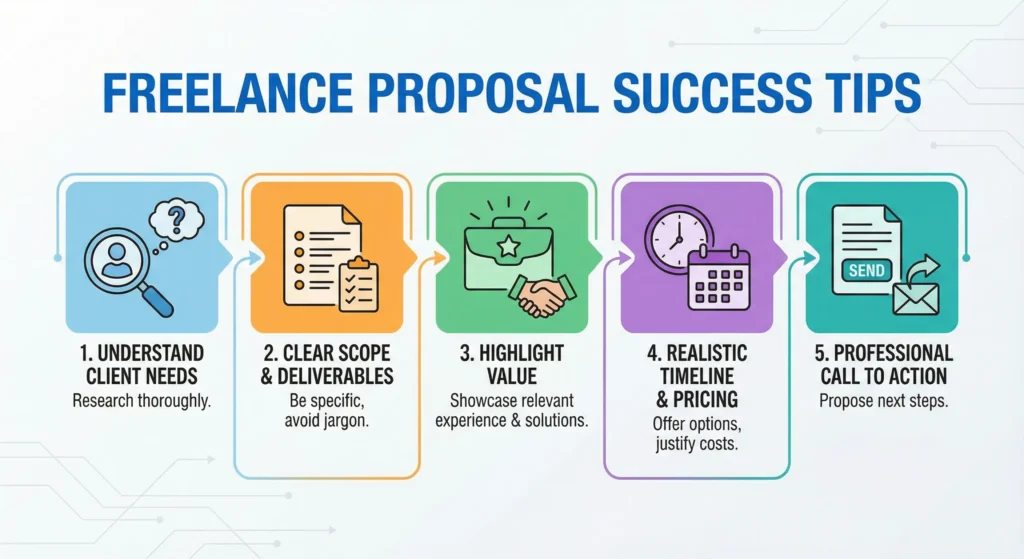
Freelance proposal tips
A well-written freelance proposal is crucial for securing projects and building a successful freelance career. To achieve this, it’s essential to understand the elements that make a proposal stand out and how to tailor it to the client’s needs.
Using Simple Language to Build Client Trust
Using simple and clear language in your proposal is vital for building trust with potential clients. Avoid using jargon or overly technical terms that might confuse or intimidate them. Instead, focus on communicating your ideas and services in a straightforward manner.
Clear communication not only helps in building trust but also ensures that the client understands your proposal’s value. This approach can significantly improve the client’s confidence in your abilities, making them more likely to choose your services.
Personalizing Proposals for Higher Response Rates
Personalizing your proposal to address the specific needs and concerns of the client can greatly increase your chances of success. Research the client’s project and incorporate details that show you understand their goals and challenges.
By tailoring your proposal to the client’s specific requirements, you demonstrate your commitment and attention to detail, making your proposal more compelling.
Writing Clear and Persuasive Proposal Introductions
The introduction of your proposal is your first opportunity to make a strong impression on the client. It should be clear, concise, and persuasive, setting the tone for the rest of the proposal. Highlight your unique selling points and outline how you plan to address the client’s needs.
A strong introduction grabs the client’s attention and encourages them to read further. It should provide a compelling overview of your proposal and entice the client to consider your services seriously.
By implementing these freelance proposal tips, you can significantly enhance your chances of winning clients. Focus on clarity, personalization, and persuasive writing to make your proposals stand out in a competitive market.
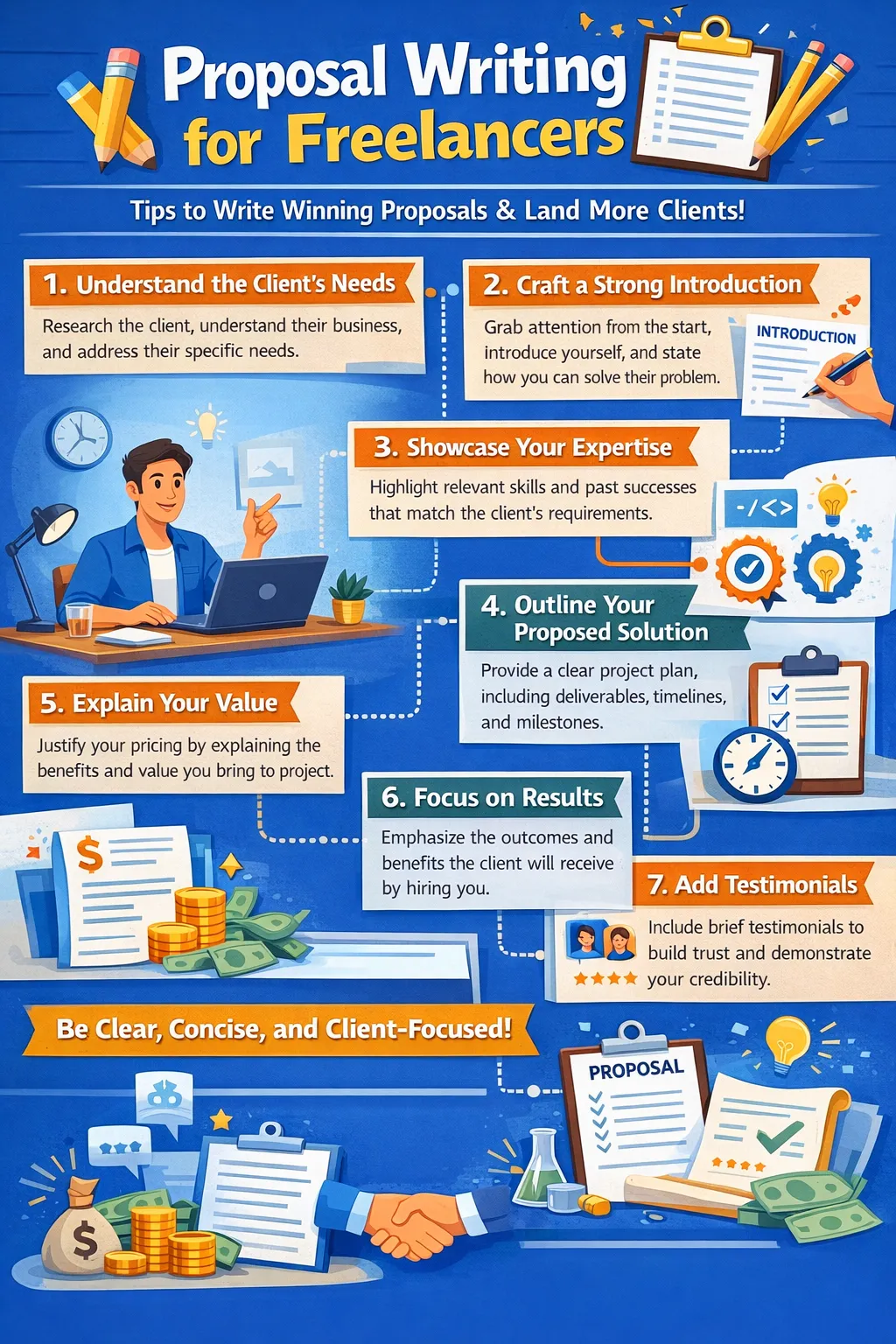
Proposal writing for freelancers
The key to a successful freelance proposal lies in its ability to clearly communicate your value proposition to potential clients. As a freelancer, your proposal is often the first impression you make on a client, making it a crucial element in securing projects.
Step-by-Step Freelance Proposal Writing Process
Writing a freelance proposal can be broken down into a simple, step-by-step process. First, thoroughly read and understand the client’s requirements. Next, tailor your proposal to address these needs, highlighting your relevant skills and experience. Use a clear and concise format, making it easy for the client to see your value.
According to a successful freelancer, “The most important thing is to show the client that you’ve taken the time to understand their project and that you have the skills to deliver it.”
“I always start my proposals with a personalized introduction, addressing the client by name and referencing their specific project requirements. This helps establish a connection from the outset.”
How to Communicate Value Instead of Just Skills
While listing your skills is important, it’s equally crucial to communicate the value you bring to a project. Clients want to know how your skills will solve their problems or improve their business. To achieve this, focus on the outcomes and benefits of your work rather than just listing your abilities.
For example, instead of saying “I have 5 years of experience in SEO,” say “I have helped numerous clients increase their organic traffic by an average of 50% through targeted SEO strategies.” This approach shows the client the tangible benefits you can provide.
Writing Proposals That Convert Leads Into Clients
To convert leads into clients, your proposal must not only showcase your skills and value but also persuade the client to choose you over competitors. This involves understanding the client’s needs, personalizing your proposal, and including a clear call to action.
A freelance proposal checklist can be a useful tool to ensure you cover all necessary elements. This might include items like introducing yourself and your services, outlining your approach to the project, providing examples of past work, and detailing your pricing and timeline.
By following these steps and focusing on communicating your value, you can significantly improve your chances of winning clients through your freelance proposals.
Business proposal for freelancers
The line between freelance and business proposals can blur, especially for freelancers dealing with larger clients or more complex projects. As freelancers grow their business, they may need to adopt a more formal approach to proposals to stand out and secure bigger projects.
Differences Between Freelance and Business Proposals
Freelance proposals are typically more straightforward and focused on the specific needs of a client. They are often less formal and may not require detailed company information. On the other hand, business proposals are more comprehensive, involving a detailed analysis of the client’s needs, a proposed solution, and a clear outline of the scope, timeline, and costs.
A key difference lies in the level of formality and the amount of detail provided. Business proposals often include company credentials, case studies, and detailed methodologies, making them more suitable for larger or more complex projects.
When Freelancers Should Use a Business-Style Proposal
Freelancers should consider using a business-style proposal when dealing with high-value projects or clients who require a more formal approach. According to
“Upwork’s guidelines for creating a proposal suggest that understanding the client’s needs and presenting a tailored solution is key to winning projects.”
This is particularly relevant for freelancers looking to secure larger contracts or work with bigger clients.
Using a business-style proposal can help freelancers appear more professional and capable of handling complex projects. It’s about presenting your services in a way that aligns with the client’s expectations and needs.
Presenting Pricing and Scope Clearly in Business Proposals
One of the critical elements of a business proposal is the clear presentation of pricing and scope. Freelancers should ensure that their proposal includes a detailed breakdown of costs, timelines, and deliverables. Transparency is key to building trust with potential clients.
For guidance on creating effective proposals, freelancers can refer to resources like Fiverr’s seller tips, which emphasize the importance of a clear and concise proposal that meets the client’s requirements.
By understanding the differences between freelance and business proposals and knowing when to use a more formal approach, freelancers can increase their chances of securing bigger and better projects.
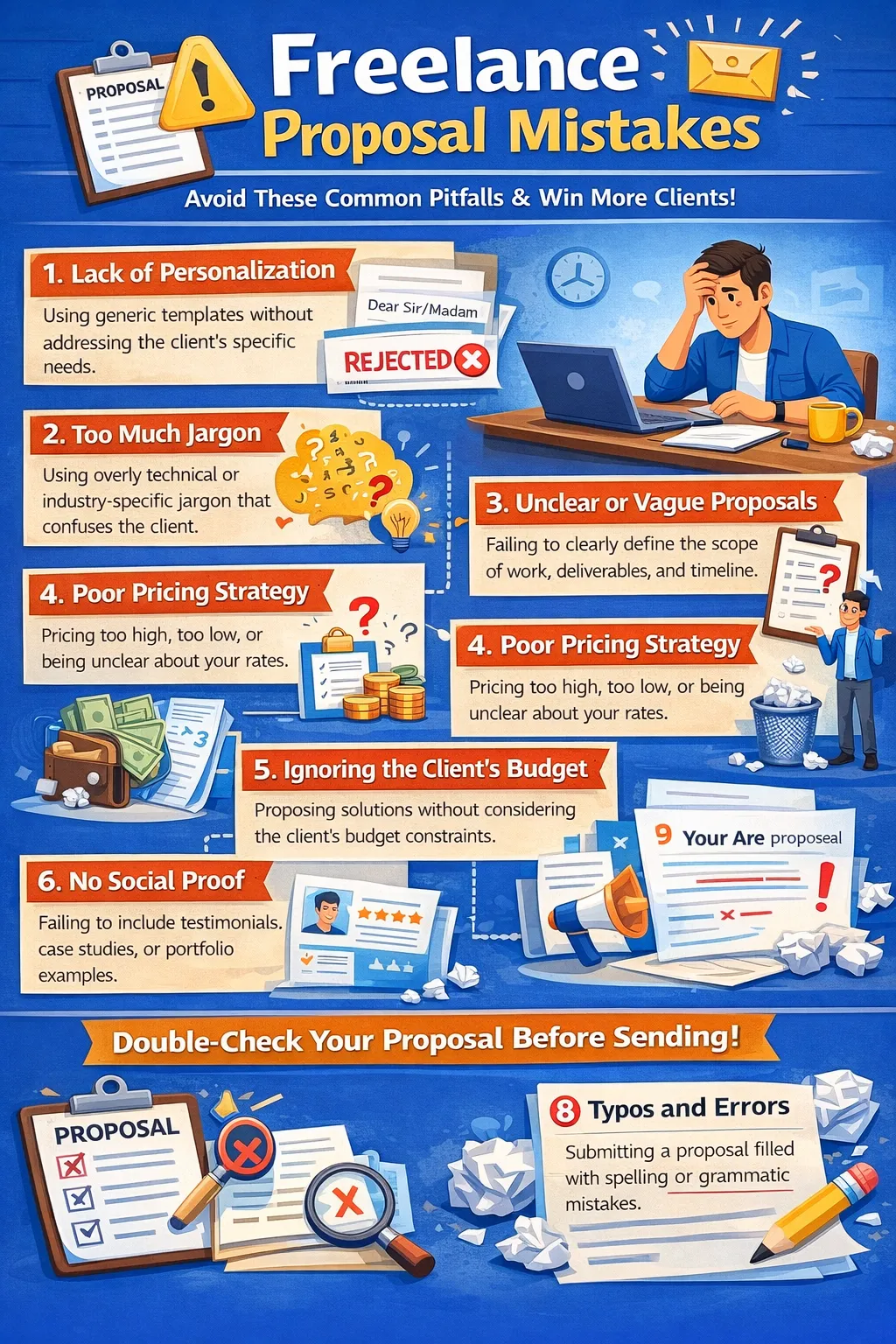
Freelance proposal mistakes
The difference between a winning and losing freelance proposal often comes down to avoiding common pitfalls. Freelancers who understand what clients are looking for and tailor their proposals accordingly are more likely to succeed.
Common Freelance Proposal Errors to Avoid
One of the most significant mistakes freelancers make is submitting generic proposals that lack personalization. Clients can tell when a proposal is not tailored to their specific needs. To avoid this, research the client’s project thoroughly and address their specific requirements in your proposal.
Another common error is failing to clearly communicate the value proposition. Instead of just listing skills and services, explain how your work will benefit the client. This involves understanding the client’s goals and demonstrating how your services align with those goals.
Why Generic Proposals Fail to Win Clients
Generic proposals fail because they do not address the client’s specific needs or show a clear understanding of their project. Clients want to feel confident that the freelancer they hire has taken the time to understand their unique challenges. A generic proposal suggests a lack of effort or interest in the client’s project.
How to Fix Weak Proposals Before Sending
To strengthen a weak proposal, start by revisiting the client’s original brief. Ensure that your proposal directly addresses their needs and requirements. Review your proposal for clarity, grammar, and spelling errors, as these can undermine your professionalism.
Additionally, consider getting feedback from peers or mentors. Sometimes, a fresh perspective can highlight areas for improvement that you may have overlooked.
Conclusion
Crafting a winning freelance proposal is crucial for securing clients in a competitive market. Throughout this article, we’ve explored the essential elements that make a freelance proposal stand out, including understanding client goals, using simple language, and personalizing proposals.
A well-structured proposal not only showcases your skills but also demonstrates your understanding of the client’s needs and requirements. By following the tips and guidelines provided, freelancers can significantly improve their chances of writing a proposal that wins clients.
“A good proposal resonates with the client’s needs and showcases the freelancer’s unique value proposition.”
By applying these principles and using freelance proposal templates as a guide, freelancers can create compelling proposals that drive results.
FAQ
Q1: What is the key to writing a winning freelance proposal?
The key to writing a winning freelance proposal is to understand the client’s needs, showcase your relevant skills and experience, and present a clear and compelling pitch that highlights the value you can bring to the project.
Q2: How do I create a freelance proposal template?
To create a freelance proposal template, start by outlining the essential elements, such as introduction, services offered, timeline, and pricing. Use a clear and concise format, and tailor the template to your specific services and the needs of your clients.
Q3: What are the most common freelance proposal mistakes?
Common freelance proposal mistakes include failing to understand the client’s needs, using generic language, and not providing a clear and compelling pitch. Other mistakes include poor formatting, lack of relevant examples, and not proofreading the proposal carefully.
Q4: How do I send a proposal on Upwork?
To send a proposal on Upwork, start by carefully reading the job description and requirements. Then, click on the “Submit a Proposal” button and fill out the proposal form, making sure to include a clear and compelling pitch, your relevant skills and experience, and your pricing.
Q5: What is the best way to personalize a freelance proposal?
The best way to personalize a freelance proposal is to research the client’s needs and tailor your pitch accordingly. Use language from the job description, highlight your relevant skills and experience, and show that you understand the client’s goals and challenges.
Q6: How do I write a clear and persuasive proposal introduction?
To write a clear and persuasive proposal introduction, start by introducing yourself and your services, and then clearly state the purpose of the proposal. Use a compelling opening sentence, and make sure to highlight your relevant skills and experience.
Q7: What is the difference between a freelance proposal and a business proposal?
A freelance proposal is typically used by freelancers to pitch their services to clients, while a business proposal is used by companies to pitch their products or services to other businesses. Freelance proposals tend to be more personal and focused on the specific project, while business proposals are often more formal and comprehensive.
Q8: How do I present pricing and scope clearly in a business proposal?
To present pricing and scope clearly in a business proposal, use a clear and concise format, and make sure to include all relevant details, such as the scope of work, timeline, and pricing. Use tables, charts, and other visual aids to help illustrate the information and make it easier to understand.
Q9: What is the ideal length for a freelance proposal?
The ideal length varies, but typically, a concise proposal that addresses the client’s needs is more effective. To make your proposal stand out, personalize it, provide relevant, and clearly outline your value proposition.
Q10: What should be included in a freelance proposal format?
A standard freelance proposal should include an introduction, scope of work, timeline, pricing, and terms. For more insights and freelance proposal writing tips, consider exploring resources that specialize in freelance writing and proposal development.
Conclusion
Crafting a winning freelance proposal is crucial for securing clients in a competitive market. Throughout this article, we’ve explored the essential elements that make a freelance proposal stand out, including understanding client goals, using simple language, and personalizing proposals.
A well-structured proposal not only showcases your skills but also demonstrates your understanding of the client’s needs. By following the tips and guidelines provided, freelancers can significantly improve their chances of writing a proposal that wins clients.
“A good proposal is one that resonates with the client’s needs and showcases the freelancer’s unique value proposition.”
By applying these principles and using afreelance proposal templateas a guide, freelancers can create compelling proposals that drive results.
About the Author & Disclosures
John Cosstick is Founder-Editor of TechLifeFuture.com and winner of the 2024 BOLD Award for Open Innovation in Digital Industries. He is a former banker, accountant, and certified financial planner.
He is now a freelance journalist and author. John is a member of the Media Entertainment and Arts Alliance (Union). You can visit his Amazon author page by clicking HERE.
Authority reference Links
For further guidance on crafting a winning freelance proposal, consider exploring the following authoritative resources. Upwork provides comprehensive proposal guidelines to help freelancers succeed on their platform. Additionally, Fiverr offers valuable seller tips to enhance your proposal writing skills.
Google’s business writing resources can also be a valuable asset in improving your proposal writing. For more information on freelance writing, check out our articles on How to Get Freelance Writing Jobs and LinkedIn for Freelance Writers. Our Step-by-Step Guide to Freelance Writing is another useful resource to explore.
By leveraging these freelance proposal resources, you can refine your proposal writing skills and increase your chances of winning clients. Whether you’re new to freelance writing or looking to improve your existing skills, these resources will provide you with the guidance you need to succeed.
- https://developers.google.com/tech-writing
- https://www.freelancer.com/community/articles/how-to-write-a-winning-proposal-on-freelancer-com
- https://www.upwork.com/resources/how-to-create-a-proposal-that-wins-jobs
- https://www.techlifefuture.com/how-to-start-freelance-writing/
- https://www.linkedin.com/top-content/career/freelancing-best-practices/
- https://www.upwork.com/freelance-jobs/writing/
- https://www.fiverr.com/resources/guides