PROOF BEFORE SCALE™ is a pending trademark application with IP Australia.
Reference details available upon request.
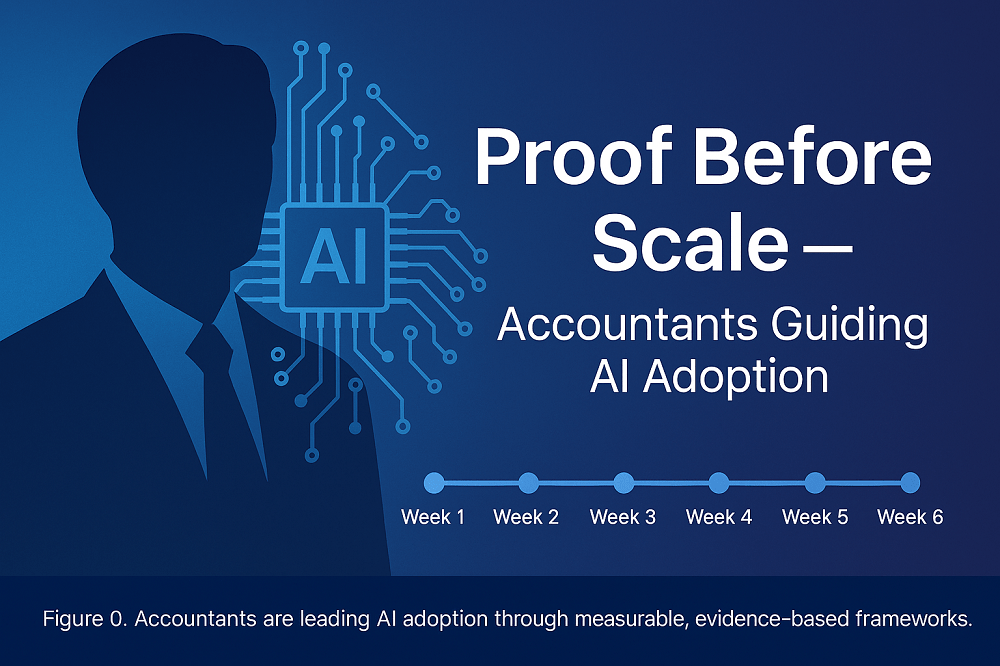
The Opportunity for Accountants in the AI Era
Artificial Intelligence (AI) is reshaping every business conversation. Once focused on compliance, tax, and financial reporting, small-business clients are now asking: ‘Should we be using AI — and if so, where do we start?’ For the accounting profession, this shift represents both a challenge and an extraordinary opportunity — to evolve from compliance partners to strategic innovation advisors.
Source: OECD AI Principles 2024
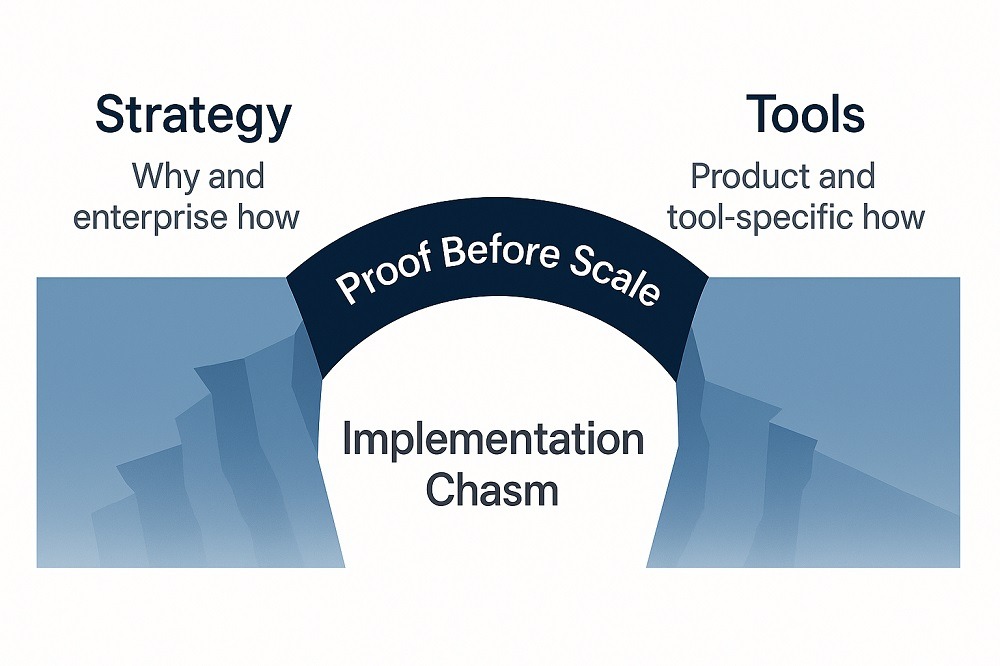
A 2024 analysis by Boston Consulting Group found that 74% of companies struggle to achieve and scale AI value, not because the technology fails, but because organizations lack governance, measurement, and disciplined proof-of-value processes before scaling.
Why Accountants Are Uniquely Positioned
Accountants already possess the traits required to make AI adoption work responsibly:
- Financial literacy and ROI discipline
- Process orientation and documentation rigour
- Trusted-advisor relationships
- Risk-management mindset emphasizing verification and control
The Six-Week ‘Proof Before Scale’ Framework
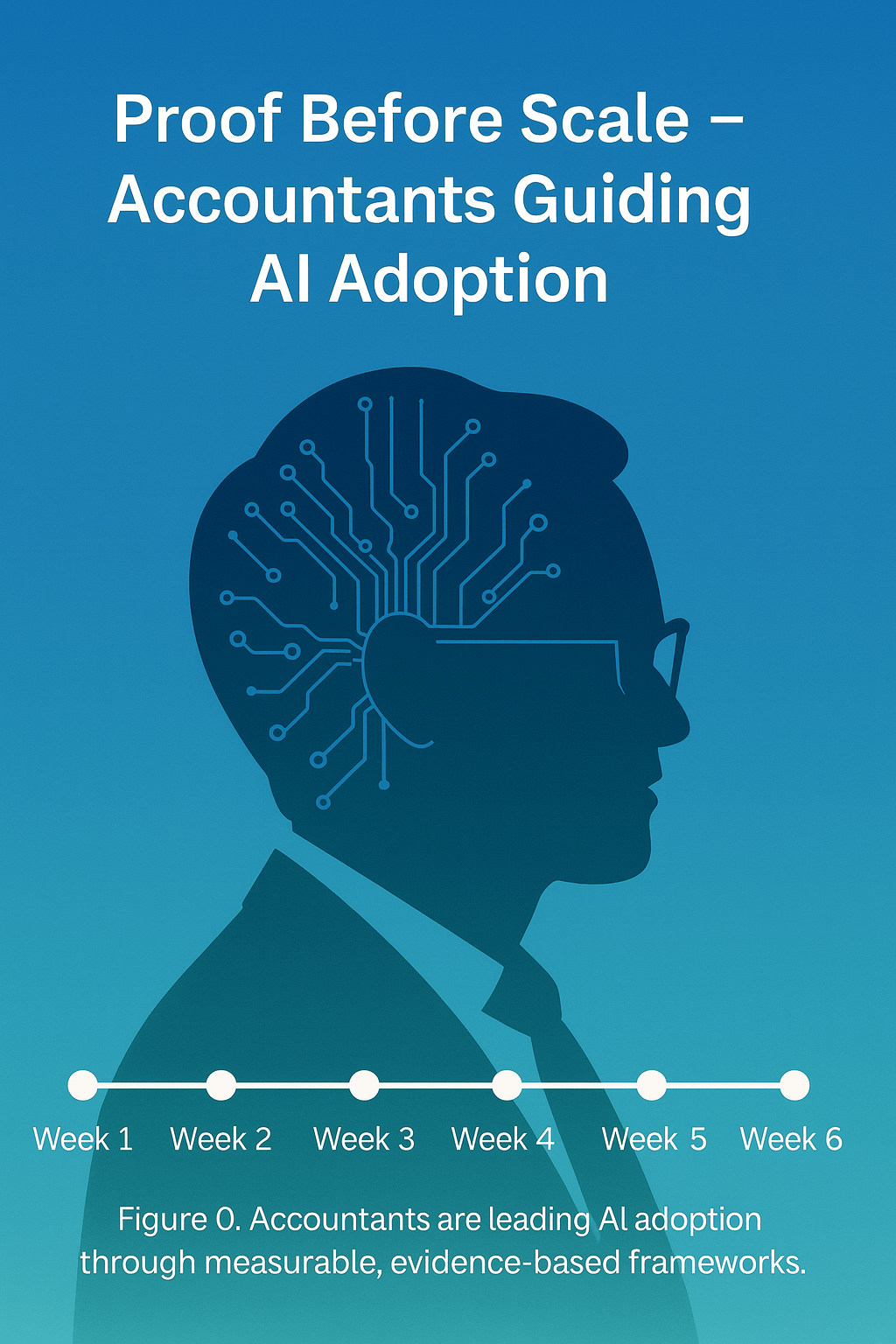
Proof Before Scale (PBS) is a six-week, evidence-first framework that helps accountants guide clients from AI curiosity to measurable business impact.
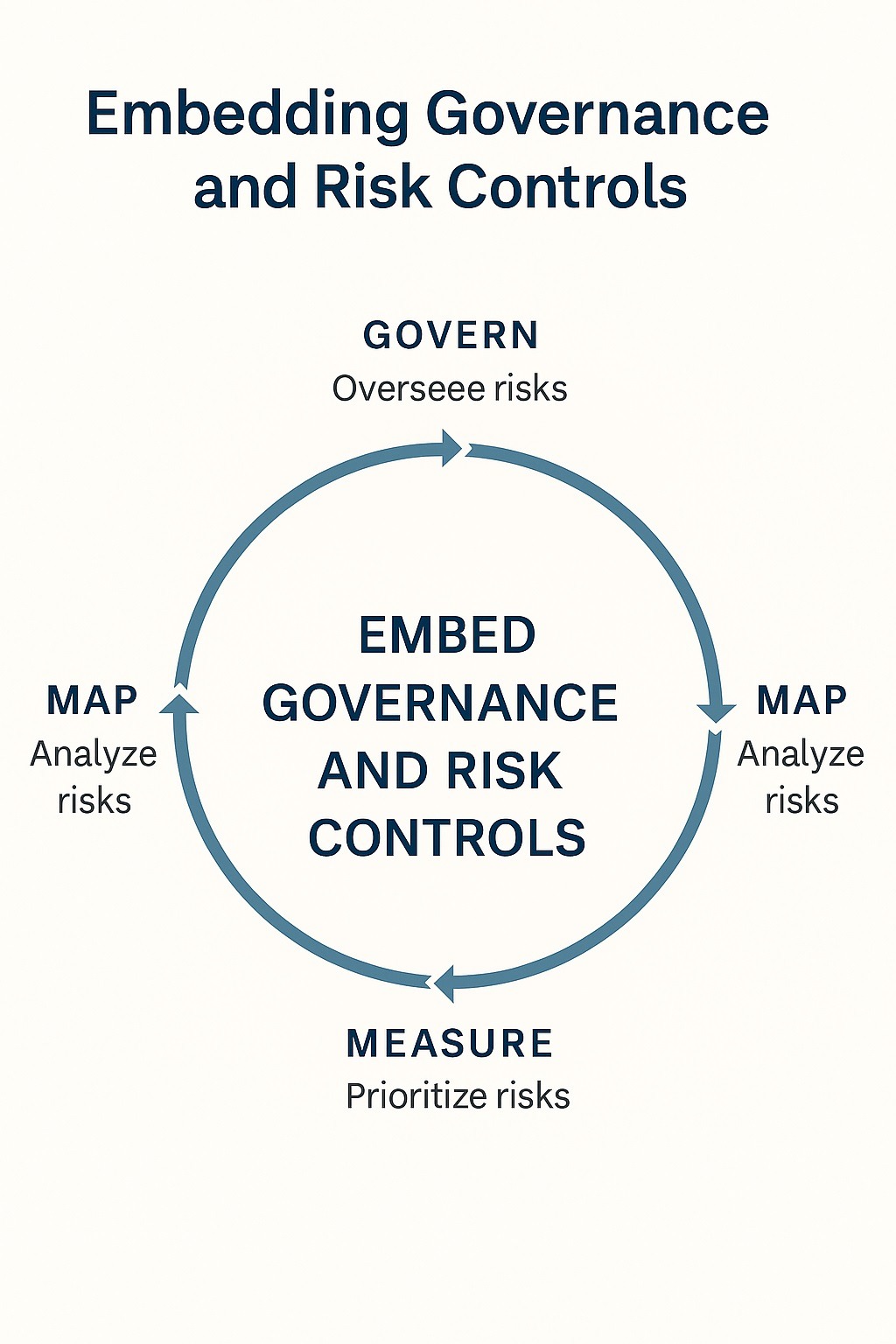
NIST AI RMF 1.0
PBS integrates the NIST model’s four pillars — Govern, Map, Measure, Manage — providing a governance-by-design approach suitable for SMEs.
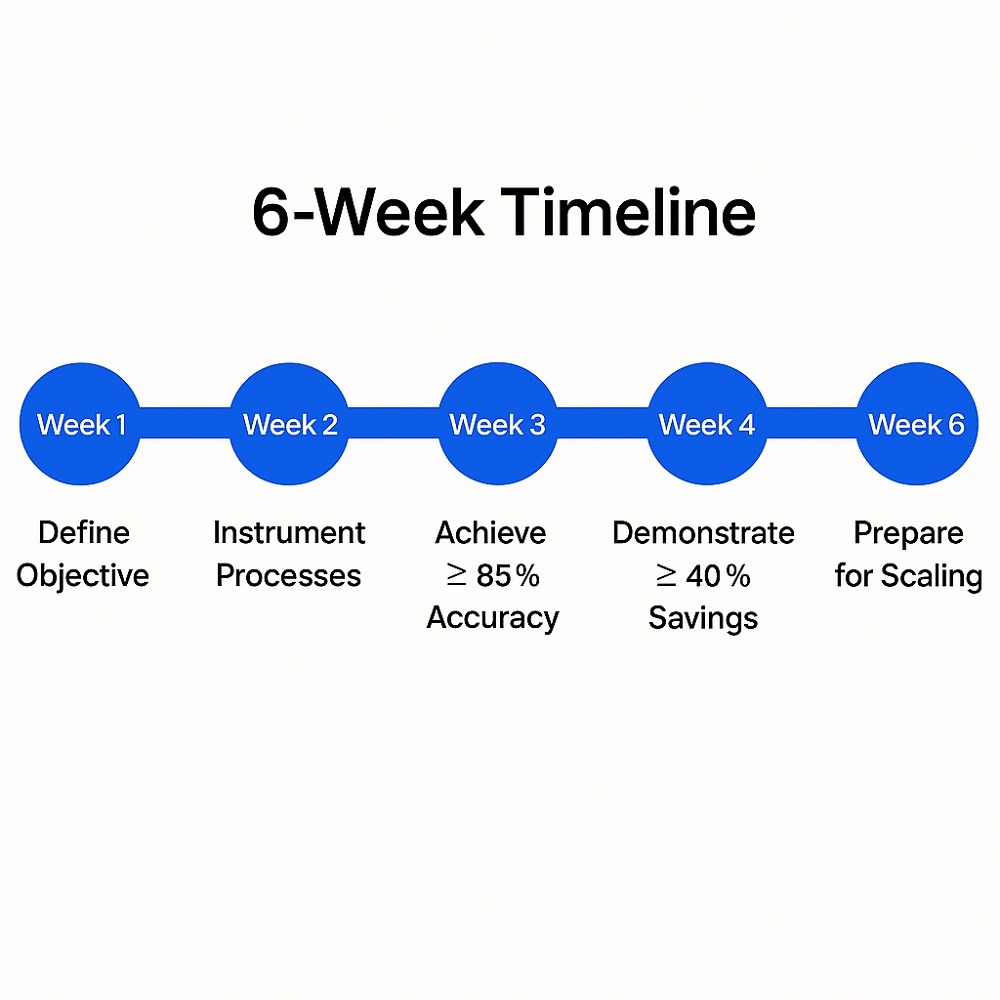
Microsoft Power Automate Case Stories
From Proof to Provenance: The Verifiable Human Contribution (VHC) Model
VHC establishes provenance metadata linking human professionals, AI systems, and verified outputs. It ensures transparent authorship, attribution integrity, and compliance for AI-assisted work.
Cosstick J. (2025) Verifiable Human Contribution Patent AU 2025220863 / PCT IB2025 058808
Authoritative Video Resources
References
1. Boston Consulting Group (2024). AI Adoption in 2024: 74% of Companies Struggle to Achieve and Scale Value. https://www.bcg.com/publications/2024/ai-adoption-value-realization
2. MIT Sloan Management Review (2025). How Generative AI Can Make Accountants More Productive. https://mitsloan.mit.edu/ideas-made-to-matter/how-generative-ai-can-make-accountants-more-productive
3. NIST (2023). Artificial Intelligence Risk Management Framework (RMF 1.0). https://www.nist.gov/itl/ai-risk-management-framework
4. OECD (2024). AI Principles for Trustworthy and Human-Centric AI. https://oecd.ai/en/principles
5. APESB (2023). APES 110 Code of Ethics for Professional Accountants. https://apesb.org.au
Citation & Verification
TechLifeFuture articles undergo multi-step fact-checking aligned with EEAT principles. We verify technical claims against primary sources and authoritative publications.
Feedback: [email protected] (subject “Citation Feedback”).
Legal Disclaimer
Educational content only; not professional advice. Consult qualified engineers or legal experts for implementation decisions.
Financial Advice Disclaimer
This publication does not constitute financial advice. Readers should seek independent financial, tax, or investment guidance before making decisions.
License Notice
© TechLifeFuture.com, 2025. This article is licensed under
Creative Commons Attribution-NonCommercial 4.0 (CC BY-NC 4.0).
You may share/adapt for non-commercial purposes with clear credit and a link to the original.
Note: Third-party media (e.g., embedded YouTube videos) remain under their original licences.

Some rights reserved.
TechLifeFuture partners with Educative.io and Mindhive.ai
(Disclosure: John Cosstick, the website owner, is a minor shareholder in Mindhive.ai)
to provide two complementary services that help readers move from AI learning to implementation:
1. Implementation training (Educative.io) – structured, self-paced, browser-based courses on Python, AI/ML, agents, data, cloud, and developer skills so SMEs and professional firms can build the capability to use AI tools in production.
Explore All AI Courses on Educative
2. Collaborative pilot environments (Mindhive.ai) – an AI-augmented collaboration platform where teams, clients, and external experts can co-design, test, and validate AI use cases, capture stakeholder input, and generate decision-ready outputs — speeding up “proof-before-scale” pilots.
Collaborative Pilot Environments
Affiliate Disclosure: Some links on this page are affiliate links, which means TechLifeFuture.com may earn a commission if you make a purchase or sign up through them — at no additional cost to you. We only recommend platforms we actively use and believe add real value to our readers.
How this relates to Mindhive.ai
The “Proof Before Scale” (PBS) framework described in this article is a methodology for accountants and SME advisers — it defines what to do in six weeks (govern, map, measure, manage, prove, document).
Mindhive.ai is the collaborative pilot environment where those PBS activities can actually be run with clients — shared briefs, stakeholder input, AI-assisted drafting, and a decision-ready output.
In other words: PBS is the playbook; Mindhive.ai is the field.
This makes PBS reinforcing — not competing — with Mindhive.ai. It gives accountants and SMEs a governed, NIST-aligned way to run pilots inside an AI-augmented workspace.
Note: This framework is platform-agnostic but is designed to run especially well in AI-augmented collaboration platforms such as Mindhive.ai.
Next Steps
Download the full Proof Before Scale Professional Guide (CC BY-NC 4.0) for templates, case studies, and governance tools coming soon: 👉https://www.techlifefuture.com/proof-before-scale-professional-guide